
Last updated November 25, 2026
 Wrought iron
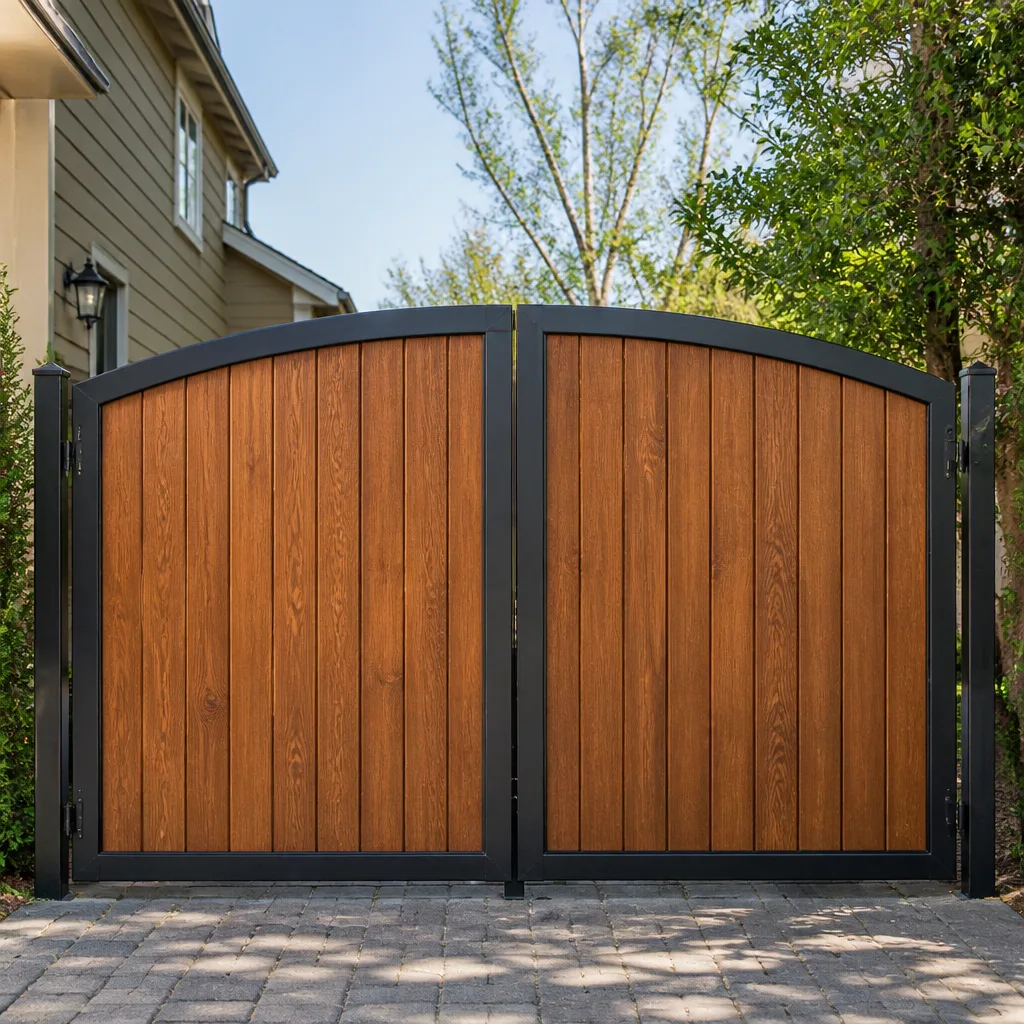 Wood & steel frame
 Farm & ranch
 Sliding driveway gates
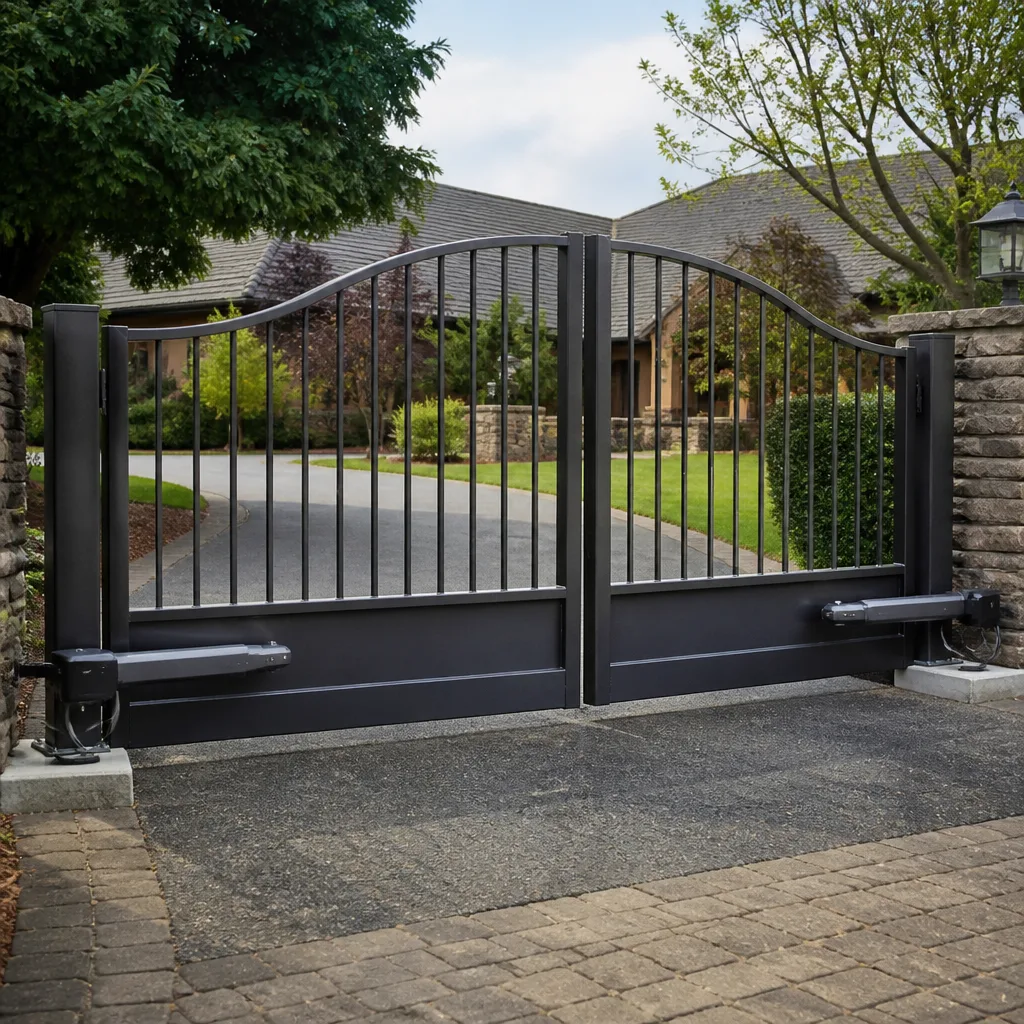 LiftMaster operators
Free on-site gate assessment - hinges, posts, and your LiftMaster or Nice gate operator checked before anything is quoted
The assessment is free and the quote is the invoice.
Get your free estimateGate Repair Maintenance Checklist for Knoxville Homeowners
The thing that kills most automatic gates around here isn’t old age or heavy use. It’s spring pollen. East Tennessee’s pollen season coats every outdoor surface with a fine yellow-green film, and that film lands directly on photoeye lenses and limit switch contacts. Nobody’s manufacturer manual mentions it, because those manuals are written for a national audience. A gate operator can be rated for tens of thousands of cycles and still fail early because its safety sensors couldn’t see through a layer of oak pollen. So this checklist is built around what actually happens to gates in Knoxville: the humidity, the soil, the pollen, and the storm season. You’ll get pass/fail inspection criteria, a real cleaning schedule, a lubrication guide, and a clear line between what you can safely handle and what needs a technician.
Quick Answer
A working gate maintenance routine for Knoxville means three things: a monthly clean-and-look pass on sensors, lenses, and tracks; a quarterly lubrication and hardware check on the specific metal parts that humidity attacks; and an annual full inspection of the motor, battery backup, and safety devices before ice storm season. Most homeowner-safe tasks take 20 minutes. Anything involving the operator’s internal wiring, high-voltage connections, or a gate that has dropped or come off its track belongs to a trained technician.
Styles & brands we work with
- Wrought iron
- Wood & steel frame
- Farm & ranch
- Sliding driveway gates
- LiftMaster operators
Table of Contents
- Monthly Checks: What to Do Every 30 Days
- Quarterly Maintenance: Lubrication and Hardware
- The Annual Deep Inspection
- Pollen, Debris, and Sensor Fouling
- Humidity, Oxidation, and the Right Lubricants
- Testing Battery Backup Before Storm Season
- Red Flags That Need a Technician
Monthly Checks: What to Do Every 30 Days
Thirty minutes once a month covers the parts that fail quietly. The goal here isn’t to fix anything. It’s to catch a small problem before it becomes a motor that won’t reverse or a gate that stops halfway.
- Wipe the photoeye lenses. Safety photoeyes are the small lenses mounted on each side of the opening. Wipe both faces with a soft, dry microfiber cloth. Pass: you can see the lens clearly with no film. Fail: a visible yellow-green haze or grit that doesn’t come off with a dry wipe.
- Test the safety reverse. With the gate moving, pass your hand through the beam path. Pass: the gate stops and reverses. Fail: it keeps moving. If it fails, stop using the gate until a technician looks at it.
- Sweep the track or the swing arc. Clear leaves, grit, and acorn debris from a slide gate’s ground track, or the swing path of a swing gate. Debris under the wheels is one of the most common causes of a gate that binds.
- Look at the control board ventilation slots. On most operators the control box has vent slots that collect dust and pollen. A dry brush around the outside of the slots is fine. Don’t open the enclosure or spray anything into it.
- Walk the gate by hand (power off, per your manual). Disconnect the operator as your manual instructs and push the gate through its full travel. Pass: smooth, no binding, no grinding. Fail: it catches, drags, or feels heavy.
That last test is the most useful one on the list. A gate that moves freely by hand is a gate whose motor isn’t working overtime. A gate that drags by hand will eventually burn out an operator even if everything electronic is fine. If you own a Knoxville gate repair pros installation or any other automatic gate, this five-minute walk is worth more than any diagnostic light on the control board. Note the date you tested it and what you found. Patterns matter more than single checks.
Quarterly Maintenance: Lubrication and Hardware
Every three months, move from looking to touching. This is where you slow down the wear that Knoxville humidity accelerates.
What to check each quarter
- Hinges and pivot points on a swing gate: apply a silicone-based or lithium grease lubricant. Not WD-40. It’s a solvent and water displacer, not a lasting lubricant, and it strips the grease that was protecting the joint.
- Slide gate rollers and track: a light coat of silicone spray on the track, wiped to a thin film. Never grease a ground track. Grease traps grit and turns the track into sandpaper.
- Chain or drive mechanism (on chain-drive operators): check tension by feel. Pass: a small, even sag. Fail: slack enough to slap the housing or so tight it hums.
- Fasteners: check bolts at the hinges, the post brackets, and the operator mount. Vibration loosens them over months. Snug, not torqued to spec unless you know the spec.
- Photocell alignment: confirm both lenses point at each other squarely. A bracket nudged by a lawn mower is a common cause of a gate that won’t close.
One note specific to this region: East Tennessee’s soil moves with the wet-dry cycle, and a gate post set near the river corridor or on a slope can shift fractionally over a season. You’ll notice it as a gate that suddenly needs a firmer push or swings a little crooked. That’s a sign to check post plumb, not to force the gate closed. On brand-name operators like Viking or Ghost Controls, the control board often has a small alignment or travel adjustment, but if the gate is physically out of square, no setting fixes it. The post does.
The Annual Deep Inspection
Once a year, ideally in late summer before storm season, do a full pass on the whole system. This is the inspection that catches the things monthly and quarterly checks can’t see.
- Motor and gearbox: listen during a full open and close cycle. Pass: consistent hum, no grinding, no clicking. Fail: any new noise.
- Battery backup: test it (we cover the method below).
- All safety devices: photoeyes, and on commercial or multi-unit systems, any loop detectors or exit sensors. Test each one individually.
- Wiring and conduit: look for cracked conduit, rodent damage, or exposed wire at the operator. Don’t touch the wiring itself. Note what you see and call.
- Gate structure: check the gate frame for rust blooms, cracked welds, and sagging. On a steel swing gate, look at the joints where the arm meets the frame.
- Manual release: confirm the key or release lever works. If you can’t open the gate by hand during a power failure, that’s a safety problem worth fixing.
For a gate motor & opener system, the annual inspection is also when you check whether the operator is still matched to the gate. Gates gain weight over time (water intrusion, rust, a repaired panel), and an operator sized for the original gate can start to strain. If your operator trips its overload protection more often than it used to, that’s usually the reason.
Pollen, Debris, and Sensor Fouling
This is the section most checklists leave out, and around Knoxville it’s the one that matters most.
Spring pollen coats lenses and settles into every crevice. The photoeye is the first casualty because it has to see clearly to keep the gate safe. When the lens films over, the gate starts behaving erratically: reversing for no reason, refusing to close, or stopping mid-travel. Homeowners often assume the control board failed. Often it’s a dirty lens.
How to clear pollen and debris without voiding a warranty
- Lenses: dry microfiber first. If film remains, a damp cloth with plain water, then dry. No solvents, no glass cleaner on plastic lenses.
- Ventilation slots: a soft dry brush around the outside of the control enclosure. Never a compressed-air blast into the box, which drives dust onto the board.
- Track and swing arc: leaf blower on low, or a broom. Avoid a pressure washer near the operator or the wiring.
- Around the enclosure: clear vegetation and leaf litter from the base of the control box. Keep the ground dry there.
One caution: opening the operator enclosure to clean inside it can void the manufacturer’s warranty on many units. Clean from the outside. If the inside of the box is visibly fouled, that’s a technician job, and on a DoorKing or Elite commercial unit, the board itself may need professional attention. We answer 24/7 if a gate has failed and you need to know what to do next. Fast dispatch, 7am-7pm, Sunday through Friday.
Humidity, Oxidation, and the Right Lubricants
Knoxville’s summer humidity is hard on steel. The corrosion points that matter most are the swing arm at its pivot, the slide gate track surface, and the post brackets where water pools after rain. Rust blooms on those points spread under paint, and eventually they seize a joint.
Not all lubricants belong on all parts. Here’s the practical breakdown:
- Hinges and pivot pins: lithium grease or a silicone-based grease. Lasts weeks, not days.
- Slide track: silicone spray, wiped thin. Never grease.
- Chain (if chain-drive): a purpose-made chain lubricant, applied sparingly.
- Never: WD-40 as a lubricant. It displaces water and then evaporates, leaving the joint dry. It also dissolves the grease that was protecting it.
If you find active rust, a light wire brushing followed by touch-up paint is a reasonable homeowner fix on the gate frame. That slows the spread. It doesn’t fix a hinge that’s already seized, and it never justifies painting over an operator housing or a sensor bracket. When rust reaches a moving part, that part needs replacement, not repainting.
Testing Battery Backup Before Storm Season
If your gate has a battery backup, that battery exists for one reason: to open the gate when the power fails. Knoxville has had ice storms and derechos that take out power, and a dead backup battery turns a minor outage into a security problem.
How to test the backup safely
- Read the manual first. Every operator has its own battery test procedure. Follow it.
- Test under no load. Make sure nothing is in the gate’s path and no one is standing near it.
- Trigger a cycle on backup power. Most systems test by cutting the main power at the breaker, cycling the gate once, and restoring power.
- Listen and watch. Pass: the gate opens and closes smoothly. Fail: it’s sluggish, stalls, or doesn’t move. A weak battery shows up as a slow cycle, not a dead one.
- Log the result. A battery that needs frequent charging is on its way out. Replace it before storm season, not after the first outage.
If your gate has no battery backup at all, that’s worth knowing before the first ice storm of the year. For most residential systems, a backup kit is a straightforward addition. For a commercial access control system, it’s a different design. Either way, it’s a free estimate and a written price. Call (855) 337-0860. We answer 24/7. Fast dispatch from 7am to 7pm, Sunday through Friday.
Red Flags That Need a Technician
Some findings are homeowner-safe. Others are invitations to a serious injury. Here’s the line.
Safe for you to resolve
- A dirty photoeye lens.
- Leaves and grit on the track or swing path.
- A loose hinge bolt you can snug with a wrench.
- Light surface rust on a gate frame (brushing and touch-up paint).
- Dry, squeaking hinges (lubricant).
Call a technician
- The gate won’t reverse on the safety test. This is a safety device. Don’t leave it.
- The gate has dropped, wrapped, or come off its track. Heavy panels and slide gates that leave the track can crush. Keep people and vehicles clear.
- The operator hums but doesn’t move, or trips repeatedly. Likely a motor, gearbox, or control board fault.
- Any sparking, burning smell, or exposed wiring inside the enclosure. Access control and operator wiring involves mains voltage. Don’t open it.
- Post movement or a gate that’s visibly out of plumb. Requires re-setting, not adjusting.
- A backup battery that fails repeatedly. Often a charging circuit fault, not just an old battery.
We’ve seen all of these, and we’ve also seen homeowners buy a new control board when the fix was a dirty lens. The cheap check is always worth doing before the expensive part gets ordered. A technician with up to 13 years of experience can usually tell you in ten minutes which one you’re dealing with. For a full-system inspection, we can arrange a gate repair visit to look at every layer, from the motor to the sensors.
Common Mistakes to Avoid
- Using WD-40 as a lubricant on hinges. It’s a water displacer, not a lasting grease. It dries out and leaves the joint unprotected within days, and it strips the grease that was working.
- Greasing a slide gate track. Grease traps grit, and the grit grinds the track. Wipe it with a thin silicone film instead.
- Opening the operator enclosure to blow it out with compressed air. It pushes dust onto the control board and can void the warranty on many units. Clean the vents from the outside.
- Skipping the safety reverse test. A gate that doesn’t reverse when it should is the biggest danger on the property, and it fails silently. Test it every month.
- Not testing the battery backup before storm season. Knoxville’s ice storms and derechos make the backup battery real, not theoretical. A dead battery is discovered on the worst possible day.
- Forcing a binding gate closed with the operator. A gate that binds by hand will burn out an operator. Fix the bind, not the symptoms.
- Assuming a dirty gate is a broken gate. A pollen-fouled lens behaves like a failed control board. Clean it first.
See the difference
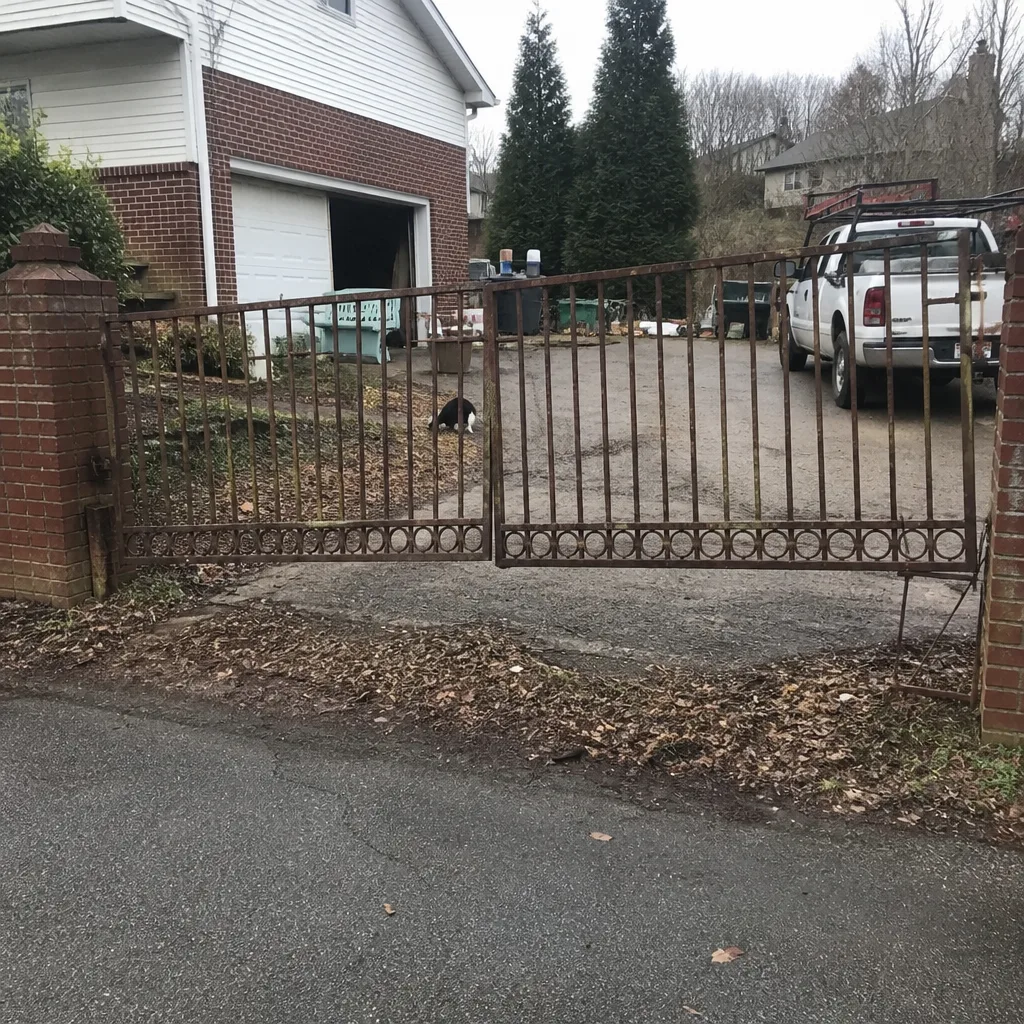 Before
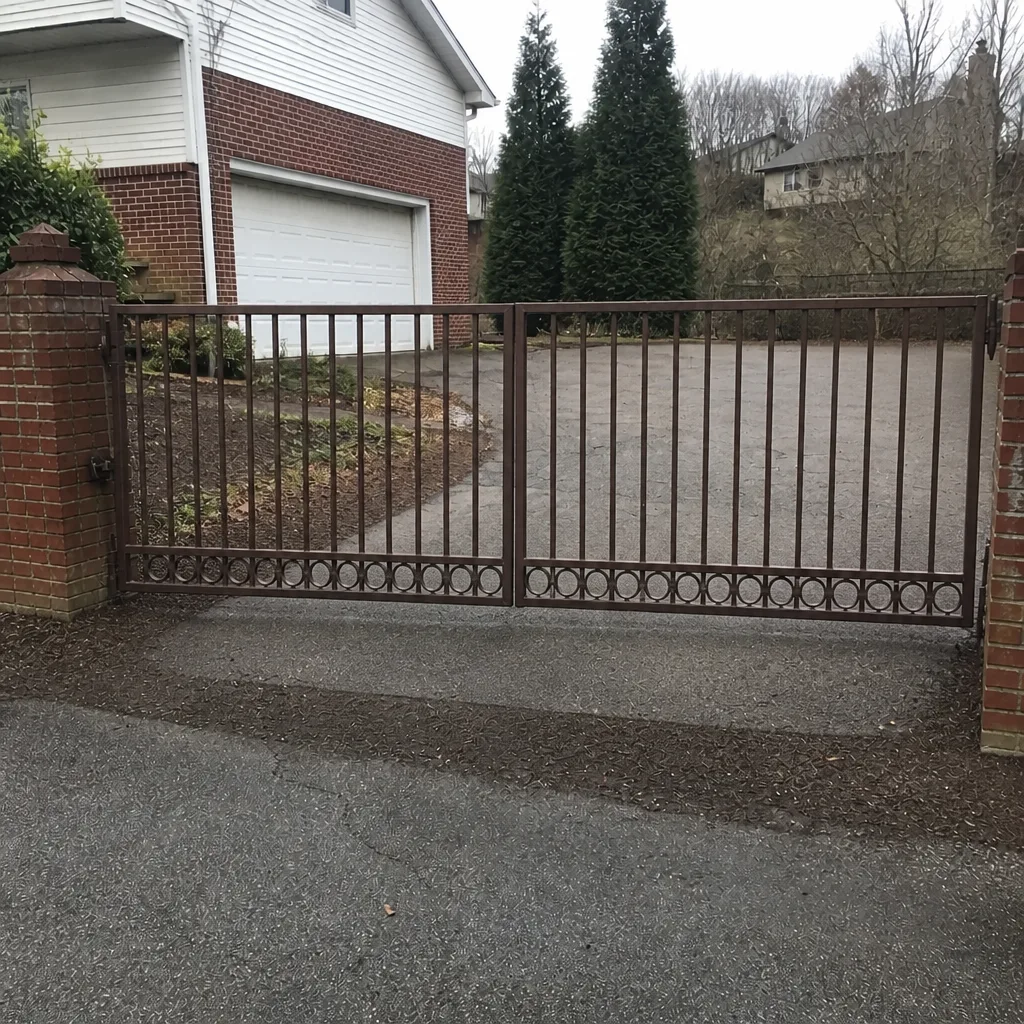 After
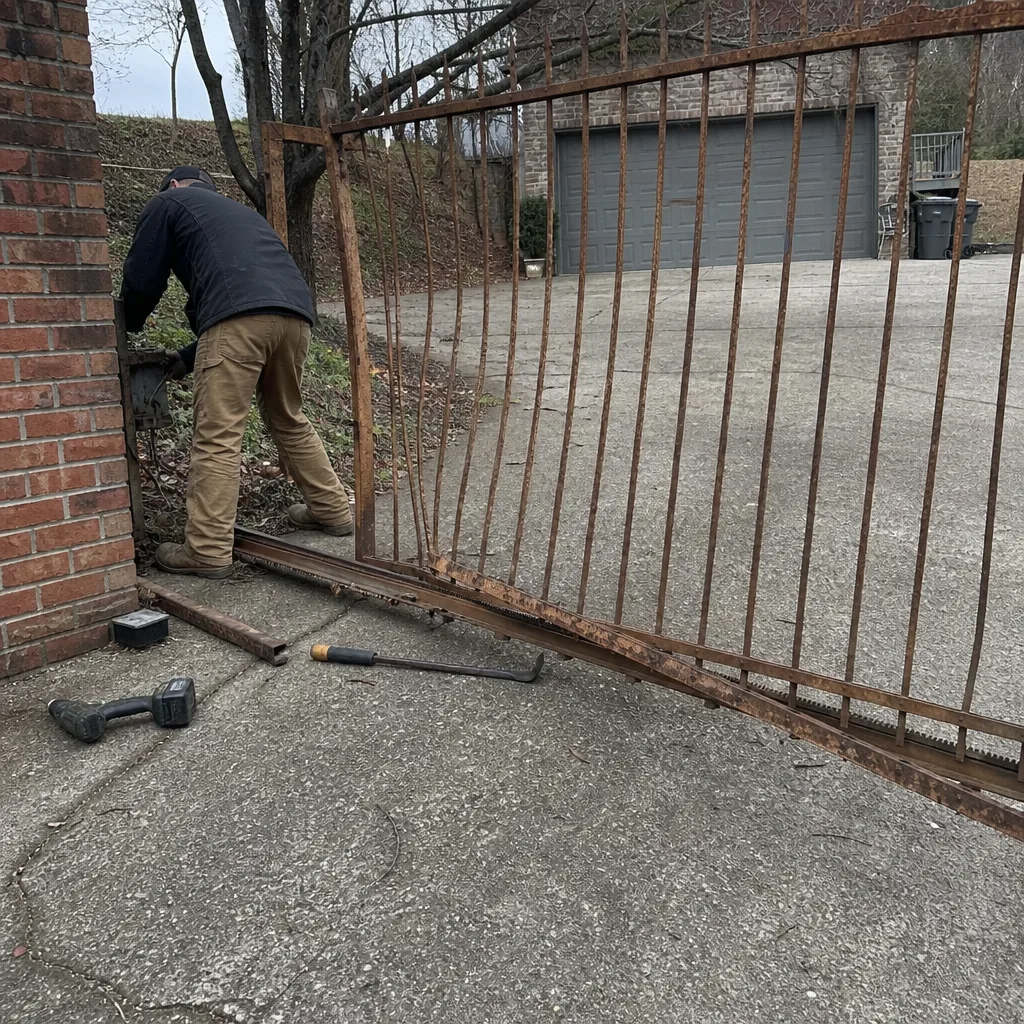 Before
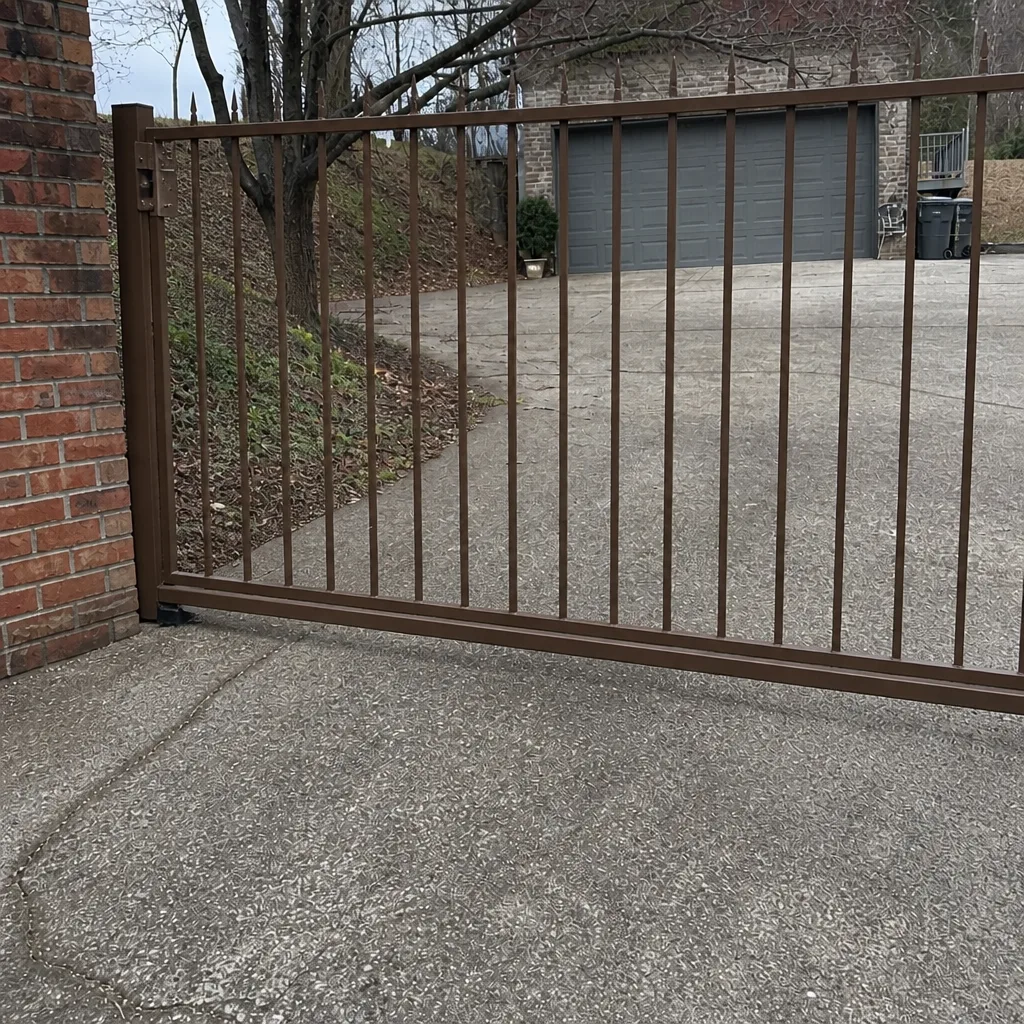 After
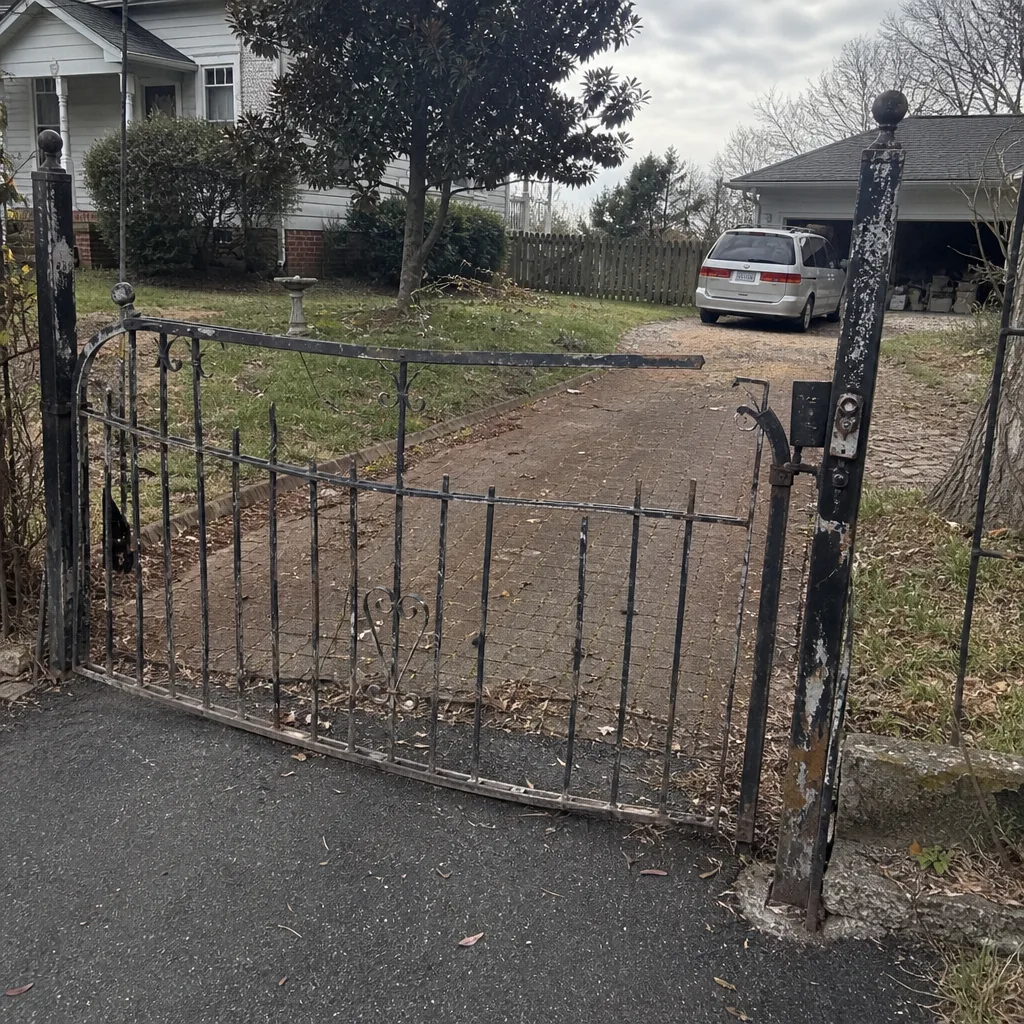 Before
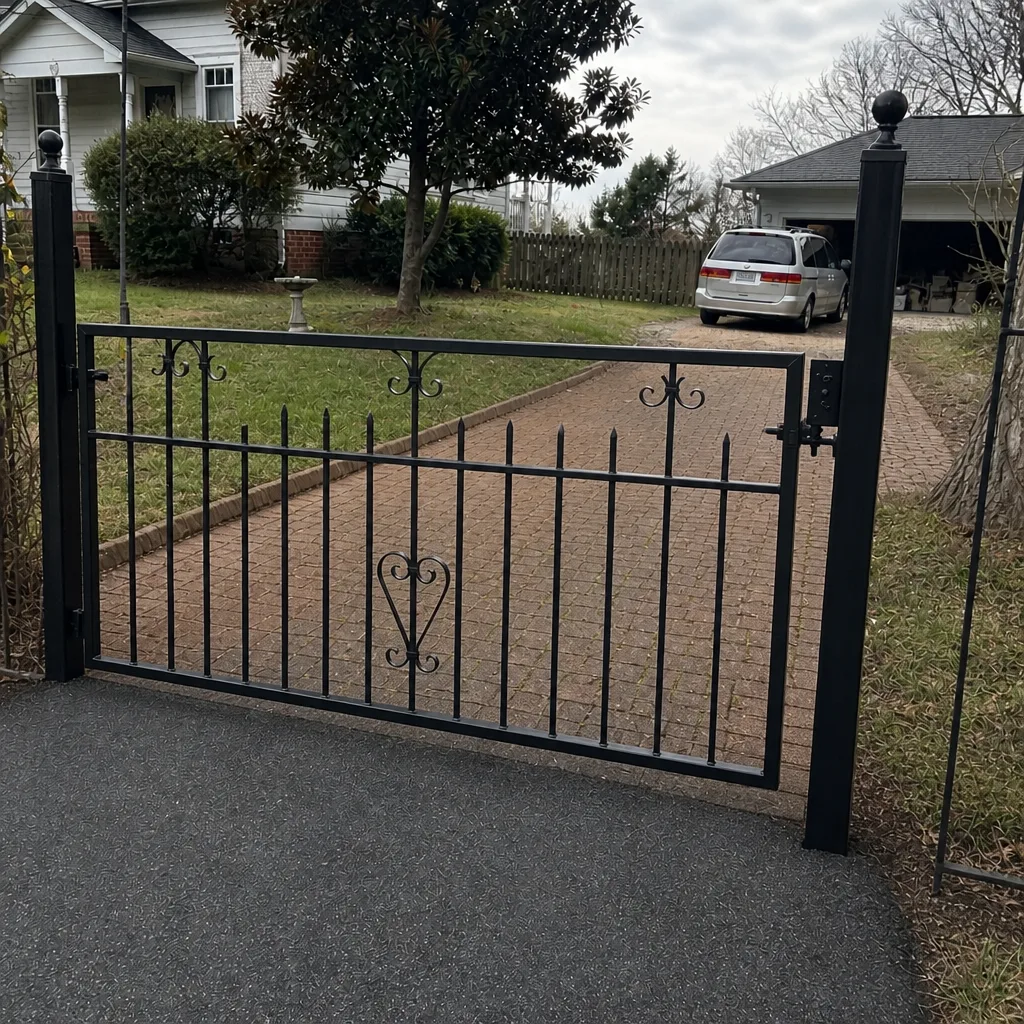 After
When to Call a Professional
Call a technician when the gate fails a safety test, drops or leaves its track, makes a new noise, or shows signs of an electrical fault. Those aren’t checklist items. They’re the point where a homeowner’s tool set stops being enough. Gate repair on a motorized system also touches mains voltage, heavy moving panels, and limits that stop the gate before it crushes something. A trained professional sets those, not a homeowner with a manual. If you’re already planning to replace rather than repair, a gate installation assessment is the right first step. Knoxville Gate Repair Pros offers free estimates in Knoxville. Call (855) 337-0860. We answer 24/7. Fast dispatch from 7am to 7pm, Sunday through Friday.
Frequently Asked Questions
Monthly clean-and-check, quarterly lubrication, and one annual deep inspection before storm season. That cadence fits Knoxville’s humidity, pollen, and storm pattern. It’s more frequent than the average manufacturer schedule because the local environment pushes harder on the system.
A fouled photoeye lens is the most likely cause, especially in spring. Pollen coats the lens and the gate thinks something is in the way. Wipe both lenses with a dry microfiber cloth and retest. If it still reverses, call (855) 337-0860 for an exact quote on a diagnosis. Estimates are free.
No, not without risking the warranty. Many manufacturers void coverage when the enclosure is opened by anyone other than a technician. Clean the ventilation slots from the outside with a dry brush. If the inside is fouled, that’s a professional job.
Lithium or silicone grease on hinges and pivot pins, a thin silicone spray on slide tracks, and purpose-made chain lubricant on chain drives. Never WD-40 as a lasting lubricant. It evaporates and leaves the joint dry.
Only if the cause is a dirty photoeye or a tripped breaker. Anything inside the DoorKing control box is a technician job. Commercial operators carry mains voltage, and the board is not a homeowner part. Don’t open the enclosure.
Yes, and it’s common on slopes and near the river corridor. East Tennessee’s wet-dry cycle moves soil seasonally, and a post set properly can still shift fractionally over time. If the gate is visibly out of plumb, that’s a re-set, not an adjustment.
The Bottom Line
Gate maintenance in Knoxville isn’t a manufacturer’s checklist copied from a drier climate. It’s a monthly wipe of the photoeyes, a quarterly lubrication pass on the parts humidity attacks, and an annual inspection before storm season. Pollen is the hidden killer. WD-40 is the hidden mistake. And the safety reverse test is the one you can’t skip, because it fails quietly. Know where your line is: lenses, tracks, hinges, and surface rust are yours. Safety devices, wiring, heavy panels, and control boards are ours. Whether your gate runs on Viking or Ghost Controls hardware, the routine is the same. Knoxville Gate Repair Pros works on the brand already on your gate. Call (855) 337-0860 for a free estimate.
Written by the team at Knoxville Gate Repair Pros.