
Last updated November 25, 2026
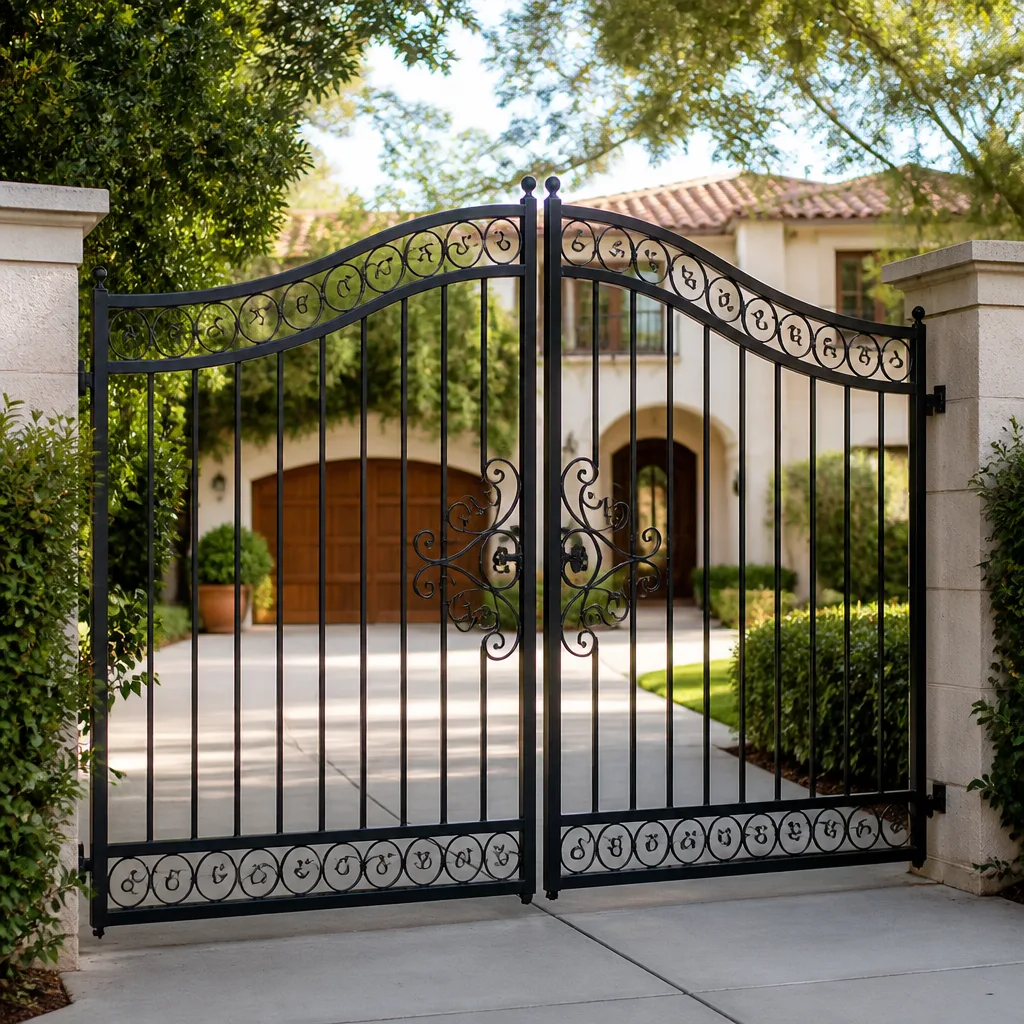 Wrought iron
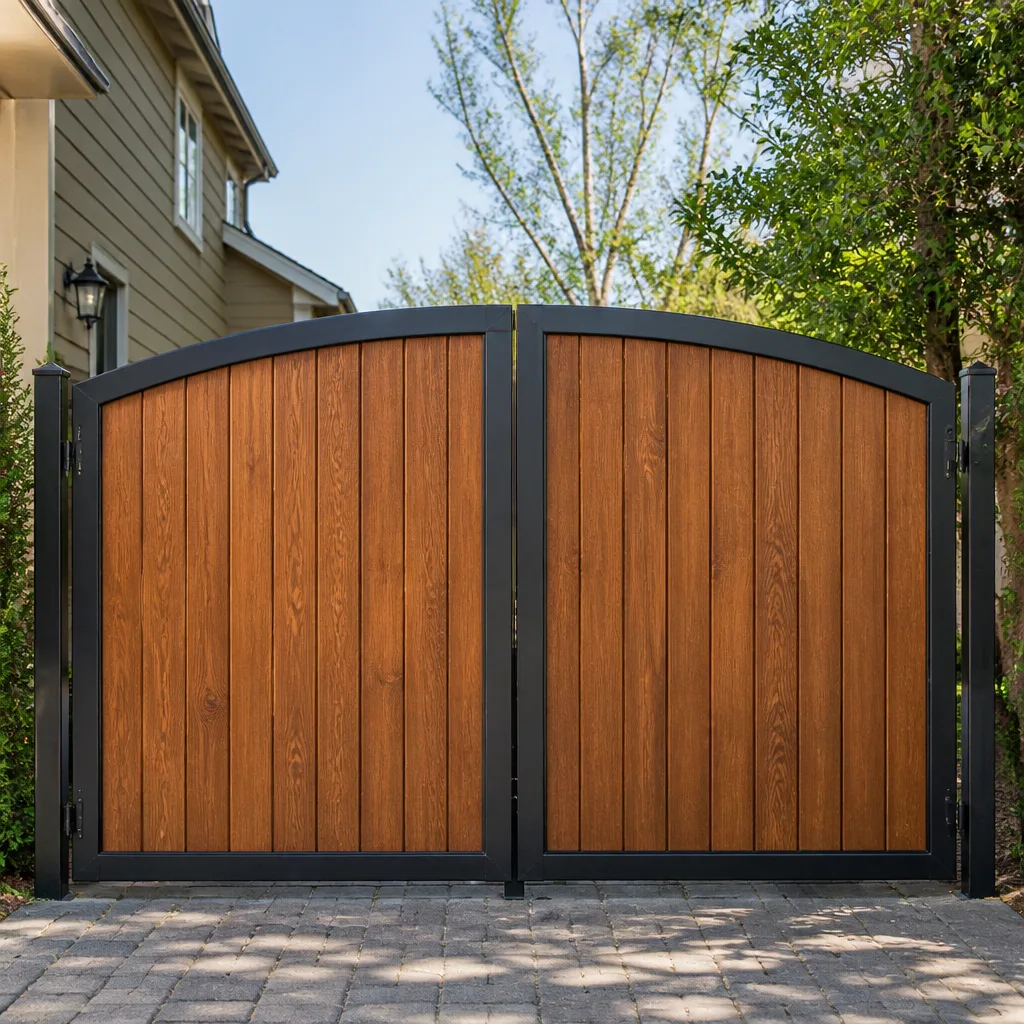 Wood & steel frame
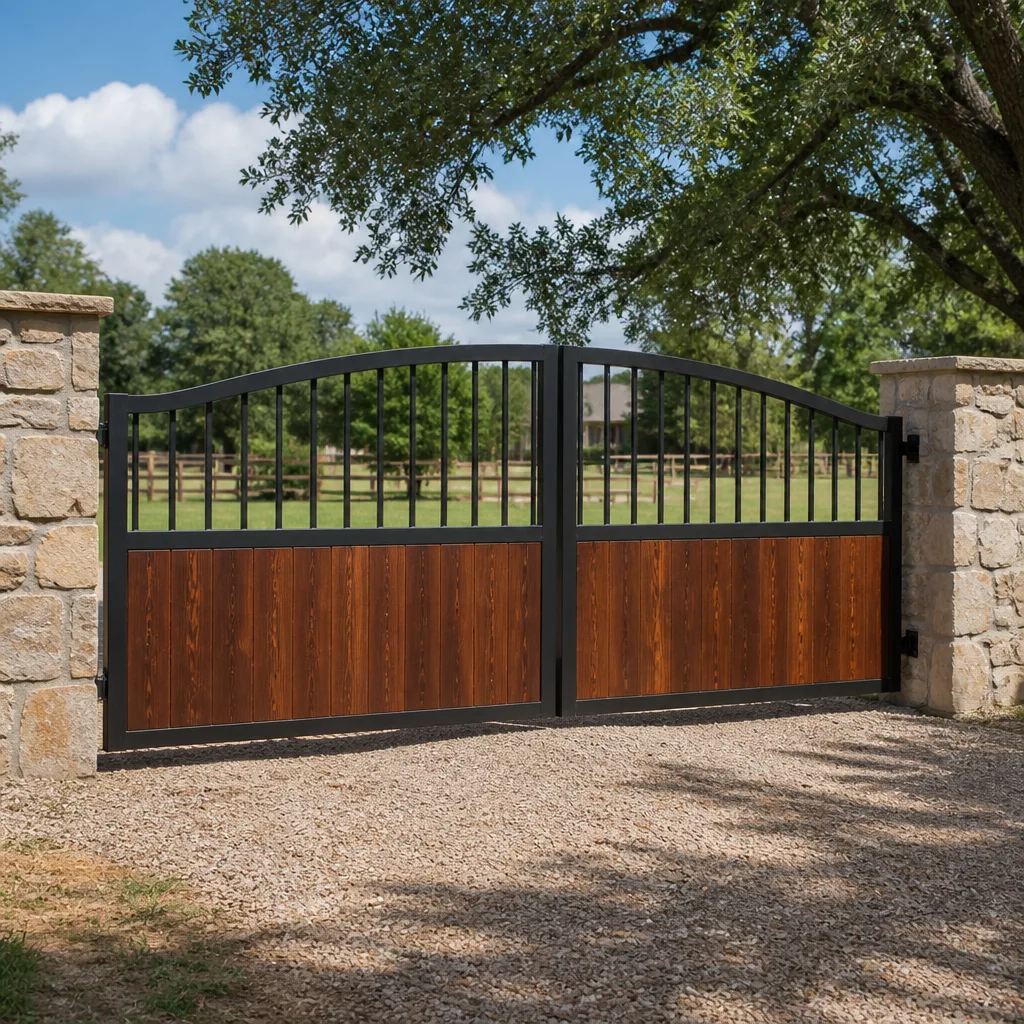 Farm & ranch
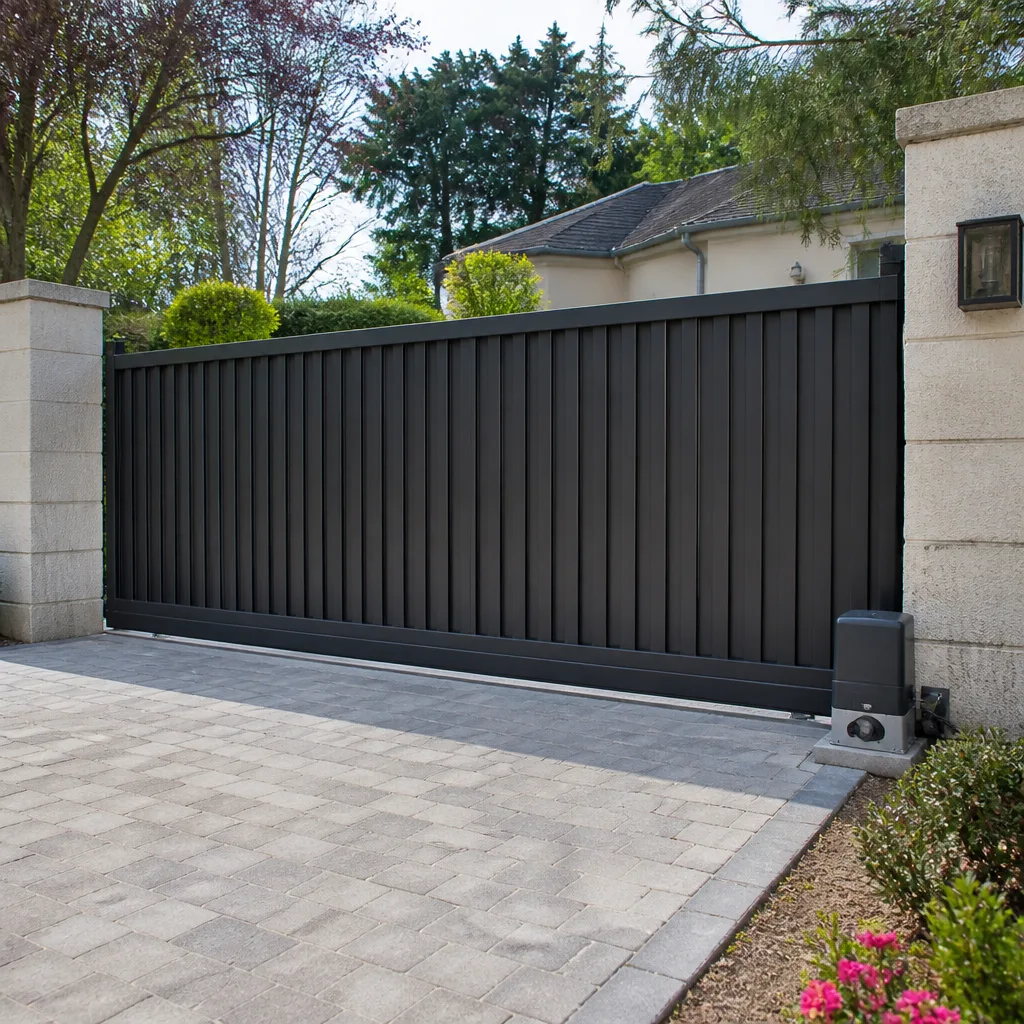 Sliding driveway gates
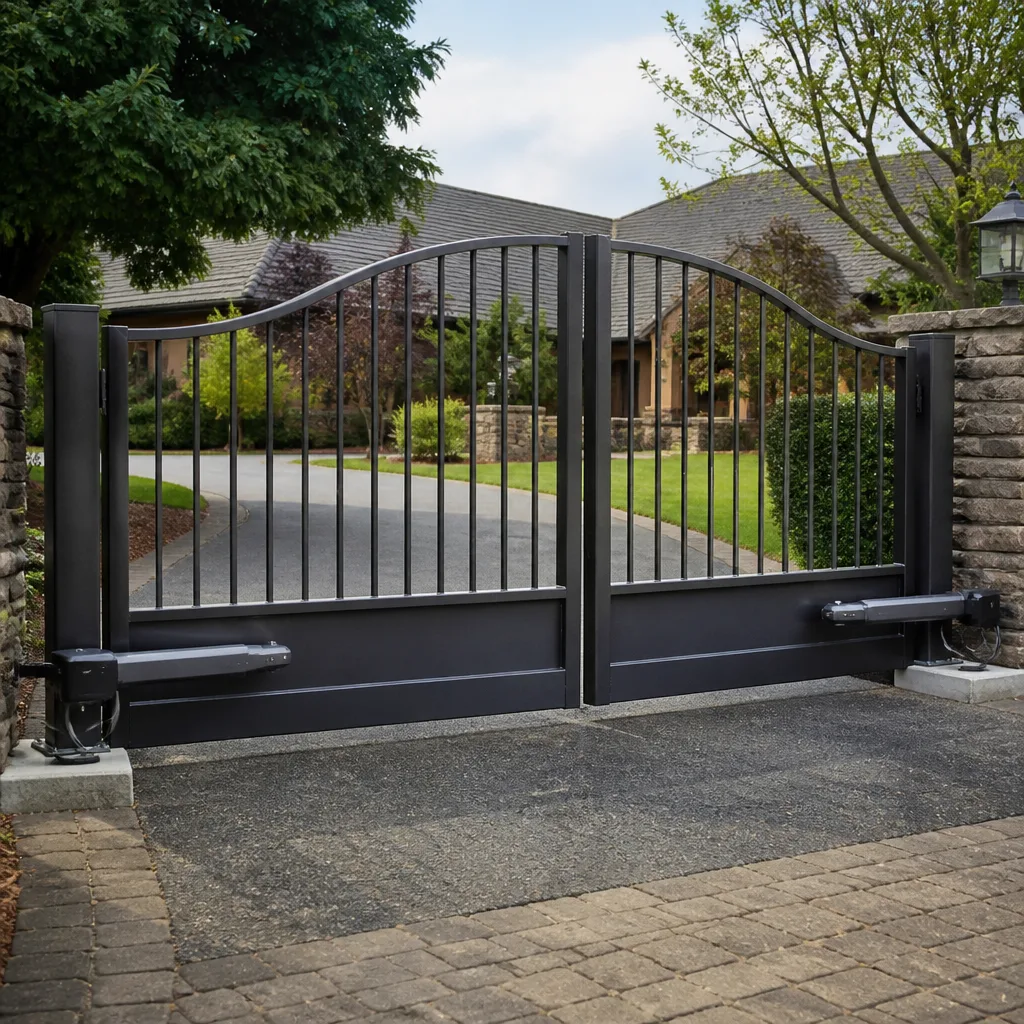 LiftMaster operators
Free on-site gate assessment - hinges, posts, and your LiftMaster or Nice gate operator checked before anything is quoted
The assessment is free and the quote is the invoice.
Get your free estimateGate Repair Maintenance Schedule: What to Do and When
Generic gate maintenance advice says lubricate every six months. That advice sends Knoxville homeowners out to grease a gate in January, when cold thickens lubricant into a grit trap that grinds drive gears faster than no lubrication at all. A gate is a machine living outdoors, and in Knoxville it lives through four genuinely different seasons: wet springs, humid summers, leaf-heavy falls, and winters with enough freeze-thaw cycling to work a concrete anchor loose. This guide gives you a calendar-locked, task-specific schedule for a Knoxville gate, plus the exact products each component needs, a battery backup test you can run before storm season, and a maintenance log that makes every future service visit smarter.
Quick Answer
An automated gate in Knoxville needs a short inspection every month, a component-specific service at each season change, and a full professional check once a year. The tasks change with the season: spring means clearing pollen from control boxes and drying out wiring, summer means checking UV-cracked wire insulation and rubber seals, fall means clearing leaf debris from ground tracks, and winter means inspecting concrete anchor footings for freeze-thaw movement. Match the task to the month and most repair calls never happen.
Styles & brands we work with
- Wrought iron
- Wood & steel frame
- Farm & ranch
- Sliding driveway gates
- LiftMaster operators
Table of Contents
- Why a Knoxville Gate Needs a Seasonal Schedule
- The Month-by-Month Task Calendar
- Lubricant Selection: The Right Product for Each Component
- Testing Your Battery Backup Before Storm Season
- Residential vs. Commercial: Where the Schedules Diverge
- How to Keep a Maintenance Log a Technician Can Use
- Safety: What You Should Never Touch Yourself
- Common Mistakes to Avoid
Why a Knoxville Gate Needs a Seasonal Schedule
Most gate maintenance checklists are written for a climate that doesn’t exist anywhere in particular. They treat the year as one continuous block of mild weather. Knoxville doesn’t work that way, and the failure pattern we see on service calls follows the calendar almost exactly.
Spring in Knoxville means pollen. It coats everything outdoors, and the place it does the most damage is inside control boxes and around terminal strips, where it mixes with humidity and forms a conductive film on circuit boards. Summer brings heat and strong UV, which degrades the plastic insulation on the wiring loom and hardens rubber safety-edge seals until they crack. Fall is leaf season, and leaves in a slide gate’s ground track act like sandpaper on the wheels every time the gate cycles. Winter brings freeze-thaw cycles that can lift and shift the concrete footing your gate posts are anchored into, which throws the gate out of plumb and puts strain on the operator.
That’s four distinct stress windows a year. A single “check it twice a year” routine misses three of them. A schedule keyed to Knoxville’s actual seasons catches each problem while it’s still a maintenance task instead of a repair. Our technicians have up to 13 years of experience, and the pattern holds across every brand we work on, from a residential Mighty Mule swing gate to a DoorKing system at a commercial entrance.
The Month-by-Month Task Calendar
Here’s the schedule we’d hand a Knoxville property owner. Monthly tasks take minutes. Seasonal tasks are the ones that prevent failures.
Monthly (Every Month, Year-Round)
- Walk the full travel path with the gate running slowly. Listen for grinding, clicking or a change in motor pitch.
- Look for debris, tools, toys or lawn clippings in the track or under a swing gate.
- Test the safety reversal feature by placing an object in the gate’s path. The gate should stop and reverse. If it doesn’t, stop using it and call for service.
- Check that the manual release works and that you know how to use it.
- Look at the gate’s alignment. A gate that has started to sag or drag is telling you something has shifted.
Spring (March to May): Pollen and Moisture
- Open the control box and check for pollen film, moisture or insect nests. Dry the interior if you find condensation.
- Inspect terminal strips and board connections for corrosion. Greenish deposits on a terminal mean moisture has been sitting there.
- Clear pollen and grit from the drive mechanism before adding any lubricant, or you’ll just grind it in.
- Check that the box’s gasket or seal is intact so spring rain stays out.
Summer (June to August): Heat and UV
- Run your hand along the exposed wiring loom and look for cracked, brittle or sun-chalked insulation.
- Inspect rubber safety-edge seals for hardening or splitting.
- Check the operator housing for heat buildup, especially on a gate that runs several times an hour.
- Clear vegetation that shades the operator but also traps heat and holds moisture against it.
Fall (September to November): Debris
- Clear leaves and twigs from the ground track of a slide gate before every wet stretch of weather.
- Check the track slot for packed grit and clean it out with a stiff brush.
- Clear leaves from around the operator and from the gate’s travel path.
- Inspect rack-and-pinion teeth for debris caught between them. Leaves and grit wear the teeth down.
Winter (December to February): Freeze-Thaw
- Inspect the concrete anchor footings and post bases for cracks, lifting or gaps where water can get in and freeze.
- Check that the gate is still plumb and level. A shifted footing shows up as a gate that drags or won’t latch.
- Use a cold-appropriate lubricant, not a heavy grease that thickens in low temperatures.
- Make sure the manual release still operates when the mechanism is cold.
Lubricant Selection: The Right Product for Each Component
The most common maintenance mistake we see is reaching for one can of grease and using it on everything. Each gate component has a different job, and the wrong lubricant accelerates wear instead of reducing it.
- Rack-and-pinion teeth: dry PTFE (polytetrafluoroethylene) lubricant. It coats the teeth without attracting grit. Grease on rack teeth collects dust and lawn debris that acts like grinding paste.
- Hinge pins and pivot points: lithium grease. These are high-load, low-speed joints that need a persistent film. Clean the pin first, then apply a thin coat.
- Rubber seals and safety-edge strips: silicone spray. It keeps rubber supple against UV and cold without degrading it. Petroleum-based products can soften and swell rubber over time.
- Chains (where a chain drive is used): a chain-specific lubricant, applied sparingly and wiped down so it doesn’t fling off onto the gate and leave a mess.
Why does this matter more in Knoxville than in a mild climate? Because spring pollen and fall leaf grit are both airborne and both stick to wet lubricant. A greased rack in spring turns into a pollen magnet. And in January, a thick grease stiffens in the cold and loads the drive gears with a film of grit that grinds them a little more with every cycle. Right product, right component, every time.
Testing Your Battery Backup Before Storm Season
Backup batteries fail silently. They sit in the operator, hold a charge, and give no sign that their capacity has dropped until the power goes out and the gate won’t move. In Knoxville, storm season means outages, and an access gate that won’t open for residents or emergency vehicles is a real problem. Test the battery before storm season, not after the power goes out.
Here’s the load-test protocol we recommend. It verifies actual runtime, not just whether the battery holds a reading.
- Confirm the battery is connected and charged. Check the operator’s status indicator for a fault or low-battery warning.
- Note the current backup runtime setting. Many operators allow you to set how long the gate keeps cycling on battery. Know yours.
- Simulate a power loss safely. Trip the dedicated circuit breaker to the operator, or use the operator’s power-loss test function if it has one.
- Cycle the gate the expected number of times for your setting. Time how long it takes before the gate slows noticeably or the low-battery warning appears.
- Compare the result to the full rated runtime. If the gate reaches a fraction of the expected cycles, the battery is failing.
- Restore power and reset the operator. Check the status indicator again for any fault code.
A battery that’s dropping capacity will usually cycle the gate just fine for the first few openings and fail partway through. That’s why the full test matters. On systems with an access controller, like a DoorKing unit, battery failure can also knock access credentials offline, so the test is as much about access as it is about the motor.
Residential vs. Commercial: Where the Schedules Diverge
A residential driveway gate might cycle ten to thirty times a day. A commercial or HOA entrance can cycle hundreds of times a day, and that changes the maintenance math entirely. A residential schedule based on the calendar works. A commercial schedule has to be based on cycles.
High-cycle commercial operators wear on a per-thousand-cycle basis. Every thousand cycles, the drive components, the lubricant film, and the fasteners all experience a predictable amount of wear. That’s why commercial maintenance intervals are tracked in cycles rather than months.
- Residential (low-cycle): task schedule driven by season and calendar, monthly visual inspections, annual professional check.
- Commercial (high-cycle): task schedule driven by the operator’s cycle counter, with component inspections per thousand cycles and a professional check tied to usage.
- Access control systems: commercial entrances with a DoorKing control panel need periodic checks of the credential database, keypad function, and intercom or camera integration, which residential gate owners usually don’t have.
- Emergency-vehicle access: commercial and HOA entrances need the manual override and fire-access function verified on a regular basis, not just at an annual check.
If you’re managing an HOA or commercial property, the first step is to find the operator’s cycle counter and start logging it. That counter is your maintenance clock. Residential gate owners can stick to the seasonal calendar above; commercial managers should hand their operator model and cycle count to a technician so the interval is calculated for that specific system. Full-scope coverage means we look at the motor, the access panel, and the physical gate as one system, which matters most on high-cycle commercial gates where a small wear problem compounds fast.
How to Keep a Maintenance Log a Technician Can Use
A maintenance log is only useful if it captures the right details. “Checked the gate, seemed fine” tells a technician nothing. What a technician needs is a pattern: which components you serviced, what you found, and what changed since last time.
Here’s what a useful log entry should include:
- Date and cycle count (for commercial gates, the current reading; for residential, the date is enough).
- Task performed: what you lubricated, cleaned, or inspected.
- Observation: any change in noise, speed, alignment, or warning indicator, even minor ones.
- Product used: which lubricant went where, so you don’t mix incompatible products.
- Any anomaly: a gate that dragged once, a light that flickered, a warning that appeared and cleared.
Why does this matter so much? Because a technician can spot a deviation pattern that a single visit can’t. If your log shows a gate slowing over three entries, or a low-battery warning appearing twice, that’s a trend pointing at a specific component. Brands like Elite or Ghost Controls have their own fault indicators, and a log gives the technician a history to interpret them.
We can work with whatever system you keep, paper or digital. When you call for gate repair, a clean log turns a diagnosis from a process of elimination into a targeted fix.
Safety: What You Should Never Touch Yourself
There are parts of a gate system that a homeowner should never service. High-voltage wiring, the electrical panel feeding the operator, and the operator’s internal high-voltage components are dangerous and should only be handled by a trained professional. A gate’s operator is a powered machine, and an electrified gate has both electrical risk and the crush risk of a heavy panel. Safety-edge seals and photo-eyes are there to prevent crushing, and if they’re not working, the gate is unsafe to operate.
Mechanical panels can be heavy and can swing or slide with force. If a gate is out of alignment, off its track, or moving on its own, stop using it and keep people clear. The right maintenance is inspection and early reporting, not opening a control box and working on live wiring. When something crosses from cleaning and checking into electrical work or a physical repair, it’s time for a professional.
This is why an annual professional check matters. We handle the parts you shouldn’t: the operator internals, the gate motor & opener service, and the gate installation work if the gate has shifted enough to need adjustment. Full-ecosystem coverage, from the motor to the access panel, means nothing falls through the gaps between a mechanical fix and an electrical one.
Common Mistakes to Avoid
- Greasing everything with the same product. Heavy grease on rack teeth in a Knoxville spring collects pollen and grit that grinds the drive gears. Match the lubricant to the component.
- Skipping the pre-storm-season battery test. A backup battery that passes a quick check can still fail partway through a real outage. Run the full load test before storm season.
- Ignoring fall leaves in the ground track. Leaves and twigs in a slide gate’s track act like sandpaper on the wheels. Clear the track before wet weather, not after the gate starts dragging.
- Treating a shifted gate as a motor problem. After a Knoxville winter, freeze-thaw movement of the concrete footing can throw a gate out of plumb. That’s a footing issue, not an operator issue, and it needs the right diagnosis.
- Using a residential schedule on a commercial gate. A high-cycle commercial gate wears on a per-thousand-cycle basis. Calendar-based maintenance misses the wear points entirely.
- Keeping no log at all. Without a record, a technician can’t spot a slow degradation pattern. A simple log turns guesswork into a targeted repair.
- Servicing electrical components yourself. The operator’s high-voltage wiring and internal components are dangerous. Inspection and reporting are yours; electrical work is a professional’s job.
See the difference
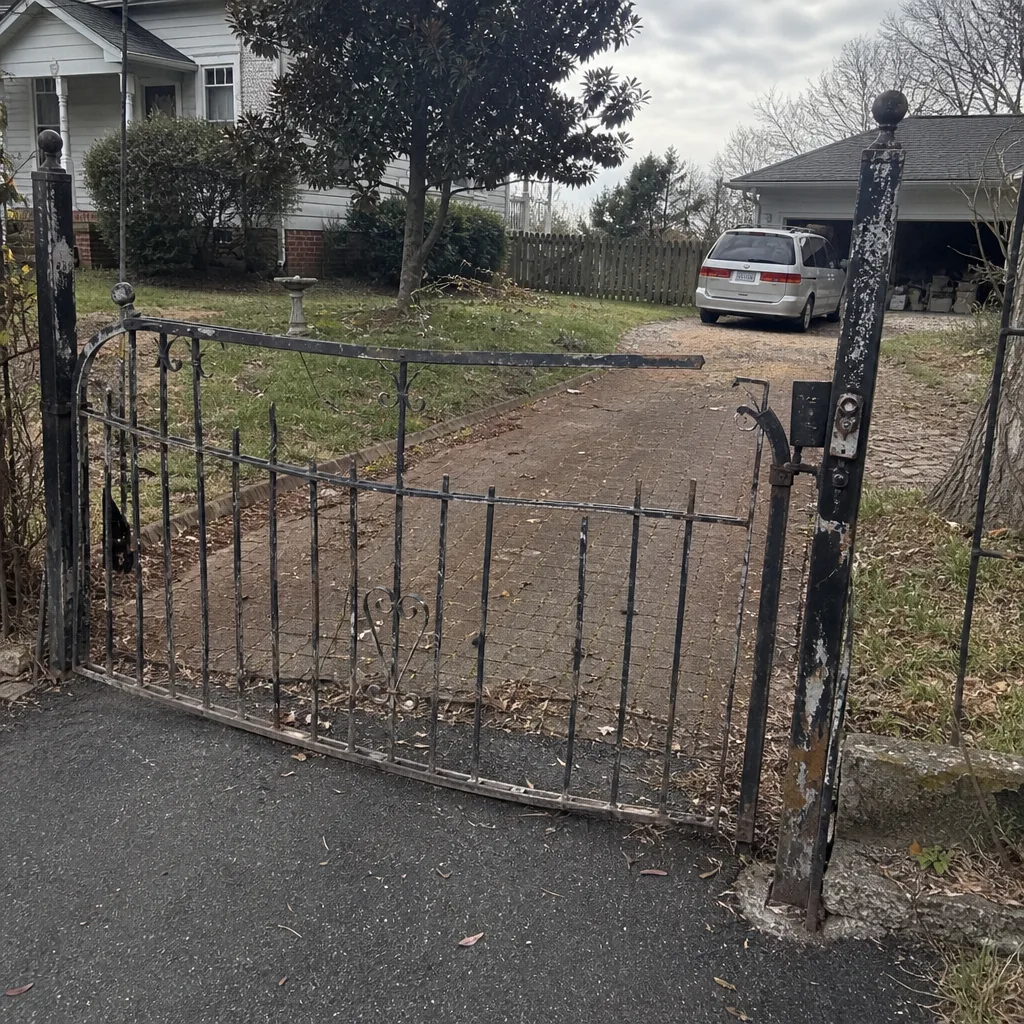
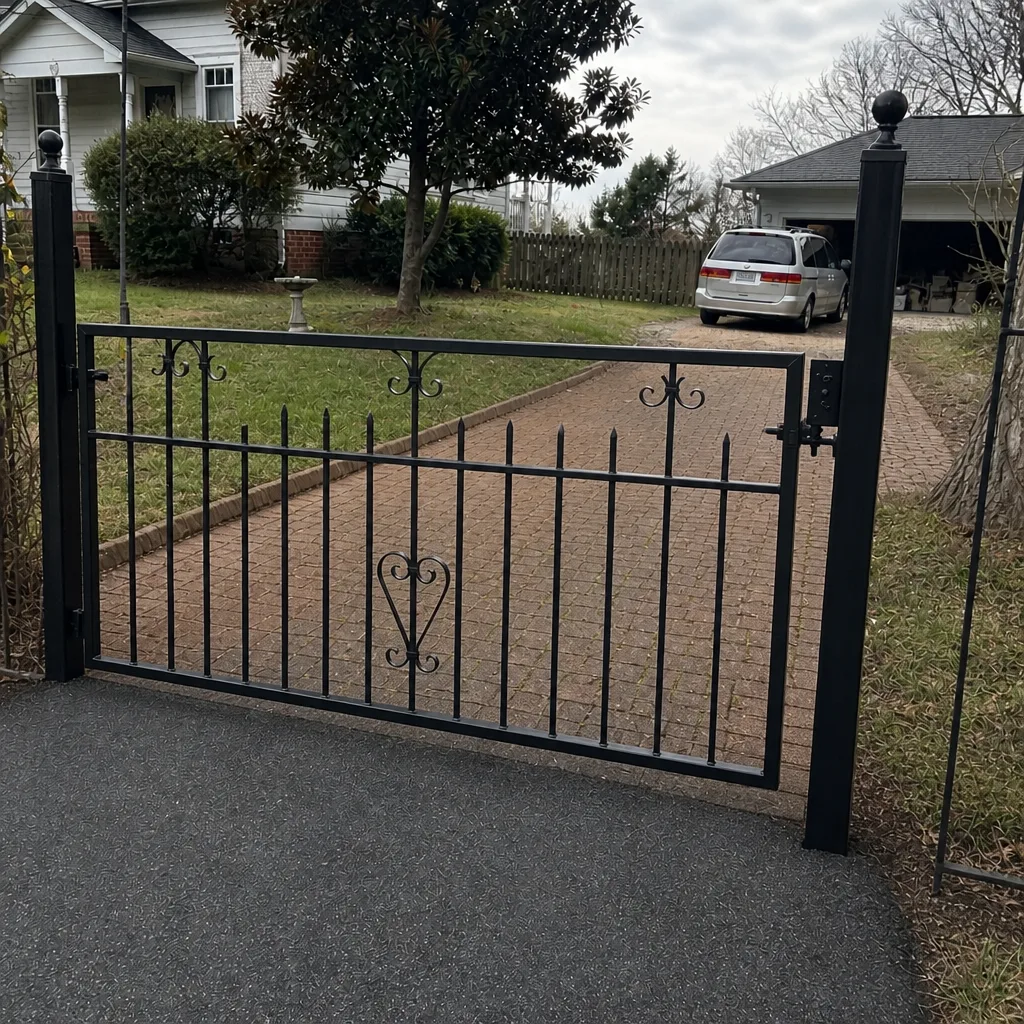
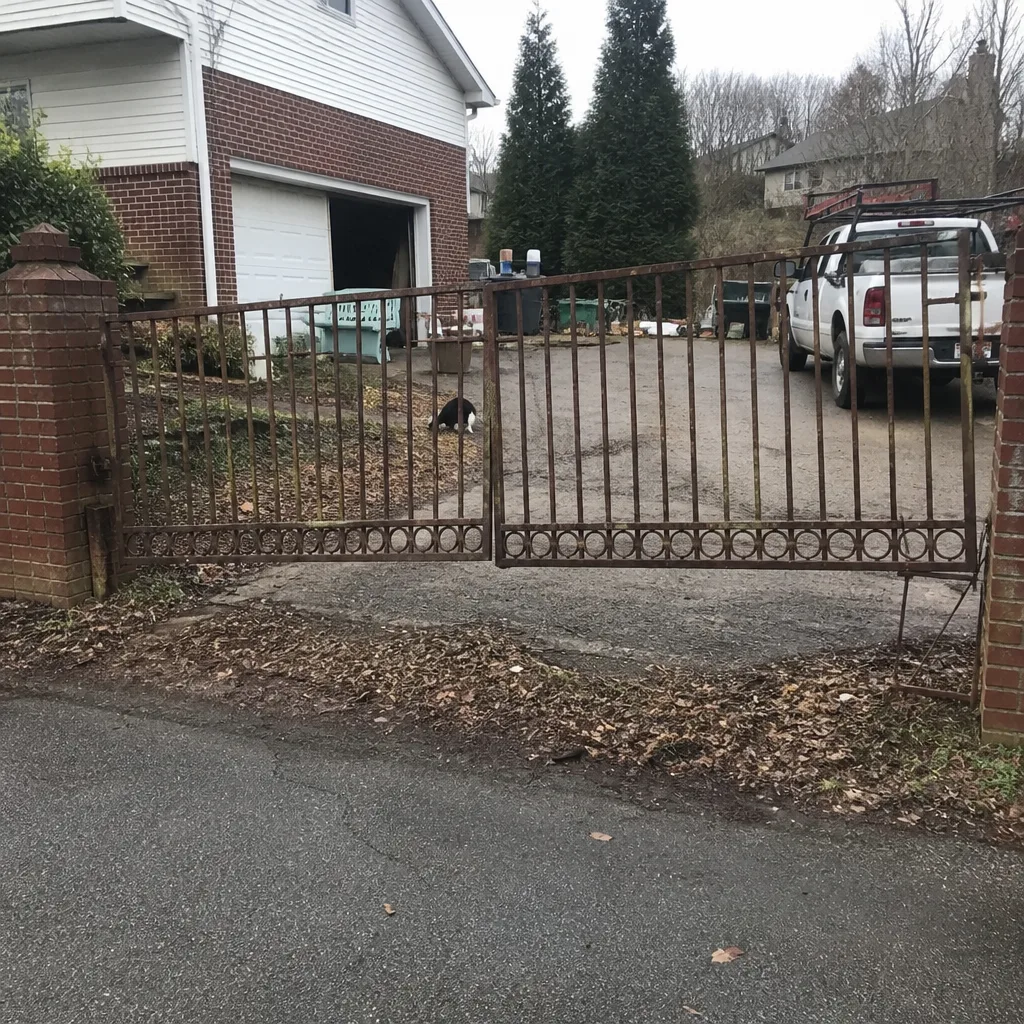 Before
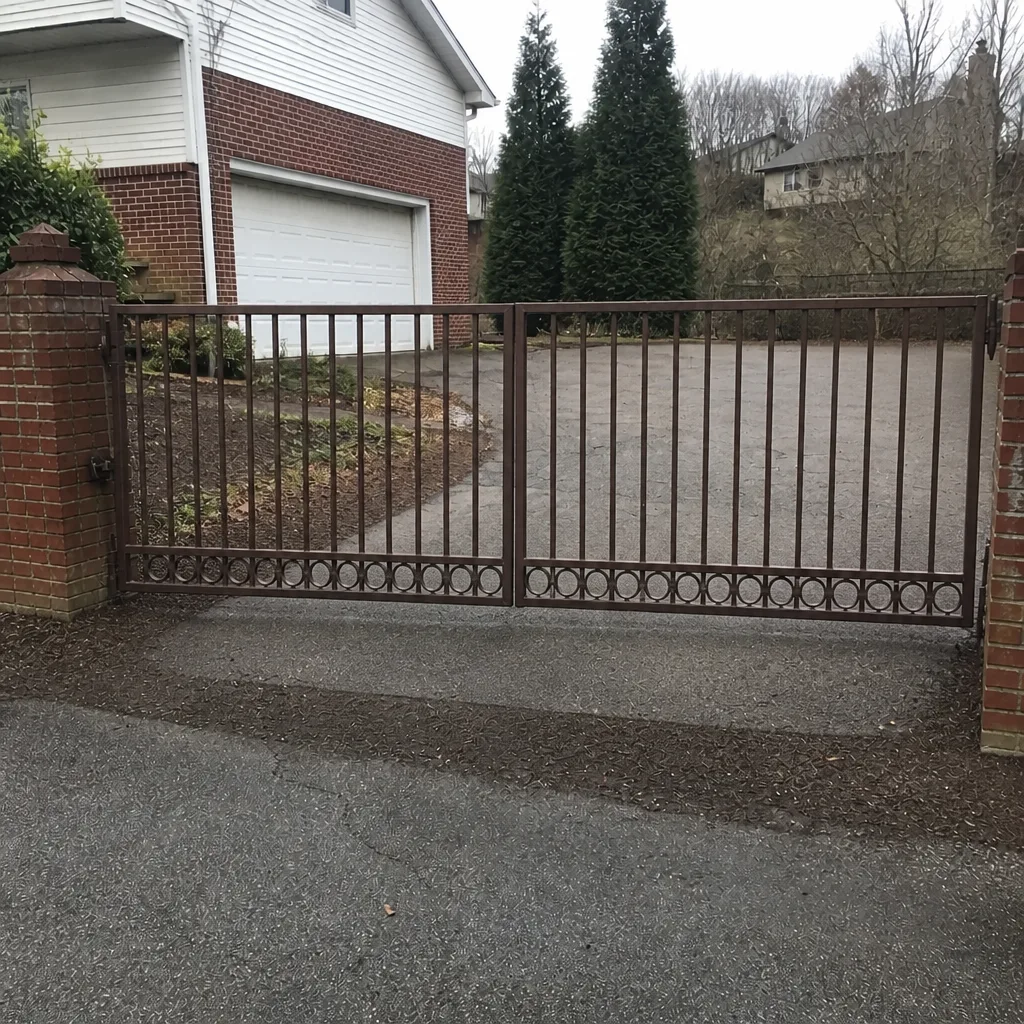 After
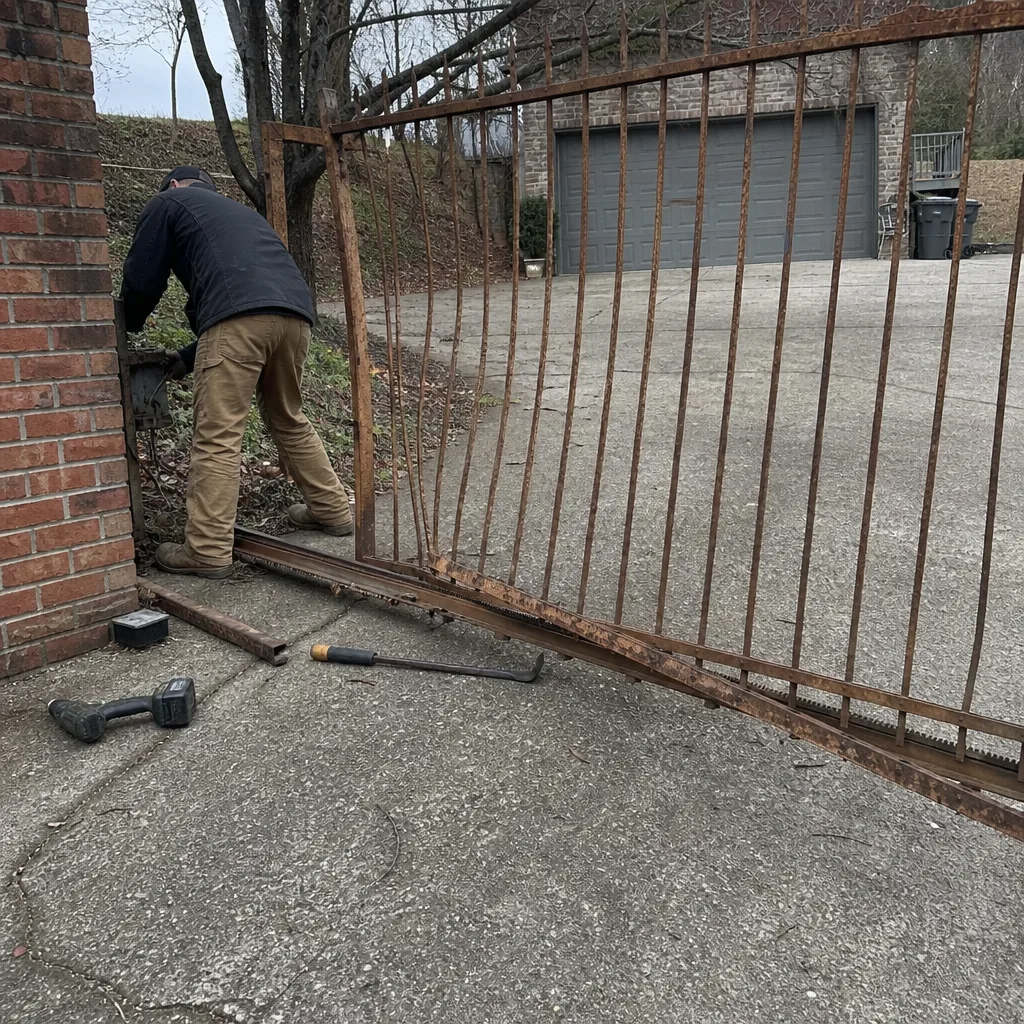 Before
 After
 Before
 After
When to Call a Professional
Some tasks belong in your monthly routine. Others belong on a technician’s schedule. Call for a professional when the safety reversal feature fails to reverse the gate, when the gate moves on its own or won’t stay latched, when you hear grinding or clicking from the operator, when the gate has dropped out of plumb or come off its track, or when the operator throws a fault indicator you can’t clear. Call before storm season if you’re not confident testing the battery, and call at the first sign of cracked wiring insulation or a corroded control panel.
Our technicians have up to 13 years of experience across nine brands, from a residential Mighty Mule to a commercial DoorKing system, and we work on the brand already on your gate rather than sending you to a brand-specific center. Knoxville Gate Repair Pros offers free estimates in Knoxville. Call (855) 337-0860 for a free estimate. We answer 24/7. Fast dispatch from 7am to 7pm, Sunday through Friday.
Frequently Asked Questions
An automated gate in Knoxville needs a short inspection every month, component-specific service at each season change, and a full professional check once a year. The season changes matter because the tasks differ: spring targets pollen in the control box, summer targets UV damage to wiring and seals, fall targets leaves in the track, and winter targets freeze-thaw movement of the footing. Call (855) 337-0860 for an exact quote on a full service visit; estimates are free.
Use dry PTFE lubricant on rack-and-pinion teeth, lithium grease on hinge pins, and silicone spray on rubber seals. Each gate component has a different job, and the wrong product accelerates wear. Grease on rack teeth collects grit; silicone keeps rubber supple against UV. If you’re not sure which parts need lubricant, call (855) 337-0860.
Trip the operator’s dedicated breaker, cycle the gate the expected number of times, and time how long it runs before it slows or the low-battery warning appears. A battery that cycles fine for the first few openings and fails partway through is on its way out. Test before Knoxville’s storm season, not after the power goes out. Call (855) 337-0860 if the test shows a drop in runtime; estimates are free.
Freeze-thaw movement of the concrete anchor footing is the usual culprit. When water gets into a crack in the footing and freezes, it lifts and shifts the post, which throws the gate out of plumb and puts strain on the operator. A gate that drags or won’t latch after winter needs a footing inspection, not just a motor check. Call (855) 337-0860 for a free estimate.
Yes. A high-cycle commercial or HOA gate wears on a per-thousand-cycle basis, so its maintenance is tracked by the operator’s cycle counter rather than the calendar. Commercial entrances also need periodic checks of access control functions, credential databases, and emergency-vehicle access. Call (855) 337-0860 to have the interval calculated for your specific system; estimates are free.
You can handle cleaning, inspection, lubrication, and the battery test, but you should never touch the operator’s high-voltage wiring or open a live control panel. An electrified gate has both electrical and crush risk, and a failing safety-edge seal is unsafe. Keep it to inspection and reporting, and call a professional for anything electrical or structural. Call (855) 337-0860 for a free estimate.
The Bottom Line
A gate stays out of the repair shop when its maintenance schedule matches the climate it lives in. In Knoxville that means a spring pollen and moisture check, a summer UV and heat inspection, a fall track-clearing routine, and a winter freeze-thaw footing check, stitched together by a short monthly walk-around. Use the right lubricant for each component, test the battery before storm season, switch to a cycle-based schedule on commercial gates, and keep a log a technician can read. Do that and the emergency callouts mostly stop. When you need a specialist, Knoxville Gate Repair Pros covers repair, installation, motor and opener service, access control, and electric gate repair, from residential driveway gates to commercial systems.
Call (855) 337-0860 for a free estimate. We answer 24/7. Fast dispatch from 7am to 7pm, Sunday through Friday. Learn more at Knoxville Gate Repair Pros.
Written by the team at Knoxville Gate Repair Pros.