
Last updated November 25, 2026
 Wrought iron
 Wood & steel frame
 Farm & ranch
 Sliding driveway gates
 LiftMaster operators
Free on-site gate assessment - hinges, posts, and your LiftMaster or Nice gate operator checked before anything is quoted
The assessment is free and the quote is the invoice.
Get your free estimateDIY vs Professional Gate Repair: The Knoxville Homeowner’s Decision Guide
Replacing the battery in your gate remote is a DIY job. Adjusting a limit switch inside a commercial slide gate operator yourself can void the UL 325 entrapment certification on that operator and shift legal liability for a gate-related injury onto you, the property owner. Those two tasks look equally simple to a homeowner standing at the control panel. They are legally and financially worlds apart. Here in Knoxville, where automatic driveway gates sit on wooded lots and commercial slide gates guard warehouse lots across the valley, the DIY-or-call question almost never turns on skill level. It turns on which component is broken. This guide gives you the partition: what you can safely handle yourself, what you should never touch, and why the economics favor a specialist for the rest.
Quick Answer
DIY gate repair is appropriate for simple, low-voltage items you can reach safely with the power off: remote reprogramming, battery replacement, cleaning the photo-eyes, using the manual release, and clearing debris from the track. Anything that touches the control board, limit switches, electrical connections, entrapment sensors, or structural anchor points belongs to a trained technician, because those parts carry high-voltage or stored-force hazards, affect UL 325 safety certification, and can void your operator warranty. In Knoxville, the smartest split is to handle the cosmetic and battery-level fixes yourself and bring in a specialist for anything electrical or structural.
Styles & brands we work with
- Wrought iron
- Wood & steel frame
- Farm & ranch
- Sliding driveway gates
- LiftMaster operators
Table of Contents
- What’s Actually Safe to DIY on a Knoxville Gate
- The Professional-Only Boundary: What Never to Touch
- Tennessee Electrical Rules and DIY Gate Wiring
- The Warranty Math: Why a Voided Operator Costs More
- The Repair Decision Tree: Symptom to Recommendation
- Why Knoxville Conditions Change the DIY Math
- For Property Managers and HOA Directors
- Common Mistakes to Avoid
What’s Actually Safe to DIY on a Knoxville Gate
Some gate maintenance genuinely belongs in your hands. These jobs are low-risk, don’t touch the electrical system, and don’t require any adjustment to the operator’s programmed logic. Doing them yourself keeps the gate running and doesn’t put anyone or the warranty at risk.
Here’s the short list of what you can reasonably handle:
- Remote reprogramming: Adding or removing a remote from the receiver is a routine button sequence in your operator manual. It doesn’t touch the control board’s safety logic and is easy to reverse. If you’re working with a LiftMaster or Linear receiver, the manual walks you through it in a few minutes.
- Battery replacement: Remote batteries and the backup battery inside many operators are user-serviceable items. Replace them with the same voltage and type specified in the manual.
- Photo-eye cleaning: Dust and spider webs on the safety sensors trip nuisance reversals. A soft cloth and a check that the lenses line up is safe work with the gate held open and the power off.
- Manual release operation: Every automatic gate has a manual release so you can move the gate by hand during a power outage. Learning how yours works is worth doing before you need it.
- Basic track and debris clearing: Leaves, gravel, and winter grit in a slide gate’s track cause drag and false obstructions. Clearing them by hand is safe and prevents wear.
Do these with the power off at the breaker, not just the remote. If a “simple” fix requires opening the operator housing or reaching into the control box, stop. That’s the line. The homeowner can safely do the battery-and-cleaning tier in Knoxville; everything past it moves into professional territory. And if a repair turns out to be bigger than you expected, our gate repair service covers every component of the system.
The Professional-Only Boundary: What Never to Touch
This is the part of the guide that matters most. Each item below crosses from maintenance into work that carries real hazard, affects safety certification, or breaks the warranty. The reason matters as much as the rule, so here’s the specific reason each one is off-limits to a homeowner.
- Control board work: The board holds the operator’s logic, including the timing and reversal behavior that keep the gate from crushing a person or vehicle. A stray touch or static zap can scramble those settings, and reprogramming them correctly requires the manufacturer’s procedure, not guesswork.
- Limit switches: These tell the operator where the gate stops. Nudge one and the gate can over-travel, slam, or reverse mid-cycle. On a commercial slide gate, altering the limits is exactly the kind of adjustment that voids the UL 325 entrapment certification.
- Electrical connections: Gate operators run on line voltage at the supply and on low-voltage at the controls. Both can hurt you, and a wrong connection can damage the board or the motor. This crosses into licensed electrical work in Tennessee, covered below.
- Entrapment protection sensors: Photo-eyes, safety edges, and loop detectors are the gate’s bodyguard. Moving, bypassing, or rewiring them removes the safety layer the code and the certification depend on. Never disable one to “make the gate work.”
- Structural anchor points: The hinges, posts, and mounting brackets carry the full weight and swing force of the gate. A loosened or re-drilled anchor can fail under load with a gate in motion. That’s a crush and pinch hazard, not a weekend project.
In our experience, most gate failures that land in the professional-only column started as a small DIY adjustment someone made to “quiet” the gate. Quieting it usually meant disabling a safety feature. If your gate won’t stay closed, reverses randomly, or stops short, whether it’s a FAAC, BFT, or another brand, that’s a diagnostic job, and it’s part of what we handle under full gate motor & opener service.
Tennessee Electrical Rules and DIY Gate Wiring
Tennessee licenses electrical contractors, and the work they cover includes the power supply and wiring for equipment like automatic gate operators. A homeowner can generally work on their own single-family home in limited ways, but that homeowner exemption has an edge, and gate wiring sits close to it. The safe reading: running new power, extending a circuit, or making connections inside the operator’s line-voltage side is licensed electrician territory, not homeowner territory.
Here’s what that means in practice for a Knoxville gate:
- Low-voltage control wiring (remote receivers, safety sensors) is the part a confident homeowner is most likely to touch safely, and even here the adjustment risks the warranty and the safety logic.
- Line-voltage supply wiring to the operator is where the licensing line is clearest. New circuits, panel connections, and conduit runs to a gate post belong to a licensed electrician.
- Multi-family and commercial gate wiring is fully in the licensed-and-permitted world, with no homeowner exemption to lean on.
Permits vary by jurisdiction, so the reliable move is to ask the city or county building department about the specific job before you start. We’re careful to point you to that rather than guess at a code section. In a market like Knoxville with a growing mix of residential subdivisions and commercial lots, getting the electrical side right matters for insurance and resale as much as for safety. For anything on the electrical side, a call to a specialist is cheaper than a mistake.
The Warranty Math: Why a Voided Operator Costs More
Operator warranties commonly exclude damage from unauthorized adjustments and from electrical work done by anyone other than a qualified technician. LiftMaster and Viking both build that kind of language into their coverage. The math is simple once you see it: the technician visit you avoided is small compared to the cost of replacing an operator the manufacturer won’t stand behind because a homeowner or an unqualified handyman touched the wrong thing.
Consider the tradeoff as a list of outcomes:
- You handle a battery or remote reset: zero warranty risk, zero cost, done in minutes.
- You adjust a limit switch and the gate over-travels: potential board and motor damage the warranty may not cover, plus a callback to fix the original problem.
- You rewire a sensor to stop a nuisance reversal: a safety feature disabled, a warranty exposure, and a liability you didn’t have before.
- You call a specialist for the electrical side: one diagnostic visit, the fix done right, the warranty intact.
For owners of high-end operators, the replacement exposure dwarfs the cost of a service visit several times over. That’s why we treat gate installation and repair the same way: get the adjustment right the first time so the hardware keeps its coverage. It also pays to know your operator’s brand. We work on the brand already on your gate, from the common residential models to the commercial-grade operators.
The Repair Decision Tree: Symptom to Recommendation
Find your symptom below. The recommendation tells you whether to try it yourself or call a professional, and the reason explains why. This is the fastest way to sort a gate failure.
- Gate won’t respond to the remote, but the keypad works: DIY. The remote likely needs a battery or reprogramming. Check the battery first, then follow the manual’s pairing steps.
- Gate reverses for no reason right after closing: Professional. That’s almost always a photo-eye alignment or a sensor fault. Cleaning the lenses is safe DIY; re-aligning or rewiring the sensor is not.
- Gate moves but stops short of fully open or closed: Professional. This points to limit switches, and adjusting them risks both the safety certification and the warranty.
- Grinding, squealing, or a smell of hot wiring from the operator: Professional, and stop using the gate. Motor or electrical trouble plus heat means a hazard. Cut power and call.
- Gate drags or jumps on a slide track: DIY first. Clear debris and check the track for obstruction. If it still drags, the rollers or track need professional service.
- Gate sags, rubs, or leans at the hinges or posts: Professional. Structural anchor points hold the gate’s weight; a failing hinge or post is a crush hazard.
- Keypad, intercom, or access panel won’t grant entry: Professional for access-control wiring. Try the obvious: fresh keypad batteries, a known-good code, a power cycle. Then call.
The pattern is consistent: remote and battery issues are yours; sensor, limit, motor, electrical, and structural issues are ours. When you’re not sure, describe the symptom to a specialist and let the diagnosis decide. For homeowners in Knoxville, that call saves trial-and-error on the electrical side.
Why Knoxville Conditions Change the DIY Math
East Tennessee weather is hard on gates. Knoxville’s humid summers swell wood and stress wiring connections, and its freeze-and-thaw winters work loose posts and shift gate alignment every season. Spring rains push grit and debris into slide tracks. Those are exactly the conditions that cause the nuisance failures homeowners most want to fix themselves, and some of them are genuinely DIY.
Here’s how the seasonal pattern breaks down for a Knoxville gate:
- After a wet spring: debris in the track and dirty photo-eyes are the top causes of false reversals. Both are safe DIY cleaning jobs.
- After a freeze: posts can shift slightly and gates can bind at the hinges. That’s structural, so it’s a professional check.
- Through a humid summer: remote and battery failures spike, which is the safest DIY tier there is.
- Year-round on wooded lots: limb and leaf debris causes the most false obstruction trips, and clearing it is safe work.
The local climate doesn’t create new professional-only categories, but it does make those categories come up more often on a Knoxville property than in a milder region. A gate that binds in winter and reverses in spring is usually telling you the same thing: the alignment is off, and that’s a job for a technician. Our Knoxville Gate Repair Pros team sees this seasonal cycle on both residential driveway gates and commercial access systems.
For Property Managers and HOA Directors
If you manage a multi-unit property or an HOA in Knoxville, the DIY question mostly answers itself. The entrapment-protection and liability exposure on a shared commercial gate operator means no resident or board member should be adjusting limits, sensors, or wiring. UL 325 certification on a commercial operator is the kind of thing that holds up in court and falls apart after a DIY fix, so the professional-only boundary becomes a governance rule, not a preference.
What property managers can reasonably do:
- Keep a record of the gate brand and model so service calls start with the right manual and parts in mind.
- Assign one person to log gate issues so patterns (reversals, stalls, access failures) show up early.
- Handle remote and keypad battery replacement in-house as routine.
- Route anything touching the control box, limits, sensors, or access-control wiring to a specialist.
Access control is its own layer, and it’s a dedicated service line for a reason: keypads, intercoms, and entry systems have their own wiring and their own failure modes. A board that can’t diagnose access control separately from the gate operator ends up guessing. We cover the whole system, from the motor to the access panel, so a manager gets one source for the layers instead of three vendors.
Common Mistakes to Avoid
- Disabling a photo-eye to stop a nuisance reversal. It fixes the symptom and removes the safety layer. On a Knoxville gate, the sensor is doing its job when it reverses; fix the alignment instead.
- Adjusting limit switches because the gate stops short. Small nudges cause over-travel, slamming, and a warranty claim you’ll lose. This is the single most common DIY mistake we see in diagnosis.
- Doing line-voltage wiring without a licensed electrician. In Tennessee, this is the clearest licensing line, and it can affect your insurance and resale as well as your safety.
- Using a general handyman for electrical gate work. A handyman may be fine for a mechanical hinge, but gate wiring, sensors, and control boards need a specialist. This is specialist work, not incidental work.
- Forcing a gate that has jammed on the track. Before you force it, use the manual release. After a wet Knoxville spring, debris is a likelier culprit than a motor failure.
- Ignoring a burning smell or a hot operator housing. That’s a stop-and-call signal. Cut the power at the breaker and don’t run the gate until it’s checked.
- Assuming your brand needs a brand-specific shop. You don’t have to hunt for a FAAC-only or LiftMaster-only center. Specialists who are brand-fluent across the major lines can service what’s already on your gate.
See the difference
 Before
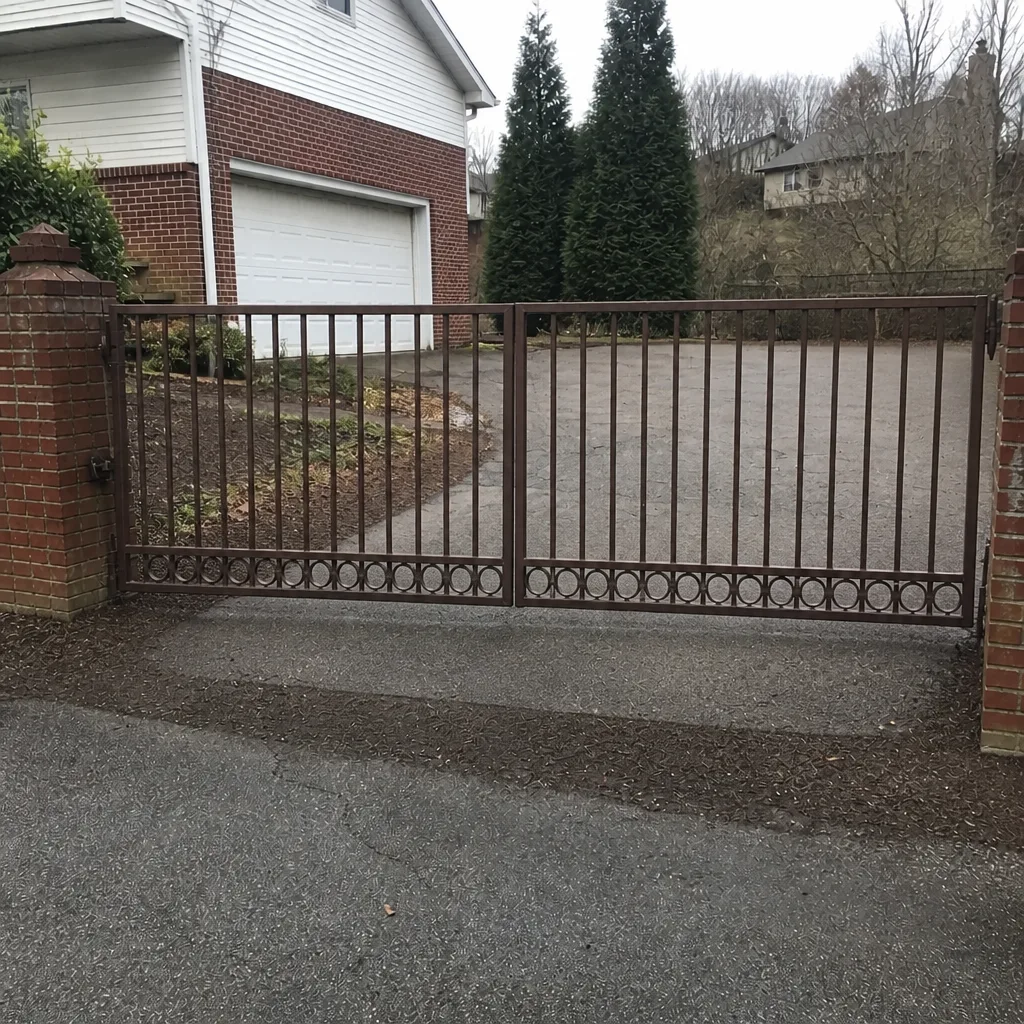 After
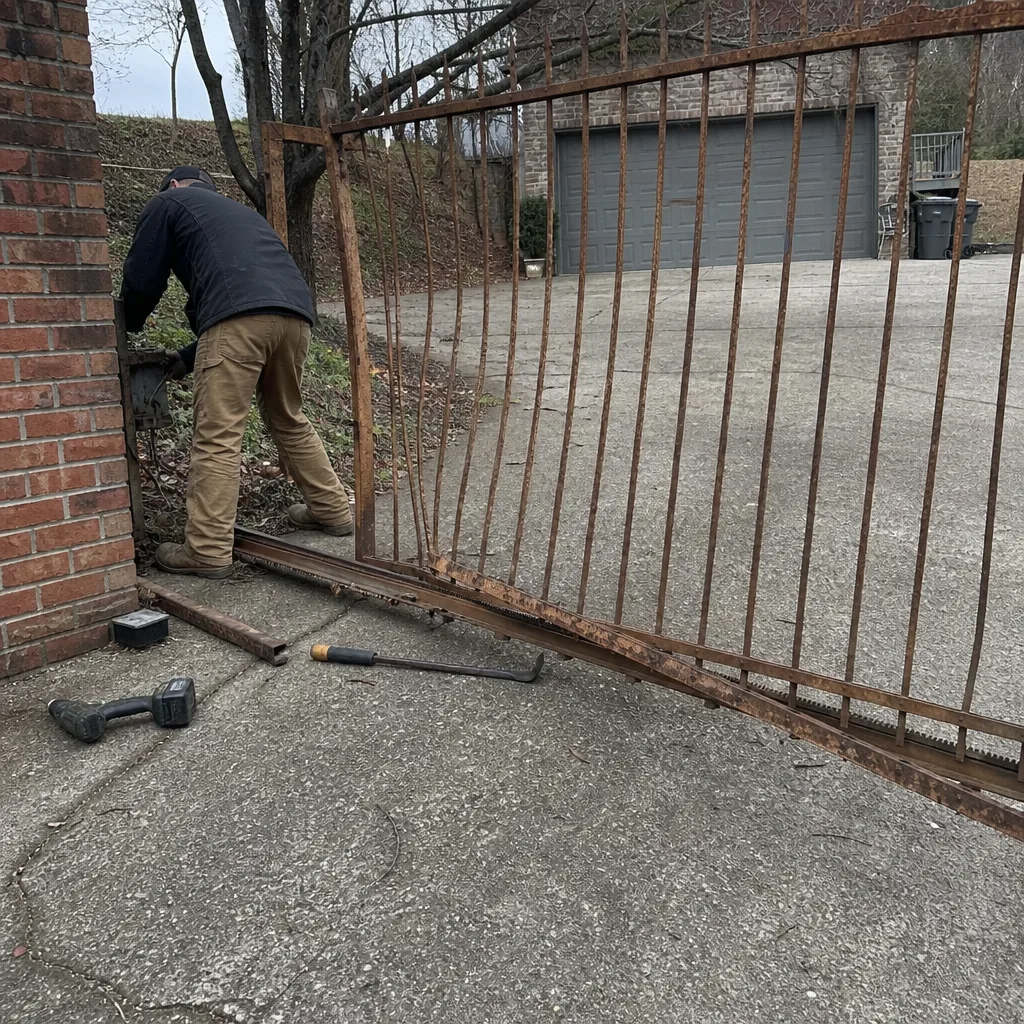 Before
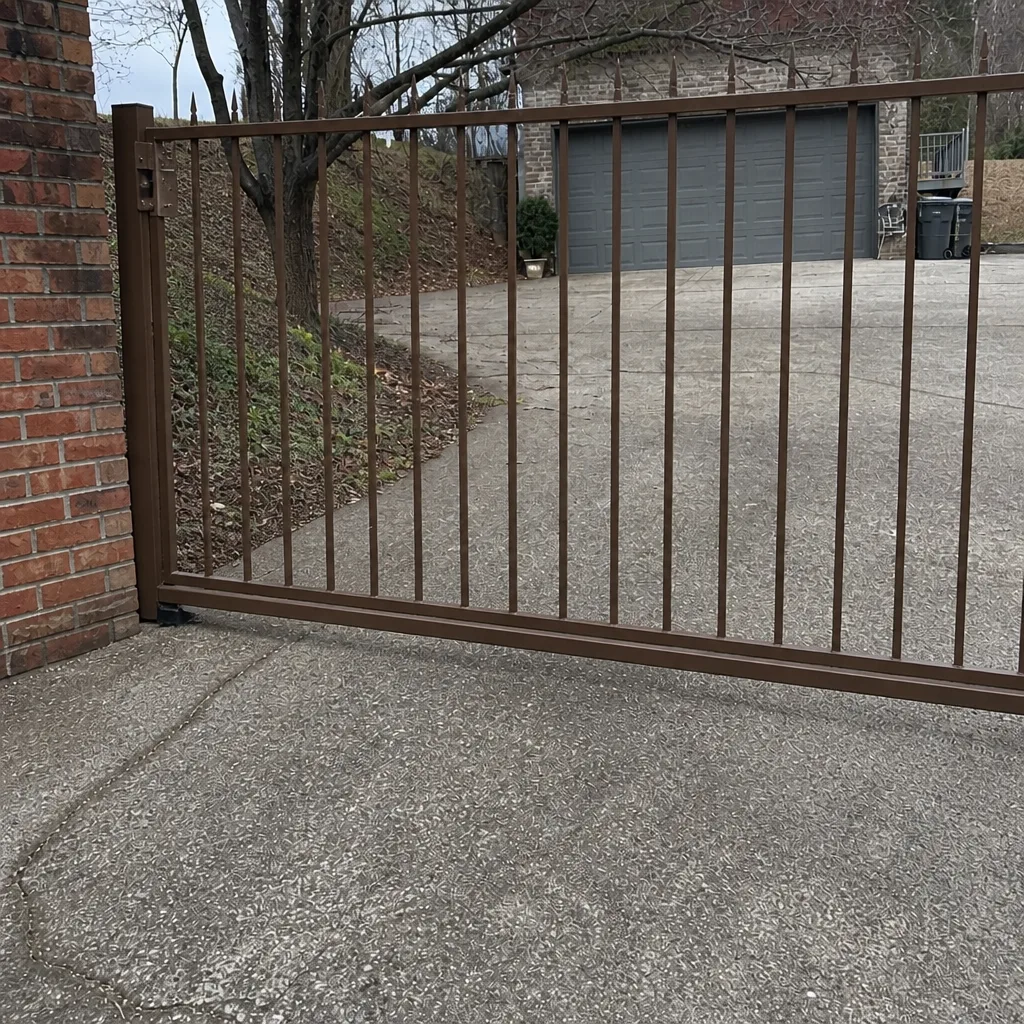 After
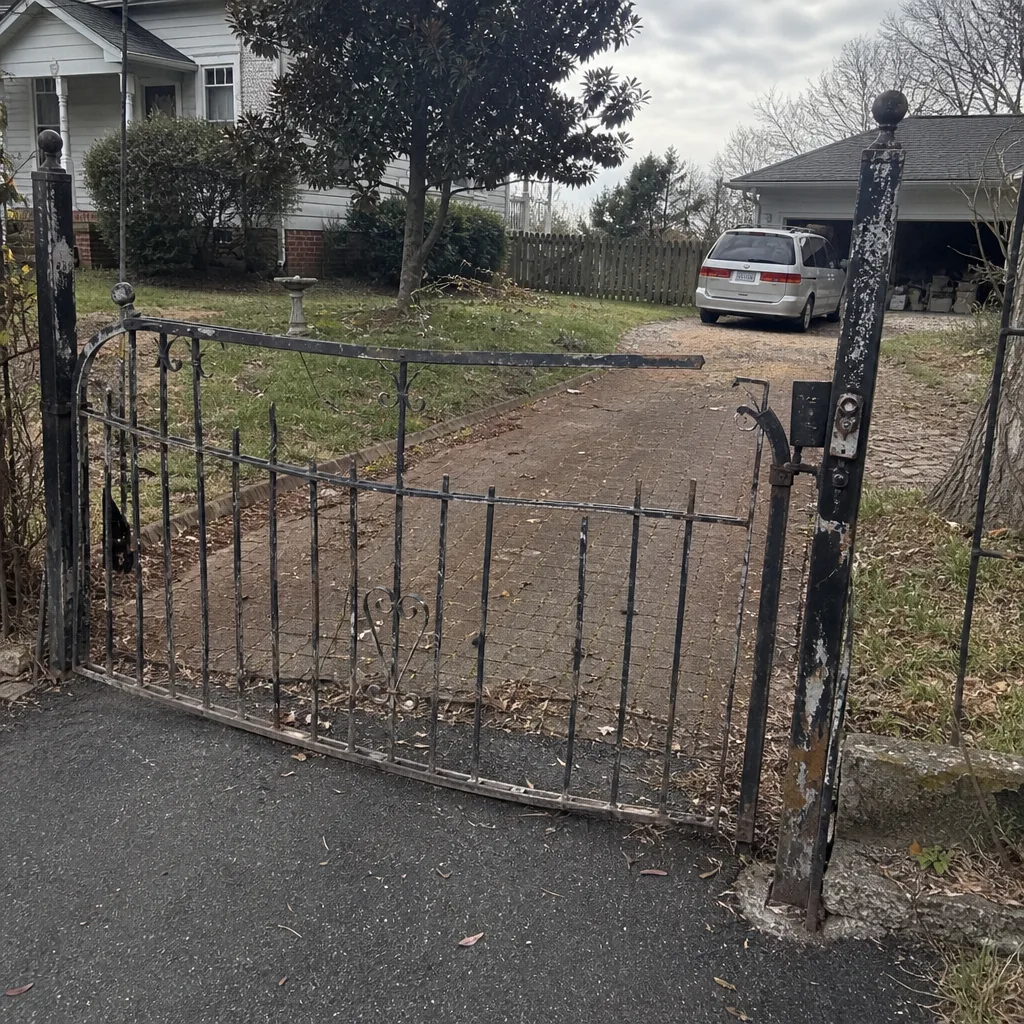 Before
 After
When to Call a Professional
Call when the symptom points to the electrical system, the safety sensors, the limit switches, the motor, or the structural anchors, or when you don’t know which of those it is. Also call if your gate binds after a freeze, sags at a hinge, or reverses randomly more than once. Those are the signs that a DIY attempt is more likely to void a warranty or disable a safety feature than to save you money. A specialist diagnoses the actual fault instead of replacing parts until it works, and a trained technician can confirm whether your gate brand’s operator has a documented adjustment procedure worth following.
Knoxville Gate Repair Pros offers free estimates in Knoxville. Call (855) 337-0860. We answer 24/7. Fast dispatch from 7am to 7pm, Sunday through Friday. The price is quoted and agreed before any work starts, so you know the number before the technician touches the gate.
Frequently Asked Questions
Yes, for the safe tier: remote reprogramming, battery replacement, photo-eye cleaning, manual release practice, and track debris clearing. Those jobs don’t touch the electrical system, the safety logic, or the warranty, so they’re appropriate to handle yourself. Anything past that tier, you should call a professional.
No. Limit switches control where the gate stops, and adjusting them risks over-travel, slamming, and a voided UL 325 entrapment certification on commercial operators. On residential operators, an incorrect adjustment can also damage the board or motor. Call a specialist for limit-switch issues; it’s cheap compared to the downside.
Tennessee licenses electrical contractors, and the work they cover includes the power supply and wiring for equipment like gate operators, including the line-voltage side. A homeowner exemption exists for limited work on a single-family home, but new circuits and panel connections are licensed work. Ask the city or county building department about permits for your specific job.
Operator warranties commonly exclude damage from unauthorized adjustments and from electrical work done by anyone other than a qualified technician, and LiftMaster and Viking build similar language into their coverage. A DIY adjustment isn’t guaranteed to void the warranty, but it puts your claim at risk. A specialist keeps the coverage intact.
Cleaning the photo-eye lenses is safe DIY. If the gate keeps reversing after a clean, it’s a professional job, because the sensor alignment or wiring needs attention. A randomly reversing gate is a safety signal, so don’t run it repeatedly while you troubleshoot.
Yes. We’re brand-fluent across LiftMaster, FAAC, BFT, Linear, Viking, Ghost Controls, DoorKing, Elite, and Mighty Mule, spanning residential driveway gates and commercial access systems. Call (855) 337-0860 for a free estimate, and the specialist works with the hardware already on your property instead of routing you to a brand-specific shop.
The Bottom Line
The DIY-versus-professional question for gate repair in Knoxville comes down to one thing: which component is broken, not how handy you are. Remote reprogramming, battery swaps, photo-eye cleaning, manual release practice, and track debris clearing are yours to handle safely. Control boards, limit switches, electrical connections, entrapment sensors, and structural anchor points are specialist work, because they carry high-voltage or stored-force hazards, affect UL 325 safety certification, and can void your operator warranty. Handle the safe tier yourself, bring in a trained technician for the rest, and the gate stays safe, covered, and running. A specialist isn’t more expensive than the fix you’d have paid for twice.
Call Knoxville Gate Repair Pros at (855) 337-0860 for a free estimate. We answer 24/7. Fast dispatch from 7am to 7pm, Sunday through Friday. Whatever your gate brand or system layer, we work on the brand already on your gate, from the motor to the access panel.
Written by the team at Knoxville Gate Repair Pros.