
Last updated November 25, 2026
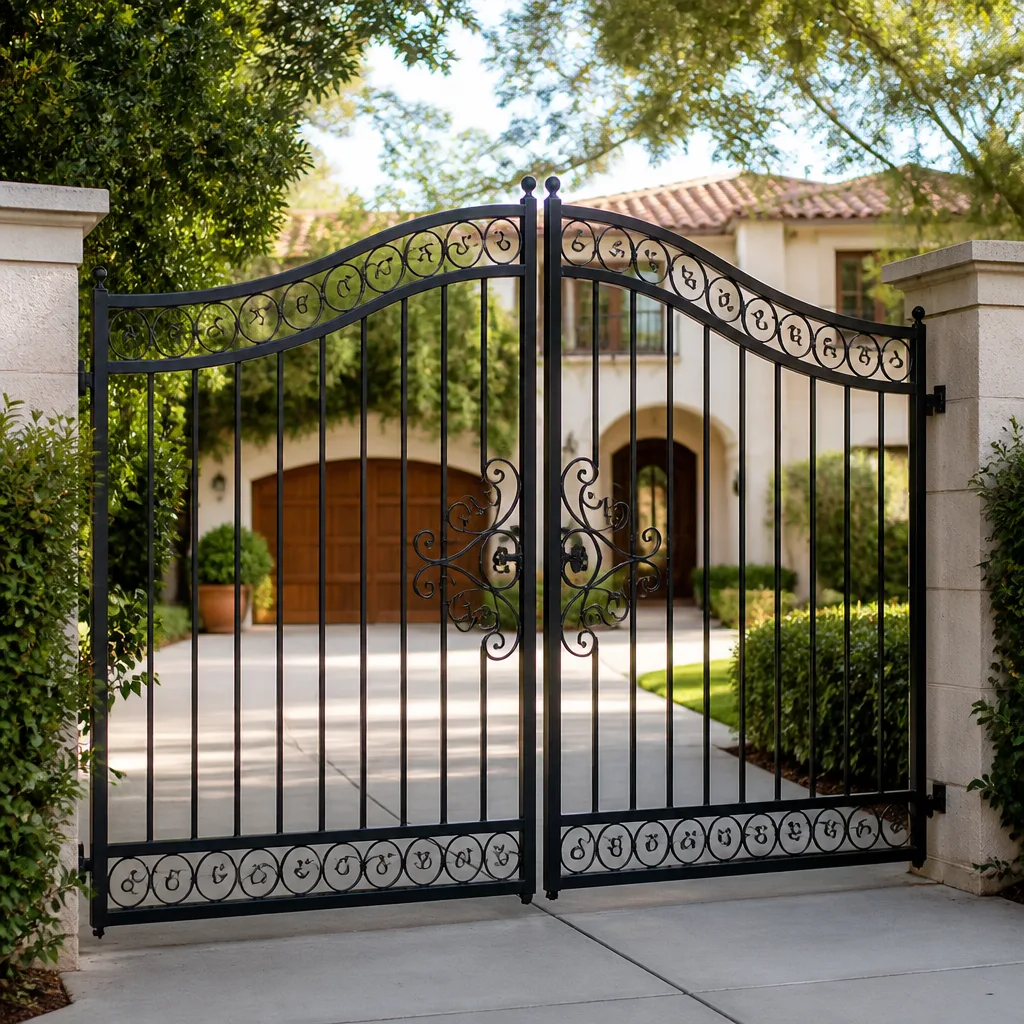 Wrought iron
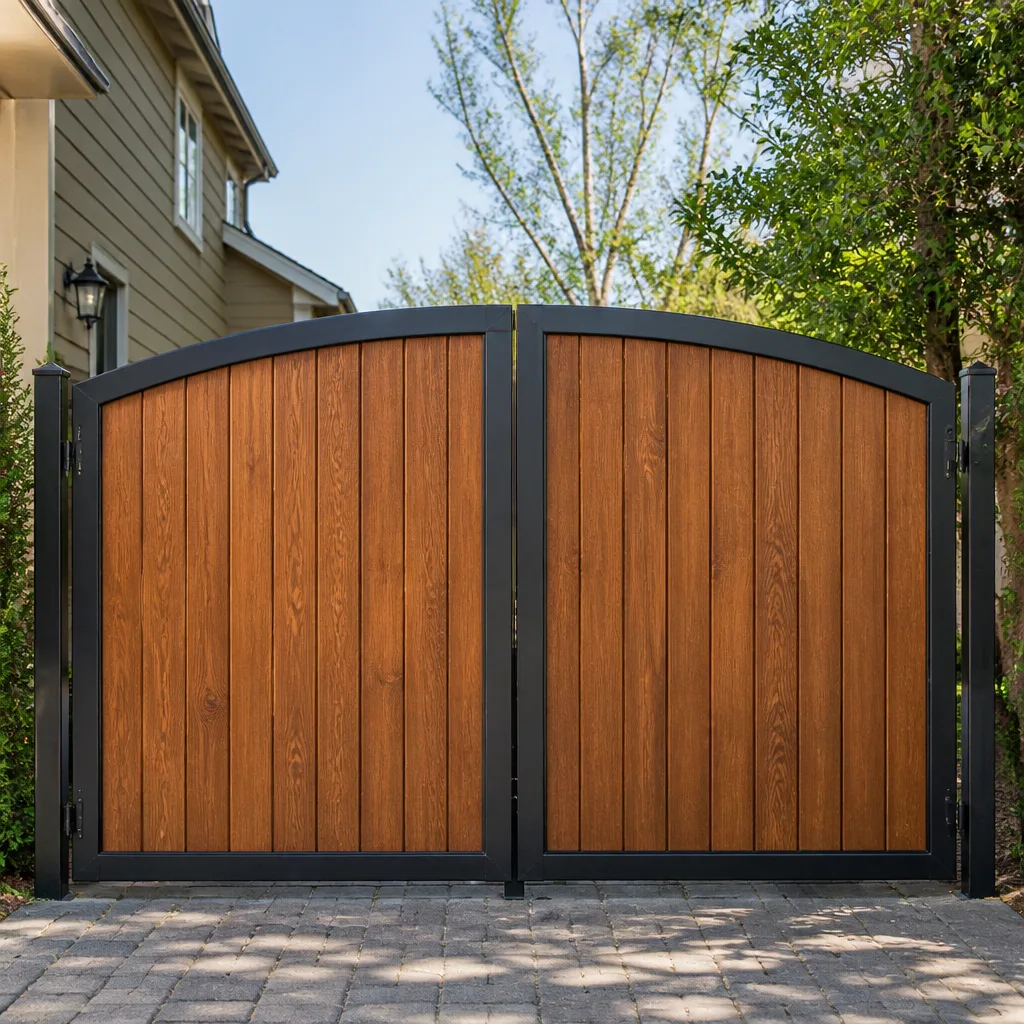 Wood & steel frame
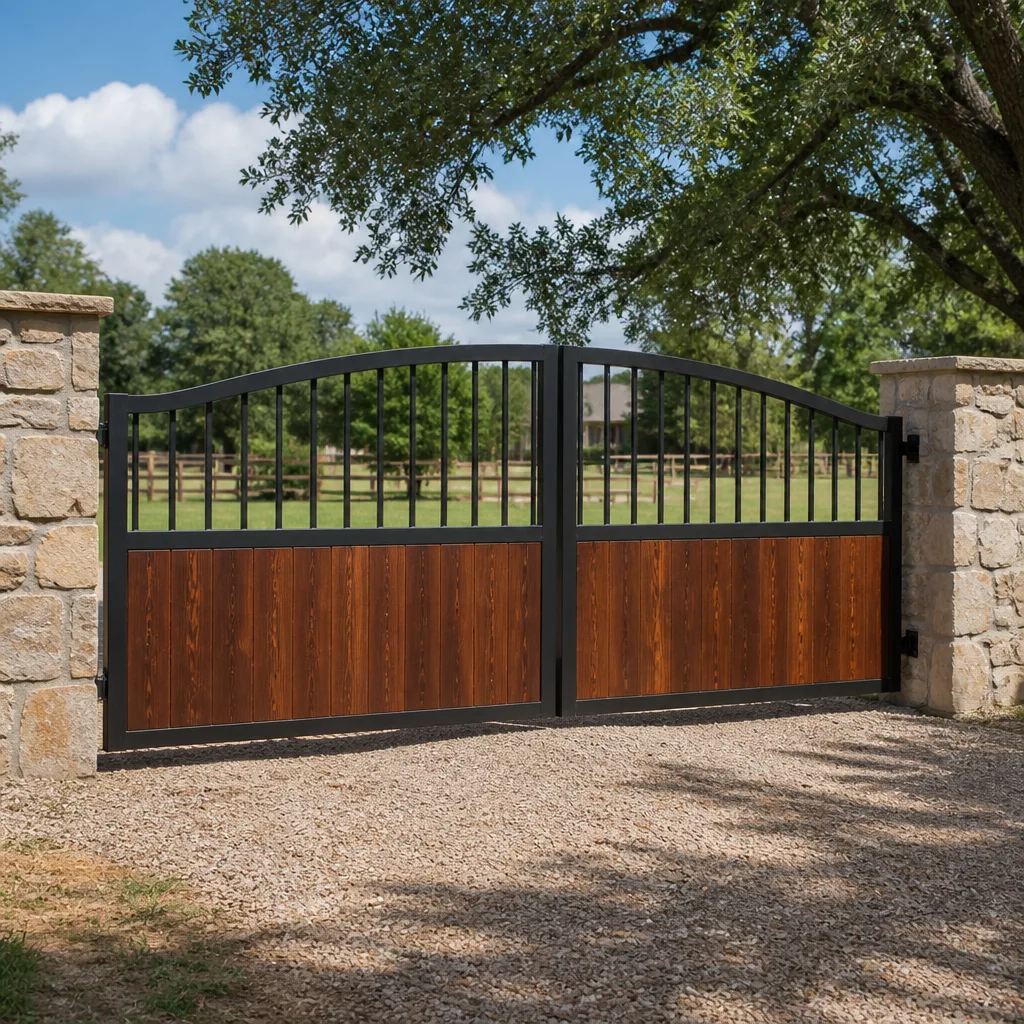 Farm & ranch
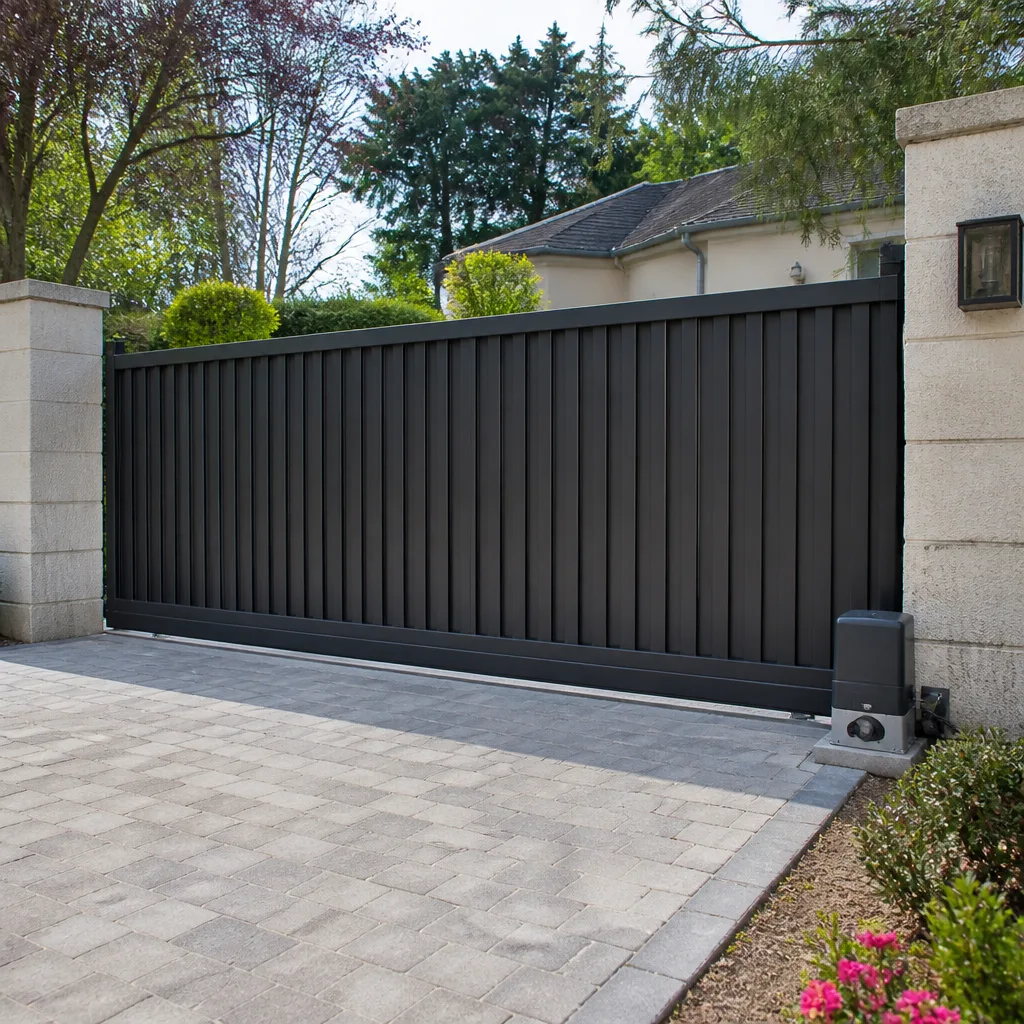 Sliding driveway gates
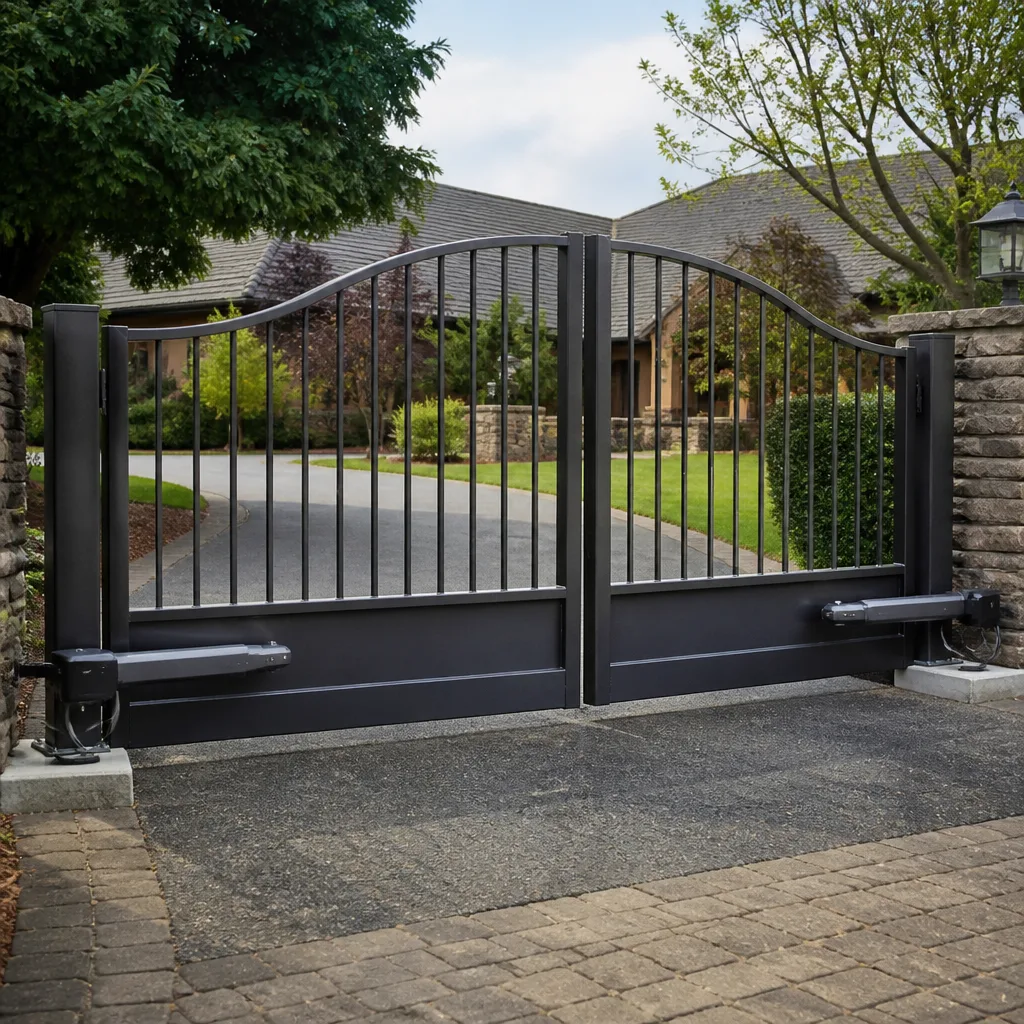 LiftMaster operators
Free on-site gate assessment - hinges, posts, and your LiftMaster or Nice gate operator checked before anything is quoted
The assessment is free and the quote is the invoice.
Get your free estimateThe Complete Guide to Gate Repair in Knoxville
A gate that reverses before it closes usually isn’t a gate problem at all. It’s a photo-eye alignment or obstruction-sensor issue, and replacing the control board to “fix” it costs several times what the real repair does. We see that mismatch constantly around Knoxville: the symptom points at one layer of the system, and the wrong layer gets replaced. This guide maps every common failure to its actual root cause across five layers – frame, hardware, drive, controls, and access – so you can describe the problem accurately and pay for the right repair the first time.
Quick Answer
Gate repair in Knoxville means diagnosing which layer of the gate system has actually failed – structural frame, hinge and pivot hardware, the drive motor and operator, the control board and sensors, or the access and entry components – before replacing anything. A correct diagnosis usually costs far less than a shot-in-the-dark part swap, because most gate failures trace to one specific layer, not to the whole system.
Styles & brands we work with
- Wrought iron
- Wood & steel frame
- Farm & ranch
- Sliding driveway gates
- LiftMaster operators
Table of Contents
- The Five-Layer Diagnostic Framework
- How Knoxville’s Clay Soil Causes Post Lean and False Operator Failures
- Swing vs. Slide Gates in Knoxville’s Hills and Gravel Driveways
- Why Residential and Commercial Gates Fail Differently
- Symptom-to-Repair Decision Matrix
- Matching the Repair to the Brand on Your Gate
- What’s Safe to Check Yourself and What Isn’t
- What Drives the Cost of a Gate Repair
The Five-Layer Diagnostic Framework
Every gate system is five layers stacked on top of each other. A repair that ignores the layer above the broken part always comes back, because the same fault walks the gate straight into the same failure. Here’s the stack, top to bottom, and what fails in each one.
- Structural frame. The gate leaf or panel itself, and the posts that carry it. Weld cracks at the corners, sagging panels, and loose hinges all live here. In Knoxville, post movement is a big one – covered in the next section.
- Hinge and pivot hardware. Hinges, pivot points, rollers, and the track a slide gate rides on. When hardware binds, the operator strains against it and looks like the motor is failing.
- Drive system. The motor and operator – the arm on a swing gate or the slide operator on a rolling gate. This layer turns electrical input into mechanical movement.
- Control board and sensors. The board that sequences the gate, plus photo-eyes and obstruction sensors. This is where most “phantom” failures originate.
- Access and entry components. Keypads, remotes, loop detectors, card readers, and intercoms. When the gate opens from a keypad but not a remote, the problem is here, not in the drive.
The rule is simple: always check the layer above the symptom. If the gate won’t close, start at the control board and sensors before suspecting the drive. If the drive seems weak, check the hardware for binding before replacing a motor. If you call us and describe the symptom, we can usually tell you which layer to look at first. Call (855) 337-0860. We answer 24/7. Fast dispatch from 7am to 7pm, Sunday through Friday.
How Knoxville’s Clay Soil Causes Post Lean and False Operator Failures
A gate that suddenly drags, scrapes, or reverses mid-travel often has a perfectly healthy operator. The real problem is the post. Knoxville sits on heavy clay soils that swell when they’re wet and shrink when they dry out. That cycle pushes and pulls on gate posts all year, and over time a post that was set plumb starts to lean. Once it leans, the gate leaf swings off its arc. The operator fights the misalignment, the sensors read an obstruction, and the whole system starts behaving like a control failure.
Here’s how that shows up, and how we tell it apart from a genuine operator problem:
- The gate binds in the same spot every cycle. That’s mechanical misalignment, not electrical. Inspect the post and hinge line first.
- The gate drags only after rain, then frees up in dry weather. Classic clay-soil movement. Wet clay swells against the post footing.
- The gate leaf sags or rubs the ground at the far end. The hinge-side post has moved or the footing has loosened.
- The operator reverses on its own with no visible obstruction. Check whether the gate is square; a leaning post can trap a gate in a bind that trips the sensors.
Correcting post lean means resetting the post to proper footing depth in the local clay, re-plumbing the gate, and only then re-testing the operator. Skipping the reset and adjusting the operator instead is a repair that comes back, usually within a season. It’s also why anyone quoting a new gate installation in Knoxville should talk about footings and soil, not just the gate style. If your gate is binding and you’re not sure whether it’s the operator or the post, start with a free estimate before you spend a dime on parts.
Swing vs. Slide Gates in Knoxville’s Hills and Gravel Driveways
Swing gates and slide gates fail in different ways, and Knoxville’s terrain makes both of them more pronounced. Driveways here climb and fall, curve, and often start as gravel before they’re ever paved. Each of those conditions loads the gate system differently.
Swing gate failures
Swing gates open into arc space, so on a sloped driveway the operator arm is always fighting gravity a little bit. That stress shows up first at the hinges and the arm mount. Over time the arm wears at its pivot, the gate starts to sag at the open position, and the operator compensates by drawing more current – which eventually burns out the board. Residential swing openers like Ghost Controls and Mighty Mule are built for flat, forgiving driveways; set one on a steep Knoxville grade and the arm will tell you about it.
Slide gate failures
Slide gates roll on a track or hang from a cantilever carriage, and they depend on that track being dead level. On a sloped or gravel driveway, a little displacement of the track or roller base means the gate binds on one side and the operator works twice as hard as it should. Gravel makes it worse – the surface under the track shifts as the season changes. That’s why commercial slide systems like DoorKing and heavier residential operators show roller wear and track misalignment before the motor fails.
- Swing gates: watch hinges, arm pivot, and post plumb. Gravity is the hidden enemy on hills.
- Slide gates: watch the track, rollers, and base plumb. Level is everything.
- Both: a gate that binds in one spot is a hardware or alignment problem, not a control problem.
When you call for gate repair, tell us which kind of gate you have and which direction the driveway runs. It shortens the diagnosis before we ever arrive.
Why Residential and Commercial Gates Fail Differently
A residential driveway gate and a commercial access gate both break, but they break for different reasons and they need different qualifications to repair. A homeowner’s gate sees a few cycles a day and lives in one location. A commercial gate runs hundreds of cycles a day, serves multiple users, and integrates with access control – keypads, loop detectors, card readers, intercoms. That load and complexity changes the failure pattern entirely.
Residential gate behavior
- Low cycle count – failures usually come from weather exposure, settling posts, or a worn hinge rather than fatigue.
- Often installed by the homeowner with a residential-grade opener (Ghost Controls, Mighty Mule), so an installer-by-trade repair isn’t always the starting point.
- Repair priority is usually reliability on the family’s schedule, not access-record accountability.
Commercial gate behavior
- High cycle count exposes wear in the drive motor, brake, and roller assembly first.
- Access control integration means a fault could be in the entry layer – a failed card reader or loop detector – not the gate at all.
- Safety and liability push toward documented, code-aware repairs, especially where the gate serves pedestrians or vehicles in a public-facing way.
- Systems like FAAC, BFT, and DoorKing combine the operator, control board, and access layer in one assembly, so diagnosing in the right layer matters even more.
This is the split we’re built for: residential driveway gate or commercial access system, same level of expertise. If your property has both a homeowner gate and a managed access system, one call covers the whole thing. A general handyman may be fine for a residential swing opener, but a commercial access system needs a gate specialist, not a generalist. For a full gate motor & opener replacement on a commercial system, ask for a written price and a clear scope before anything is ordered.
Symptom-to-Repair Decision Matrix
Most homeowners can describe the symptom even if they can’t name the part. Use this matrix to figure out which layer is likely at fault and what kind of repair you’re probably facing. It won’t replace a diagnosis, but it lets you describe the failure accurately and get a realistic quote before anyone arrives.
- Gate reverses before closing: obstruction sensor or photo-eye alignment. Check for an obstruction at the sensor line, dirty lenses, or a mis-aimed photo-eye before touching the board.
- Gate opens partway and stops: usually a control board fault or a limit setting – not a failing motor.
- Gate opens from the keypad but not the remote: access and entry layer. Remote, receiver, or keypad wiring, not the drive.
- Gate won’t open at all, no sound from operator: power or board. Confirm power to the operator first.
- Motor hums but the gate doesn’t move: drive or hardware – a binding hinge, frozen roller, or misaligned track loading the motor.
- Gate sags or drags the ground: hinge or post. Structural and hardware layers, not the operator.
- Gate drifts back after opening: brake or limit in the drive; on a swing gate, arm wear.
- Keypad lights up but nothing opens: access layer control, wiring, or board output.
- Gate reverses only in wet weather: post or hardware bind from soil movement, or a moisture-sensitive sensor.
- Intermittent open/close with no pattern: sensor or control board; ask for a sensor and board test first.
If you’ve narrowed it down to one of these and want a second opinion, call (855) 337-0860 for a free estimate. We’ll confirm the layer and quote the repair before any work starts, so the number you’re given is the number you pay unless the diagnosis surfaces something the estimate didn’t cover – and if it does, we tell you before we proceed.
Matching the Repair to the Brand on Your Gate
Different gate brands are engineered differently, and the right repair path depends on which brand is already on your property. We work on the brand already on your gate: Ghost Controls, DoorKing, Elite, Mighty Mule, LiftMaster, FAAC, BFT, Linear, and Viking. That nine-brand coverage is the whole point – you don’t have to hunt for a technician who recognizes your specific hardware, and you don’t get routed to a brand-specific service center.
What that means in practice:
- If your gate has a residential opener like Ghost Controls or Mighty Mule, the diagnosis starts at the arm and the sensor line, because those systems are purpose-built for a driveway and their weak points are well mapped.
- If it’s a commercial assembly like DoorKing or FAAC, the repair may sit in the access layer – loop detector, reader, or intercom – so we test the entry side and the operator together.
- If it’s a mid-range residential system like Elite, expect to start at the control board and limit settings, since a limiting fault can mimic a motor failure.
- If it’s LiftMaster, Linear, BFT, or Viking, the same layered logic applies: hardware, then drive, then control, then access, in that order.
Brand fluency is a shortcut, but it’s not a guess. The diagnostic framework is the same no matter what brand is on the gate. The brand knowledge just tells us where to look first, which saves you time and saves us from swapping the wrong part. For an all-in replacement, the installer should be familiar with the brand you’re keeping or the upgrade you’re considering. If you want to talk through options, our Knoxville Gate Repair Pros team handles the full system, from the motor to the access panel.
What’s Safe to Check Yourself and What Isn’t
Some gate checks are perfectly safe for a homeowner. Others are dangerous, and the line between them is electrical. Anything on the line-voltage side of a gate operator – the power feed, the board, the motor wiring – is a job for a trained professional. A gate operator runs on line voltage, and a commercial system adds access wiring on top of that. Work on those components by an untrained person is a genuine hazard.
Safe to check yourself
- Look for a visible obstruction at the photo-eye line: a branch, trash, a stray tool, a pet toy.
- Wipe obvious dirt off the photo-eye lenses and confirm the sensors face each other.
- Test the keypad and remote separately to see which one triggers the gate.
- Listen: hums, clicks, grinding, or silence tell you a lot about the layer.
- Watch the gate travel; if it binds in the same spot every cycle, note where.
Leave to a professional
- Any diagnosis or repair of the control board.
- Motor, arm, brake, or wiring work on the operator itself.
- Resetting a gate post or repairing hinges under load.
- Commercial access control wiring or integrated systems.
If you’re unsure, don’t guess at which layer it is. Describe the symptom and let a technician test it. A free estimate is cheaper than a wrong part, and it’s safer than working on a live operator.
What Drives the Cost of a Gate Repair
Gate repair costs are set per job, by a written estimate, and the estimate depends on which layer failed and which brand is on the gate. A sensor alignment and a control board replacement are both “gate repair,” but they’re nowhere near the same job. The range you’ll see quoted – from a small hardware or sensor fix to a board or operator replacement – reflects that difference. The written estimate is what sets the final price, and it’s agreed before any work starts, so the quote you sign is the number you pay.
What actually drives the cost up or down:
- Which layer failed. Access and sensor layer faults are typically the smallest; drive and control board faults are larger; post or structural repairs sit somewhere in between depending on footing work.
- Brand and hardware availability. A common residential brand may straight to the right replacement part; a commercial assembly may need specific components ordered first.
- Residential vs. commercial. Commercial systems involve access control integration and higher-duty parts, so the job is generally larger.
- Whether the diagnosis is clean. A gate with one clear fault is simpler than one where the post lean and a tired operator have combined.
Every estimate is free, and we come out, look at the gate, and give you a written price before work begins. That’s how we keep the repair from turning into a guess. If you’ve been quoted for a part swap that doesn’t match the symptom, it’s worth getting a second look. For a full gate installation or operator replacement, the price is measured and scheduled rather than quoted on the spot, but the process is the same: measure, written price, go.
Common Mistakes to Avoid
- Replacing the board before checking the sensors. A reversing gate that gets a new control board without a sensor test is the most common wasted repair in Knoxville. Test the photo-eyes and obstruction sensor first.
- Adjusting the operator when the post has moved. A leaning post from clay-soil movement makes the operator look broken. Reset the post, then re-test the drive.
- Assuming a weak motor needs replacement. If the gate binds in one spot, the motor may be fine and the track or hinge is the real problem.
- Using the wrong opener for the terrain. A residential swing opener installed on a steep or heavily sloped Knoxville grade will wear faster than a matched system. Match the operator to the slope.
- Ignoring gravel under a slide gate track. The track undercarriage shifts with the seasons, and that drift binds the gate and overloads the operator.
- Treating a commercial access system like a home gate. If the gate has loop detectors, card readers, or an intercom, the fault may be in the access layer – not the drive – and generalist hands can make it worse.
- Skipping the free estimate to “just try a part.” A short written estimate costs nothing and keeps you from paying for the wrong fix.
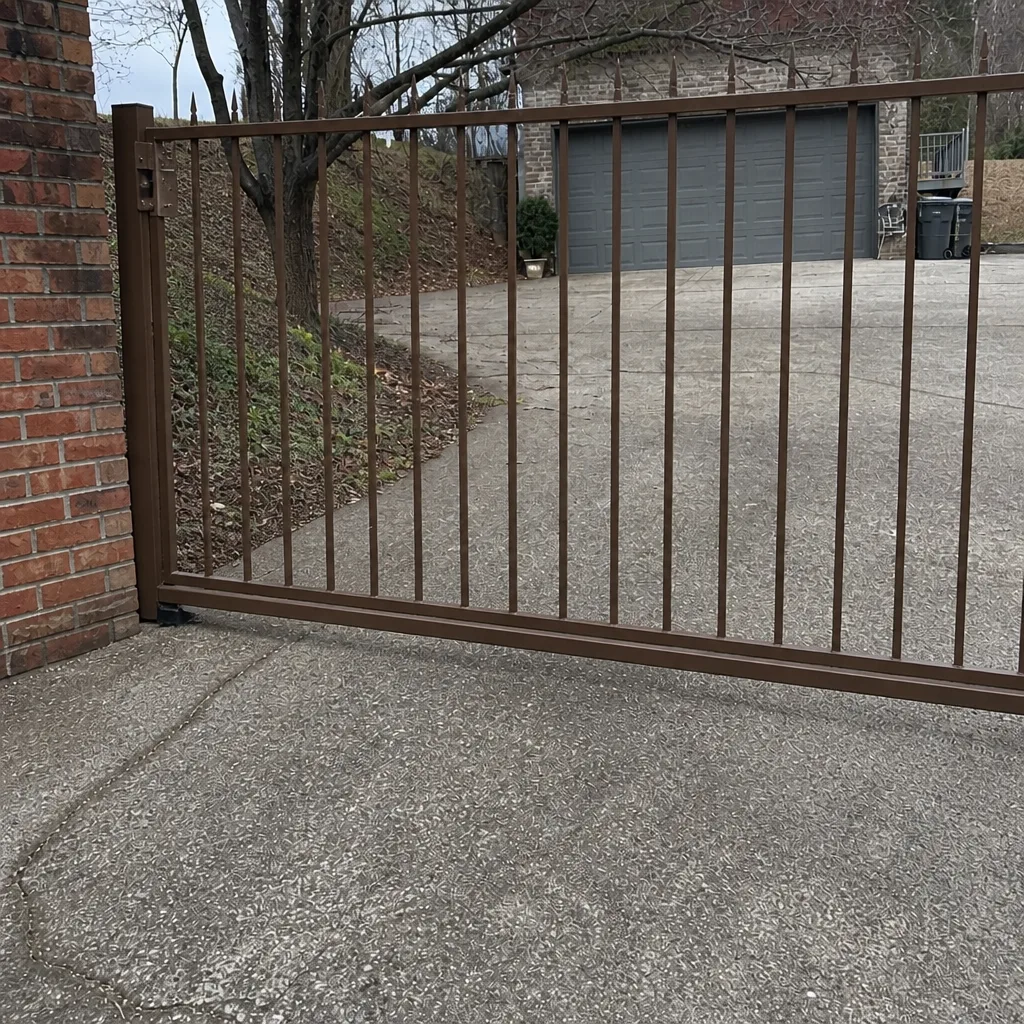
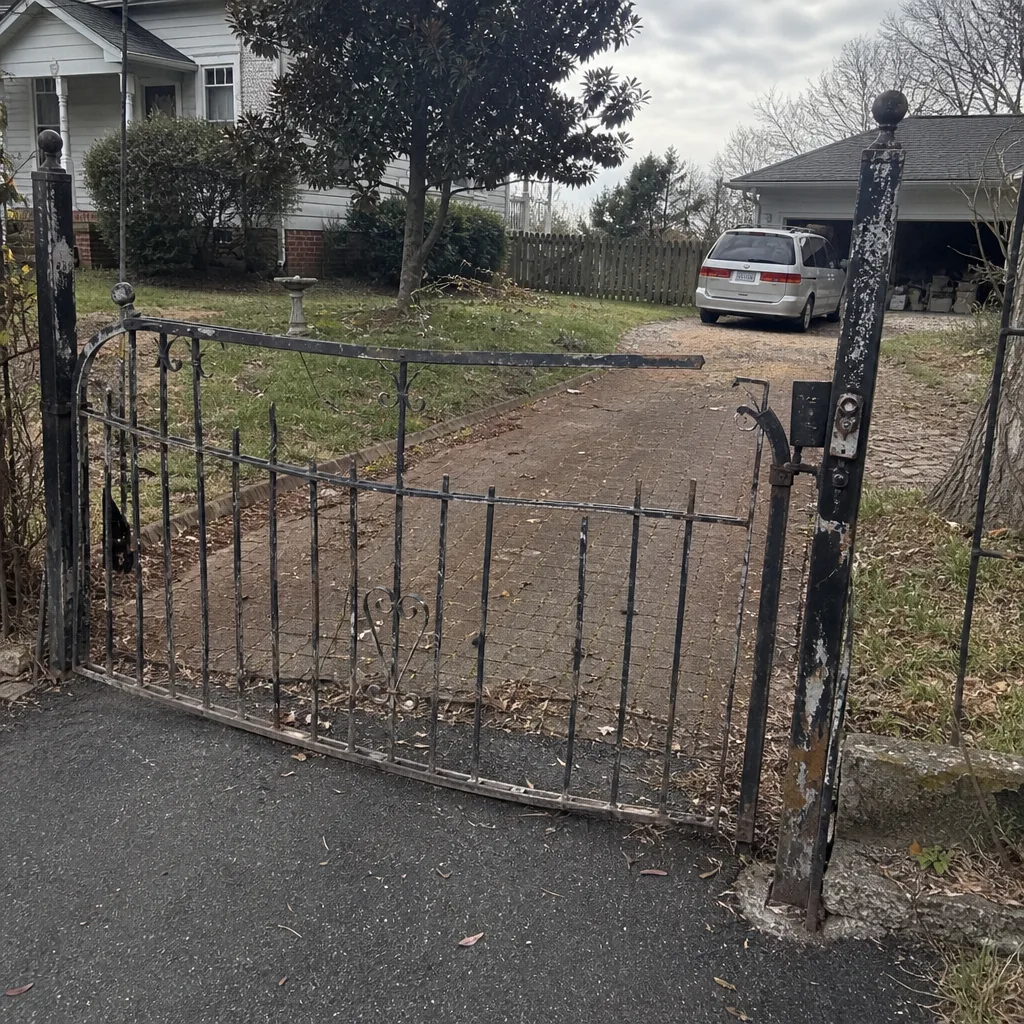
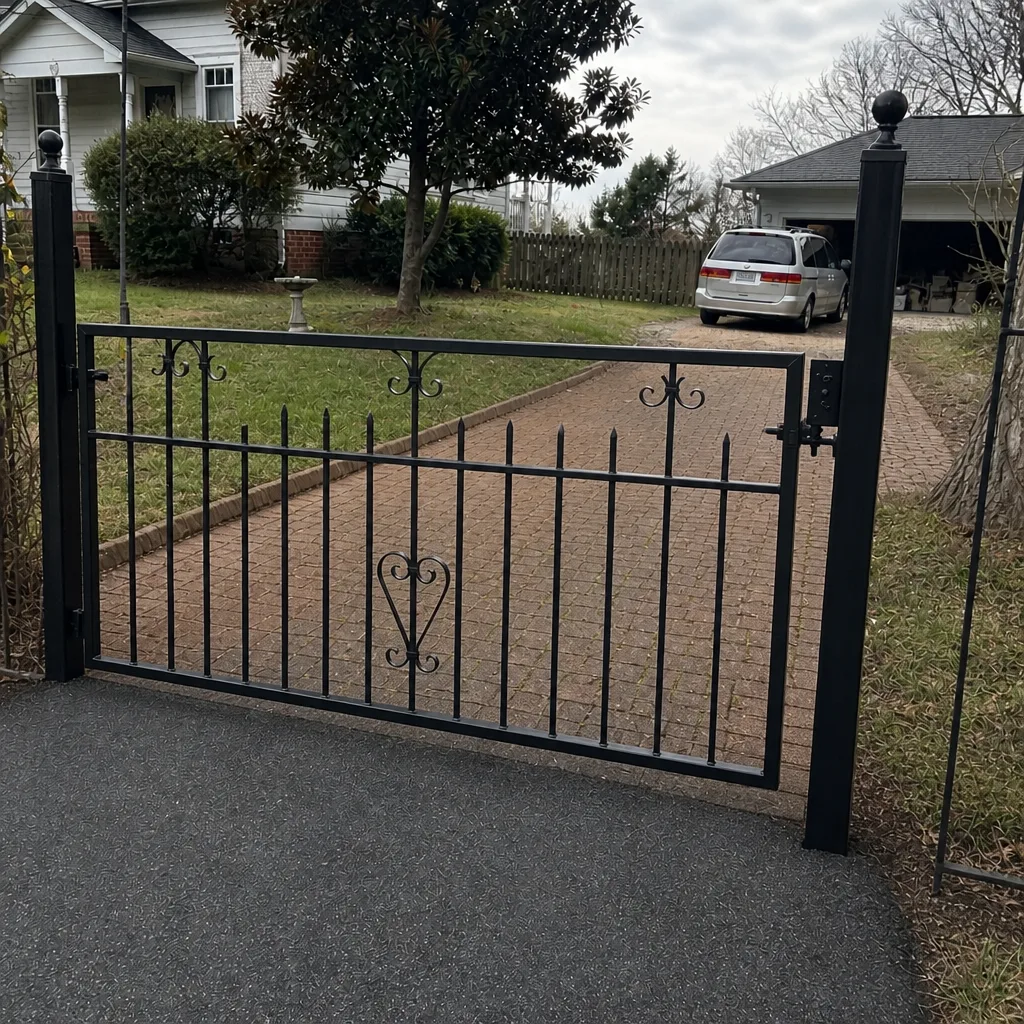
See the difference
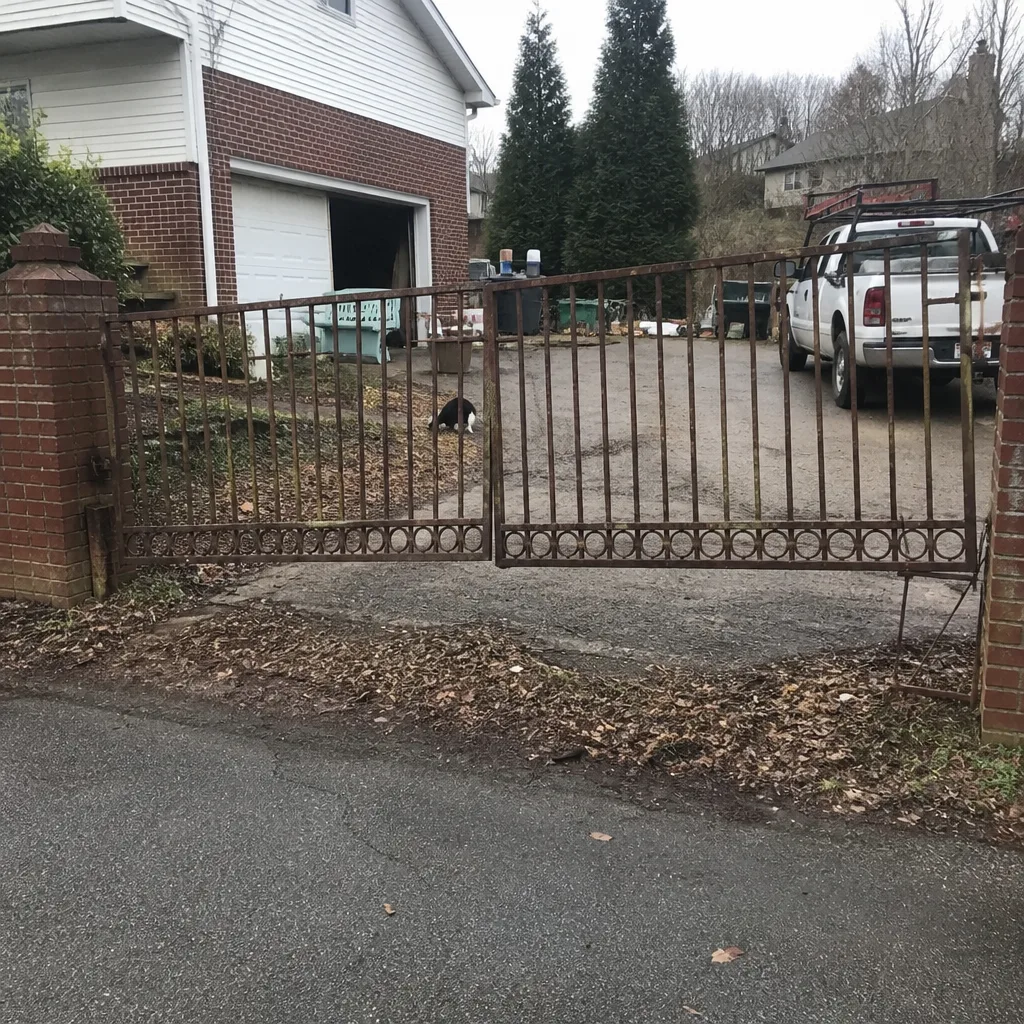 Before
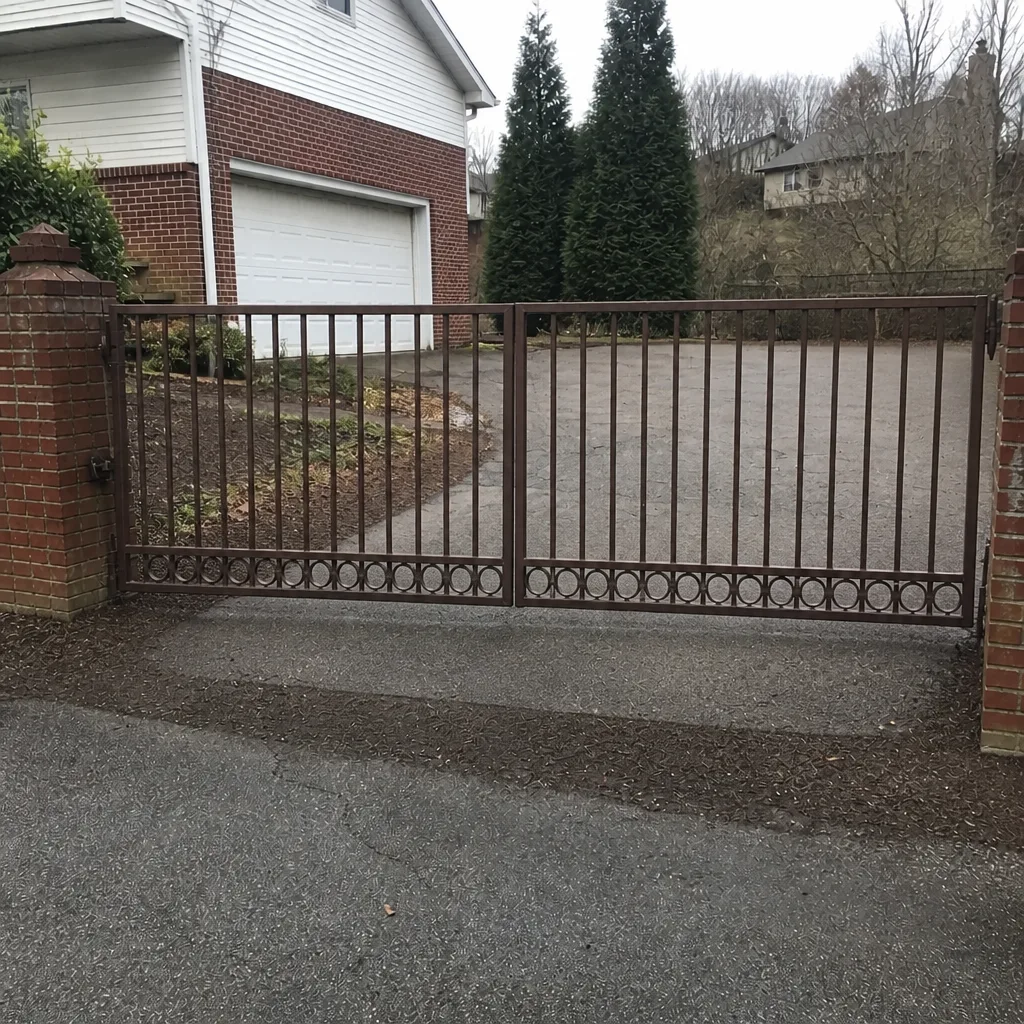 After
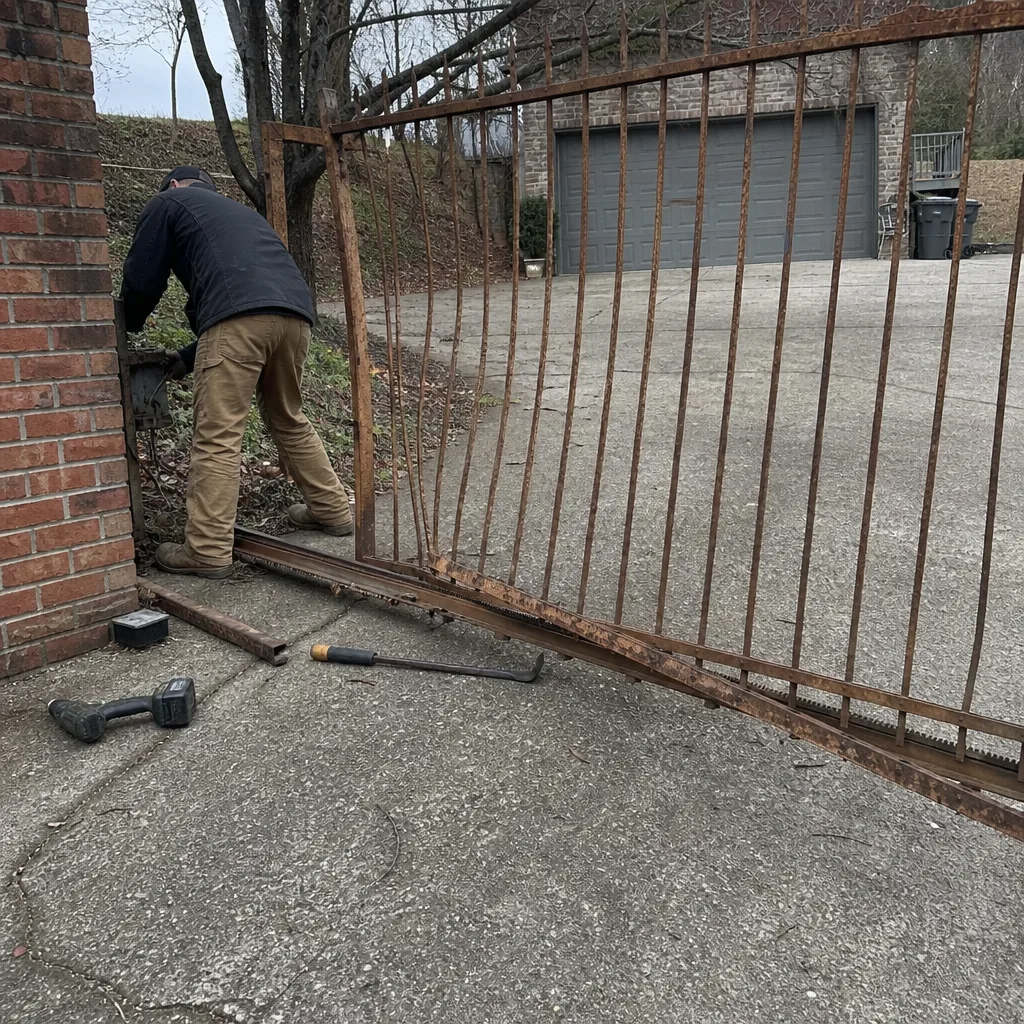 Before
 After
 Before
 After
When to Call a Professional
Call a professional gate technician when the gate reverses without a visible obstruction, when the operator hums or clicks but the gate doesn’t move, or when the gate binds in the same spot every cycle. Those point to layers most homeowners can’t safely diagnose. Call right away if the gate stops mid-travel and won’t clear, if a post is visibly leaning, if the gate drags the ground, or if a commercial system serves multiple users and access has failed. Don’t open the control board or the operator wiring yourself – line voltage on a gate operator is dangerous. Knoxville Gate Repair Pros offers free estimates in Knoxville – call (855) 337-0860. We answer 24/7. Fast dispatch from 7am to 7pm, Sunday through Friday.
Frequently Asked Questions
Gate repair is priced per job by a free written estimate, and the range depends on which layer failed. Sensor or hardware fixes sit at the low end; control board or operator replacements at the higher end. Call (855) 337-0860 for an exact quote – estimates are free, and the written estimate sets the final price before any work starts.
Same-day service is available for gate repair, and we answer the phone 24/7. Fast dispatch runs from 7am to 7pm, Sunday through Friday. A call outside dispatch hours is booked into the next opening. Call (855) 337-0860 to check the day’s schedule.
Usually not. A gate that reverses before closing is typically a photo-eye alignment or obstruction-sensor issue, not a motor or control board failure. Replacing the board to fix a sensor problem is a common and costly mistake. Have the sensors tested first, and call (855) 337-0860 if you want us to confirm it.
In almost every case, yes. We work on Ghost Controls, DoorKing, Elite, Mighty Mule, LiftMaster, FAAC, BFT, Linear, and Viking. You don’t need to hunt for a brand-specific shop, and you won’t be routed elsewhere for a repair your gate brand needs.
In Knoxville, the likely cause is clay soil. Wet clay swells and pushes on gate posts, which can shift the gate out of alignment, bind the hinges, or trip an obstruction sensor. A gate that drags or reverses only in wet weather should get a post and alignment check, not just a control board repair.
Yes. Commercial systems with loop detectors, card readers, and intercoms combine the operator, control board, and access layer in one assembly, and the fault could be in any of them. A gate specialist who works on both residential and commercial systems will diagnose the right layer. Call (855) 337-0860 for a free estimate.
The Bottom Line
Most gate failures trace to one of five layers, and the fix is only right when the diagnosis is right. A reversing gate is usually a sensor problem, not a board. A dragging or binding gate is usually a hardware or post problem, not a motor. In Knoxville, clay soil and hill-and-gravel driveways make post movement and track drift common failure modes that mimic operator faults. Match the symptom to the layer, get a written estimate before work starts, and use a gate specialist for anything on the line-voltage side. Our technicians have up to 13 years of experience across residential and commercial systems. Call (855) 337-0860 for a free estimate. We answer 24/7. Fast dispatch from 7am to 7pm, Sunday through Friday.
Written by the team at Knoxville Gate Repair Pros.