
Last updated November 25, 2026
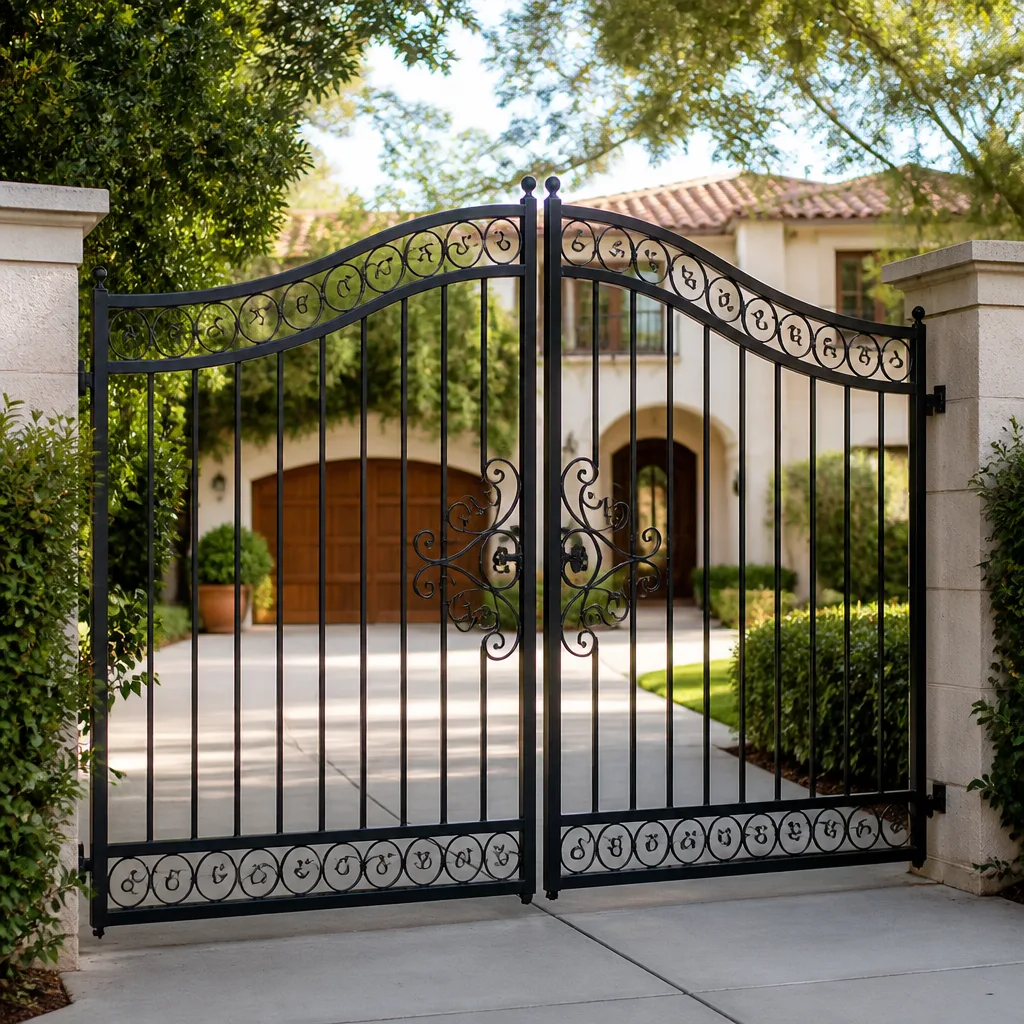 Wrought iron
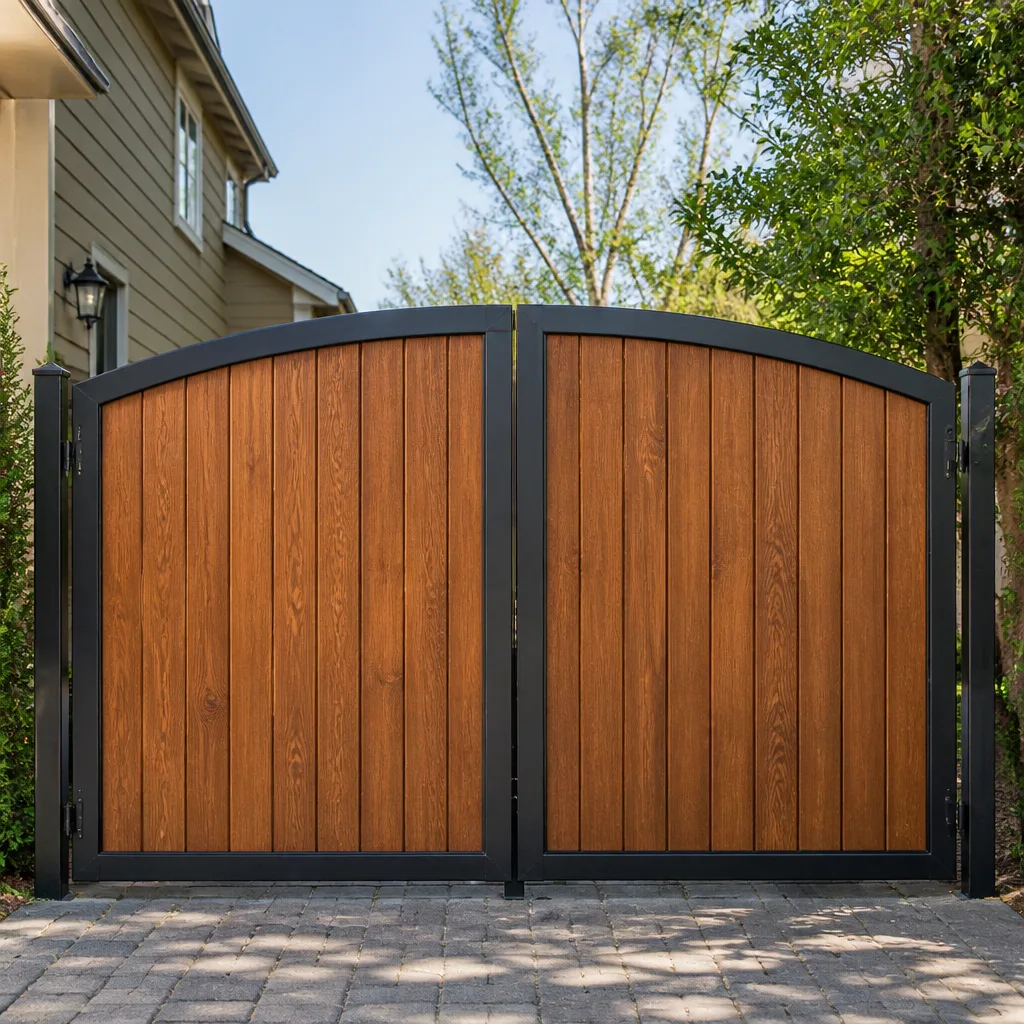 Wood & steel frame
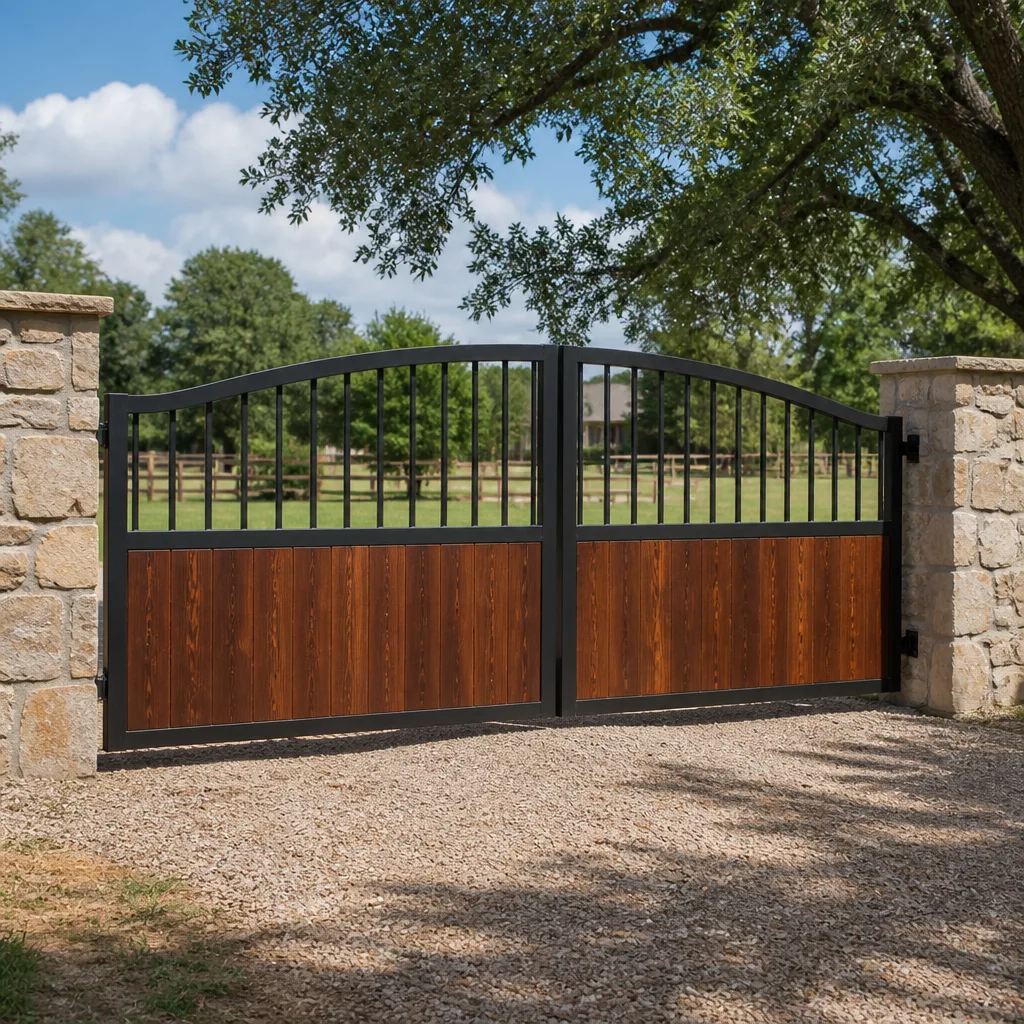 Farm & ranch
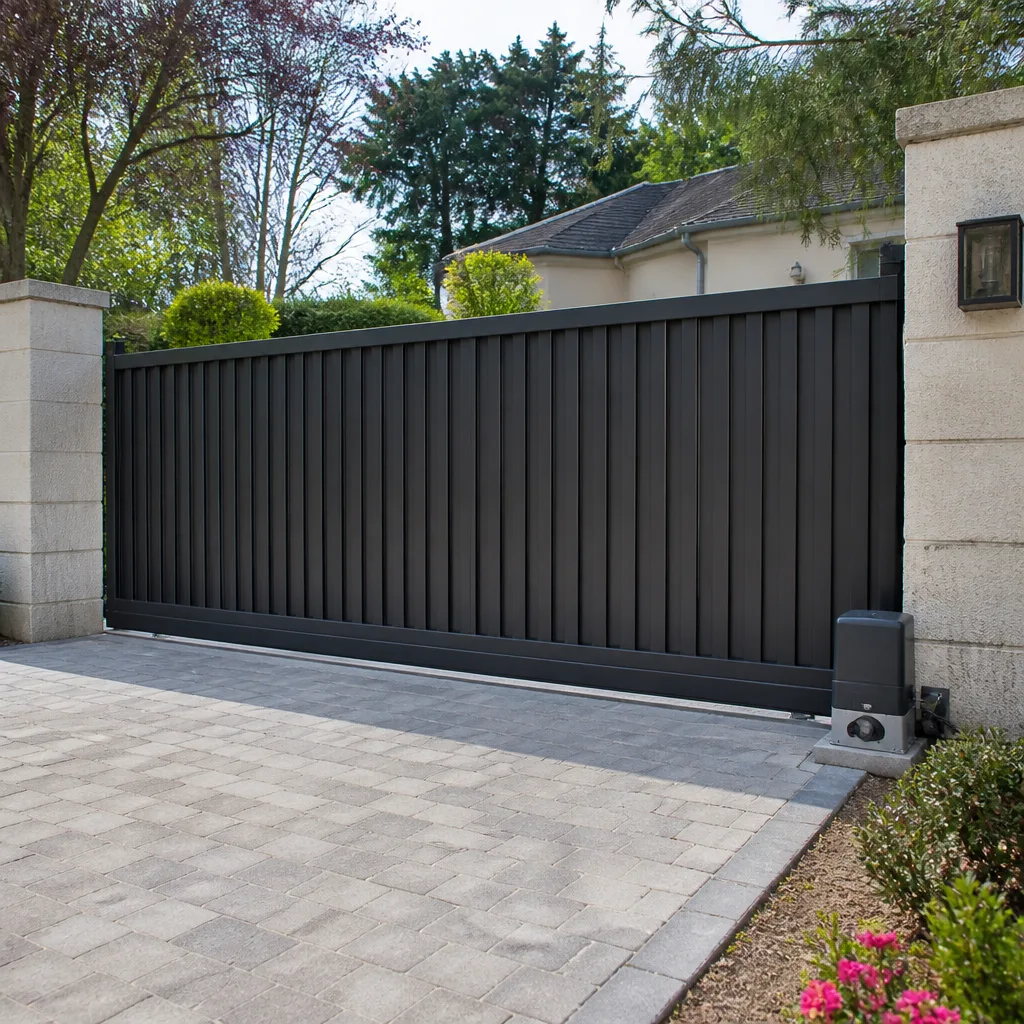 Sliding driveway gates
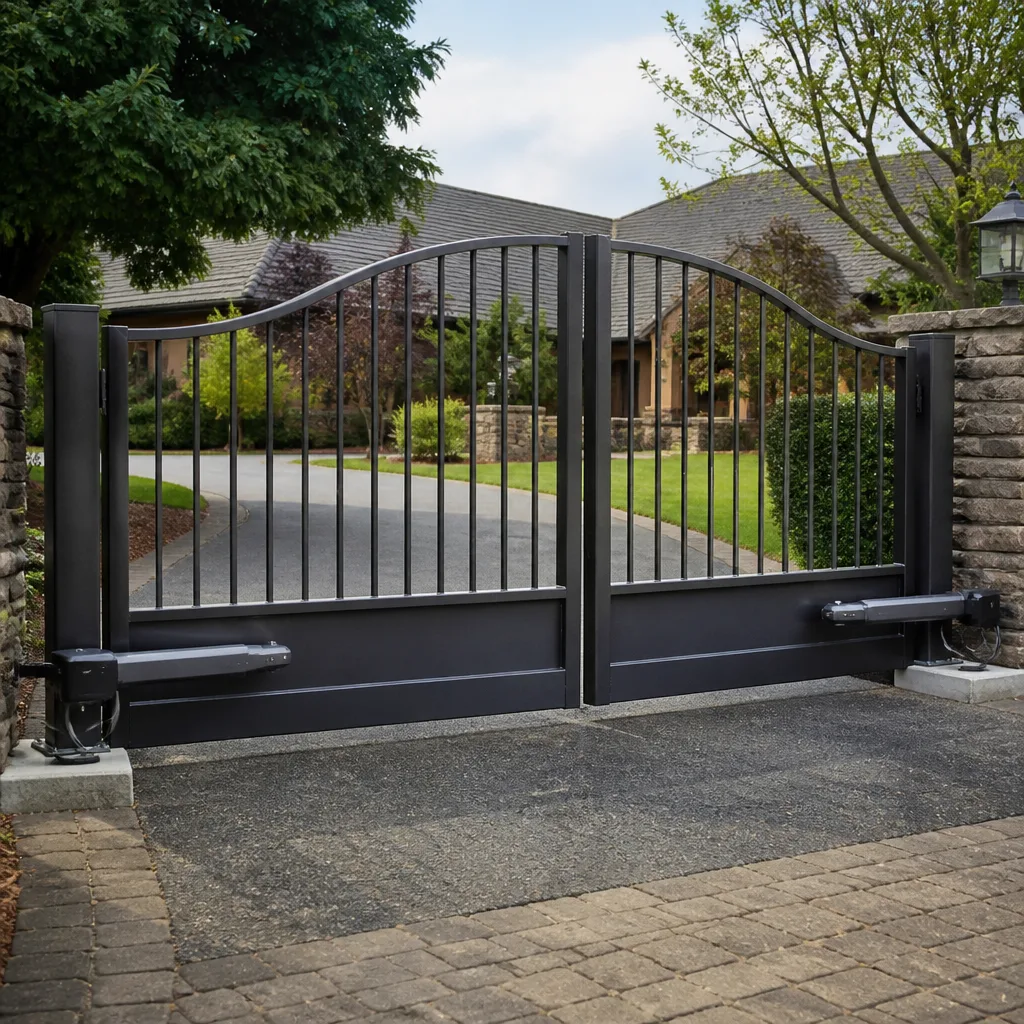 LiftMaster operators
Free on-site gate assessment - hinges, posts, and your LiftMaster or Nice gate operator checked before anything is quoted
The assessment is free and the quote is the invoice.
Get your free estimateGate Repair Warning Signs: A Knoxville Homeowner’s Reference Guide
A gate that hesitates for two seconds before it moves isn’t warming up. That pause usually points to a low battery in the backup system or a failing capacitor inside the operator, and if the pattern holds, it tends to turn into a gate that won’t open at all somewhere in the next 30 to 90 days. The trouble is that most early warnings look like small annoyances, so people in Knoxville wave them off until the gate quits on a morning they actually need it. This guide teaches you to read those signals and match each one to the part that’s likely failing, so you can act before a repair turns into a replacement.
Quick Answer
The most important gate repair warning signs are hesitation before movement, grinding or humming from the operator, a reversing gate with nothing in its path, visible post lean, a growing gap under the gate, rust at the hinges, and reduced remote range. Each points to a specific component, and sorting them by severity tells you whether you can wait a week or need a technician today.
Styles & brands we work with
- Wrought iron
- Wood & steel frame
- Farm & ranch
- Sliding driveway gates
- LiftMaster operators
Table of Contents
- What Your Gate’s Sounds Are Telling You
- Visual Warning Signs That Need a Technician Within 48 Hours
- Operational Anomalies and Their Root Causes
- Knoxville-Specific Warning Signs: Efflorescence and Orange Staining
- The Four-Level Severity Triage System
- Why Brand Matters in Gate Diagnostics
- Seasonal Patterns in Knoxville Gate Failures
- Common Mistakes to Avoid
What Your Gate’s Sounds Are Telling You
Sound is the earliest and cheapest diagnostic tool you own. A gate operator makes a predictable set of noises when it’s healthy, so any new sound is information. Here’s how to decode the three you’re most likely to hear, and what each one usually implicates at the component level.
Grinding
Grinding is mechanical, and it almost always comes from the drive train. On a screw-drive or chain-drive operator, grinding points to worn drive gears, a dry or failing chain, or debris caught in the track. Left alone, grinding metal-on-metal accelerates wear fast, which is why a grinding gate belongs on the schedule-and-fix-soon list rather than the wait-and-see list. If you hear grinding on a sliding gate, stop running it and check the track for obstructions before anything else.
Clicking
Clicking is usually electrical or control-related. A rhythmic click with no movement often traces to a relay in the control board or a limit switch that isn’t registering. On an access control system, clicking at the keypad or reader can mean the relay is firing but the operator isn’t getting the signal to move. This is the kind of fault that looks intermittent and drives people crazy, because the gate works one day and clicks uselessly the next.
Humming
A hum with no movement is the classic signature of a stuck motor or a failed capacitor. The motor is getting power but can’t turn. On a swing gate with a LiftMaster or Linear operator, a hum-without-motion is worth shutting down at the breaker and calling for service, especially if the gate is a heavy one. Continued power to a stalled motor can damage the windings and turn a capacitor swap into a full motor replacement.
If you can’t place the sound, describe it when you call. “Grinding before it moves, then a click” gives a technician a real head start.
Visual Warning Signs That Need a Technician Within 48 Hours
Not every warning sign announces itself with noise. Some of the most serious ones are things you can see from the driveway. These are the signs that shouldn’t wait a month.
- Visible post lean. If a gate post has started to lean, the gate is no longer running true, and the operator is now fighting the geometry. Lean usually means the footing has shifted or water has reached the anchor bolts. A leaning post gets worse, not better.
- Gate sag you can measure. Get down low and look at the gap between the bottom of the gate and the ground at both ends. If that gap has grown uneven, the gate has sagged on its hinges. Sag throws off the latch alignment and stresses the operator on every cycle.
- Rust bloom at the hinge plates. Rust pushing out from under the hinge plates means moisture has gotten behind the steel. It’s a structural warning, not a cosmetic one, and it’s the point where a hinge can seize and shear.
- Cracks in the masonry at the anchor points. If the concrete or brick around the post anchor shows fresh cracking, the gate is moving against its own foundation. That’s a same-day call.
None of these are things to watch for a few weeks. A post that’s leaning or sagging today is going to be leaning or sagging more in a month, and the operator pays the price in the meantime. In our experience, gate repair that starts from a visible structural sign almost always expands to include the operator if it’s put off.
Operational Anomalies and Their Root Causes
Operational problems are the ones that don’t make noise and don’t show up as rust, but they make the gate unreliable in a way that’s dangerous or just maddening. Here’s how each of the common anomalies traces back to a cause.
Reversal Without Obstruction
A gate that reverses when nothing is in its path is a safety system firing falsely. On an operator with an obstruction sensor or safety edge, reversal can come from a misaligned sensor, a dirty lens, a loose connection, or a safety edge that’s been damaged. This one matters because the safety system is supposed to reverse for a reason. A gate that reverses randomly is either going to stop reversing when it should or frustrate everyone enough that someone disables the sensor, which is the last thing you want on a driveway gate.
Remote Range Reduction
If you have to be closer and closer to the gate before the remote works, the receiver or the remote’s battery is usually behind it. Start with the battery. If a fresh battery doesn’t restore range, the receiver antenna or the receiver itself is the prime suspect. On a Linear or Ghost Controls system, receiver replacement is a routine job once the antenna check comes up empty.
Inconsistent Response
A gate that responds sometimes and not others points to the control board, the power supply, or the wiring. Intermittent response can also come from the photo-eye safety beam being knocked slightly out of alignment. The gate works when the sun’s at one angle and doesn’t when it isn’t, or works in the morning and not the afternoon. This is the hardest fault class to diagnose, which is why the control board and wiring should be checked by someone who knows the brand.
Gate Moves a Few Feet and Stops
A gate that travels a short distance and stops is usually hitting a limit switch that’s out of adjustment, or the control board is receiving a false obstruction signal. On commercial systems from DoorKing or FAAC, this can also point to a logic board setting that’s been changed. Resist the urge to keep pressing the remote; the operator gets worked harder with each attempt.
Knoxville-Specific Warning Signs: Efflorescence and Orange Staining
Knoxville’s climate and soil do a number on gate hardware in ways that don’t show up in a general diagnostic guide. The clay soil holds water, the freeze-thaw cycles work on posts and footings, and the iron-rich groundwater leaves a signature. Here are two signs that are local to this area and often missed.
White Efflorescence on Masonry Posts
A white, powdery bloom on the surface of a brick or concrete post is called efflorescence. It’s salt pushed to the surface by moisture moving through the masonry. On its own, efflorescence is cosmetic. Around the anchor bolts, it’s a warning that water is getting into the footing where the post is anchored. If you see the bloom concentrated at the base of the post or around the bolts, take it seriously. That’s water intrusion reaching the hardware that holds the gate up. Left alone, it leads to rust on the anchor bolts and the post lean that shows up later as a gate that won’t close properly.
Orange Track Staining
On a sliding gate, an orange or rust-colored stain along the track or on the concrete beneath it is common in Knoxville, and it points to iron in the groundwater or runoff. The staining itself isn’t the problem. The problem is what it implies: the track is sitting in standing water, the rollers are running through that water, and the bearings are being washed of lubricant. If the staining is new or spreading, check the drainage around the gate before the rollers fail.
Both signs are easy to write off. Both belong on the monitor-and-schedule list the moment they appear around structure or hardware.
The Four-Level Severity Triage System
Not every warning sign deserves the same urgency. Sorting them into four levels keeps you from overreacting to a cosmetic issue and underreacting to a real one. Use this as your rule of thumb.
Level 1: Ignore (But Note It)
- Surface rust on painted steel away from hinges or welds.
- A cosmetic scratch or ding on a panel.
- A slightly noisy keypad button.
These don’t require a call. Write down when you first noticed them and check again in a few months.
Level 2: Monitor
- Slight noise change that isn’t grinding (a little louder, a little higher pitch).
- The gate hesitates sometimes but not consistently.
- Efflorescence appearing on non-structural masonry.
Keep an eye on it. If the pattern repeats or gets worse, move it up to Level 3 and schedule a visit.
Level 3: Schedule (Within a Week or Two)
- Grinding, clicking, or humming from the operator.
- Remote range reduction.
- Inconsistent response.
- Gate reverses when nothing is in the path.
- Rust bloom at hinge plates.
- Orange track staining that’s new or spreading.
These are real mechanical or electrical faults. Left for weeks, they tend to compound. Call and get an appointment on the books. For gate repair in Knoxville, scheduling before the fault becomes a failure is the cheaper path almost every time.
Level 4: Same Day (Stop Using the Gate)
- Visible post lean.
- Gate sag measurable by an uneven bottom gap.
- Cracks in masonry at the anchor points.
- Gate moving a few feet and stopping hard.
- Any sign of electrical burning or scorching at the operator.
- Gate operator that won’t respond to any input.
These are structural or safety issues. Stop running the gate and call. If you’re not sure whether a symptom is Level 3 or Level 4, treat it as Level 4.
Why Brand Matters in Gate Diagnostics
A gate operator isn’t a generic box. Each brand has its own control board logic, its own limit switch design, its own diagnostics, and its own quirks. When a fault lands on your gate, the fastest route to a fix is a technician who already knows the brand in front of them.
We work with the brand already on your gate, across nine manufacturers: LiftMaster, FAAC, BFT, Linear, Viking, Ghost Controls, DoorKing, Elite, and Mighty Mule. That range matters because residential driveway operators like Mighty Mule and Ghost Controls fail differently than commercial access systems like FAAC, BFT, and DoorKing. A Mighty Mule that hesitates usually points to a battery or control board question. A DoorKing system that reverses randomly is often a loop detector or logic setting. Knowing which family you’re looking at changes the diagnostic path.
We also cover the whole system, from the motor to the access panel. That means gate motor & opener replacement, Knoxville Gate Repair Pros, and access control work all fall under the same roof, along with gate installation when a repair stops making economic sense. No handoffs, no one telling you to call a different company because your brand isn’t on their list. Your gate brand is on our list.
If you’re planning a new gate down the road, choosing a brand your technician actually knows is worth more than any spec sheet.
Seasonal Patterns in Knoxville Gate Failures
Gate problems cluster around the seasons in Knoxville, and knowing what to watch for each part of the year helps you catch faults earlier.
Spring
Spring rains push water into masonry posts and footings, and the freeze-thaw of late winter has already worked on both. This is when anchor bolt issues and post lean show up most. It’s also when you’ll notice efflorescence appearing on posts that looked clean in fall.
Summer
Heat stresses capacitors and control boards. Operators that ran fine all winter can start humming or reversing in July. Battery backups in residential operators can also weaken faster in the heat, which is the culprit behind many “hesitation” faults in midsummer.
Fall
Falling leaves and debris jam sliding gate tracks and trigger obstruction sensors. On swing gates, the drop in temperature tightens hinges and can make a marginal gate sag suddenly.
Winter
Freeze-thaw cycles work on the clay soil, which is what pushes footings and leads to leaning posts. Hard freezes also shorten battery life and can cause control boards to reset unexpectedly. If the gate hesitates on a cold morning, that’s a signal worth noting.
None of these patterns is a certainty, but they’re the ones we see most often. Put a check on your calendar for the change of each season and walk the gate one time. It takes five minutes.
Common Mistakes to Avoid
- Running the operator while it’s grinding. Every cycle of a grinding gate wears the drive train a little more. Stop using the gate until the cause is diagnosed.
- Disabling an obstruction sensor because it keeps triggering. The sensor firing is a warning, not a nuisance. Disabling it removes the safety feature that protects a person or a vehicle in the path.
- Spraying lubricant on a chain or track without diagnosing the noise. Lubricant can quiet a symptom and hide a worn part. Find out what’s wearing first.
- Patching a leaning post with brackets or shims. Post lean means the footing or anchor is the problem. Bracing it at the gate doesn’t fix the cause and usually adds stress to the operator.
- Calling a handyman when the symptom is electrical. Access control wiring, motor capacitors, and high-voltage power runs need a gate specialist, not a generalist. Gate specialist, not a generalist, is the standard to hold.
- Waiting through the fall to check the gate. The season change from summer to fall and from fall to winter is when faults surface. Check before the weather turns, not after the gate quits.
- Pressing the remote over and over when the gate won’t move. Repeated attempts work the operator harder. Stop, look at the signs, and call if it’s a Level 3 or Level 4 signal.
See the difference
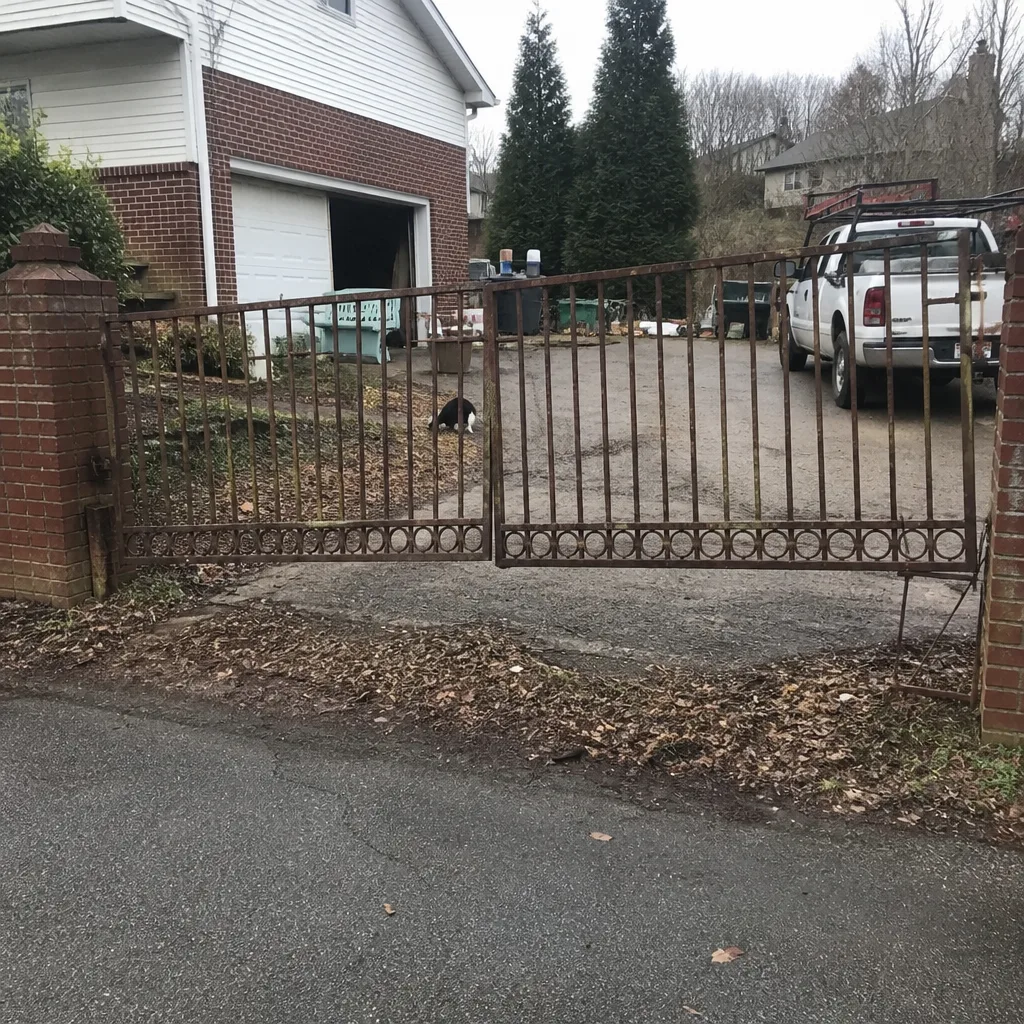 Before
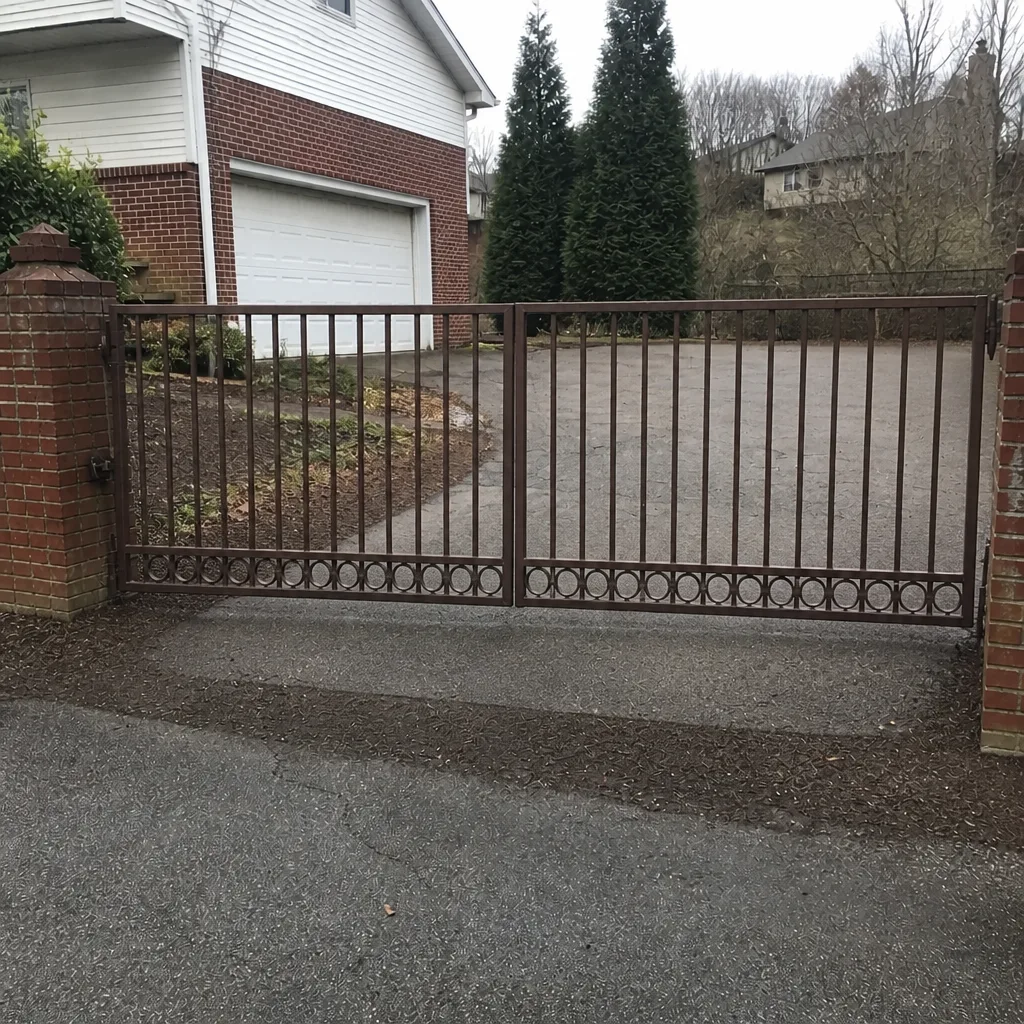 After
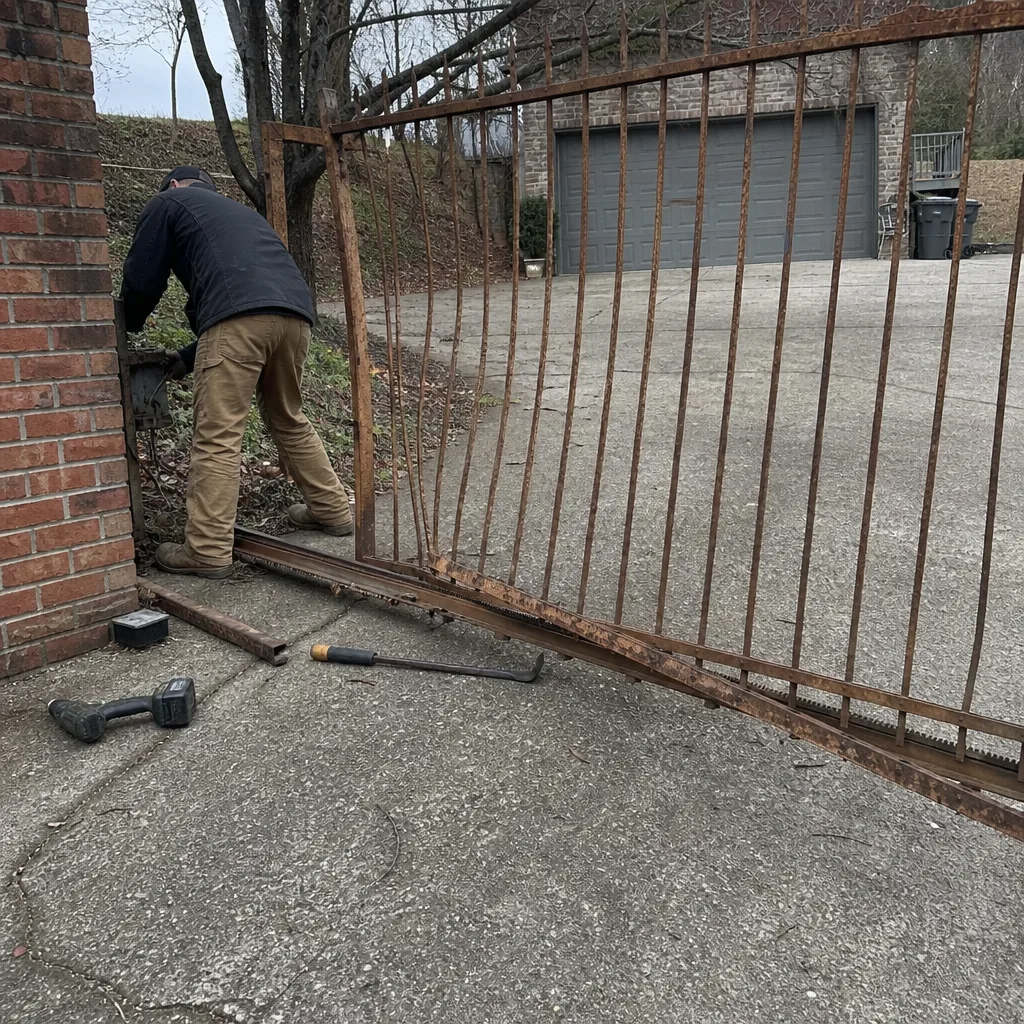 Before
 After
 Before
 After
When to Call a Professional
Call when the signs point to structure or electrical: a leaning post, a gate that sags when you look at the bottom gap, rust bloom at hinge plates, fresh cracking at the anchor points, or a gate that reverses when nothing’s there. Call when you hear grinding, humming, or clicking from the operator, and call when the gate stops responding inconsistently or the remote range keeps shrinking. These are the faults that get worse with time and cost more the longer they’re ignored, and they’re the faults that need a gate specialist, not a handyman. Knoxville Gate Repair Pros offers free estimates in Knoxville. Call (855) 337-0860. We answer 24/7. Fast dispatch from 7am to 7pm, Sunday through Friday.
Frequently Asked Questions
Hesitation before the gate moves is the most common early sign, and it usually points to a low battery in the backup or a failing capacitor. If you notice the pause becoming more frequent, that’s your signal to get it checked before the gate quits entirely.
Gate repair pricing depends on the fault, the brand, and the parts involved, so it’s quoted per job after a technician looks at the gate. The written estimate is the final price, and we confirm it before any work starts. Call (855) 337-0860 for an exact quote; estimates are free.
A full installation covers the gate panels, posts and footings, the operator or opener, the access control hardware if you want it, and the power run to the operator. We quote the full scope in writing before any work begins, so there are no surprises on the invoice.
Yes. We handle the electrical power run to the operator and the safety edges and photo-eyes that make the gate reverse when something’s in the path. Those are the parts that need the most care, and they’re not work for a generalist.
A gate reversing without an obstruction usually means the photo-eye or safety edge is misaligned, dirty, or damaged. It can also point to a control board receiving a false signal. Don’t disable the sensor; get it diagnosed, because a false-reversing gate is a real safety issue.
Very likely, yes. We work on the brand already on your gate across nine manufacturers including BFT, Linear, Viking, and Ghost Controls, plus LiftMaster, FAAC, DoorKing, Elite, and Mighty Mule. When you call, tell us the brand and what the gate is doing, and we’ll take it from there.
The Bottom Line
Gate failure rarely comes out of nowhere. A hesitation, a grinding noise, a lean in the post, a rust bloom at a hinge, a stain on the track, a remote that’s lost its range – these are the system telling you which part is going. Sort what you see and hear into the four levels: ignore, monitor, schedule, same day. Handle the Level 3 signs before they become Level 4, and call on the Level 4 signs the day you see them. In Knoxville, the climate adds its own signatures, from efflorescence at the anchor bolts to orange staining in the track. Read them early, and the repair stays small.
Knoxville Gate Repair Pros offers free estimates in Knoxville. Call (855) 337-0860. We answer 24/7. Fast dispatch from 7am to 7pm, Sunday through Friday.
Our technicians have up to 13 years of experience.
Written by the team at Knoxville Gate Repair Pros.