
Last updated November 25, 2026
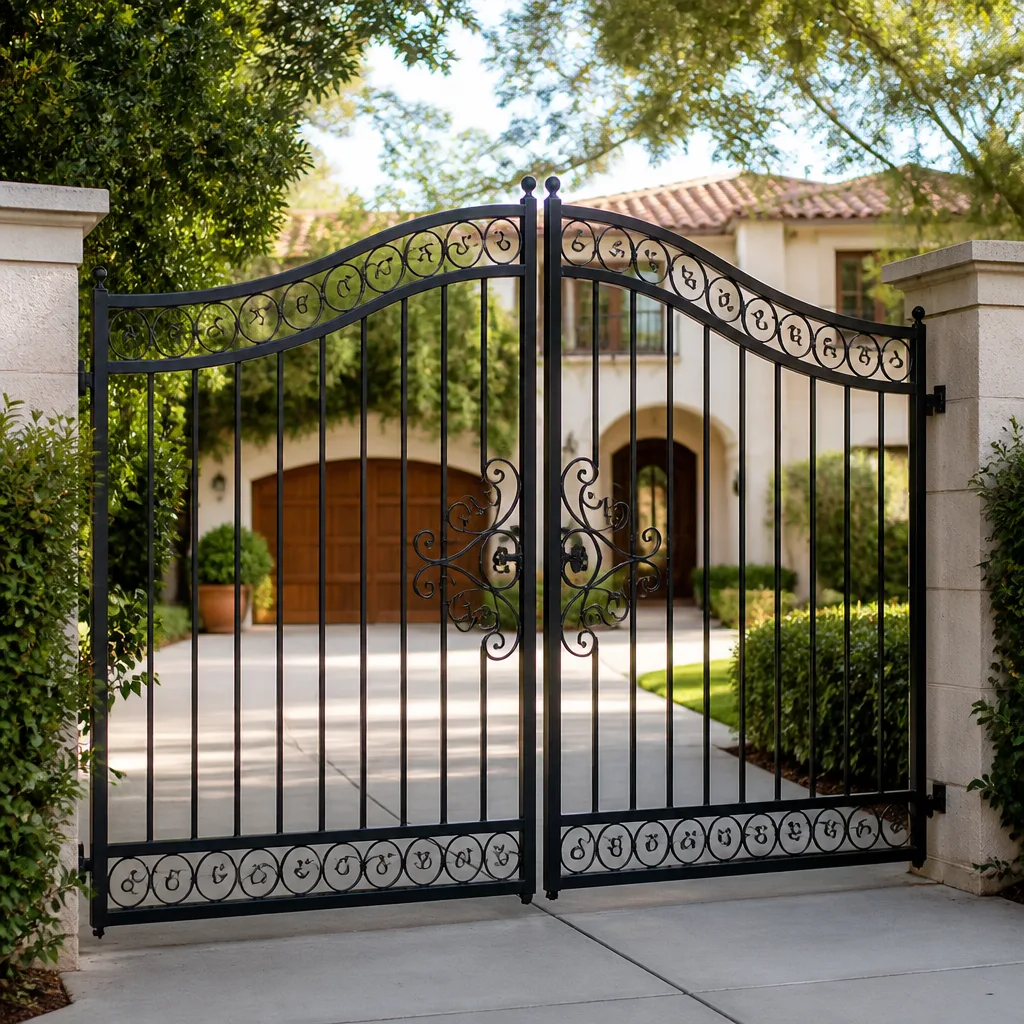 Wrought iron
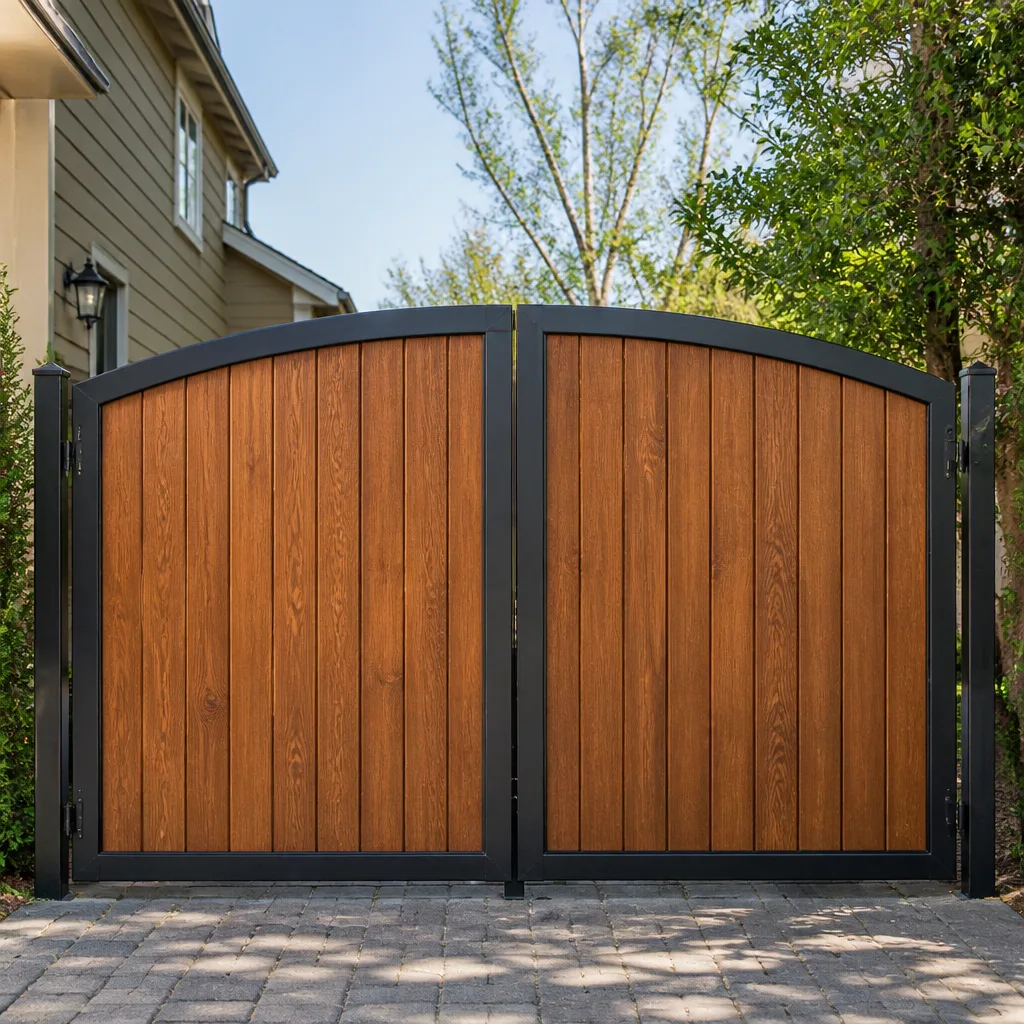 Wood & steel frame
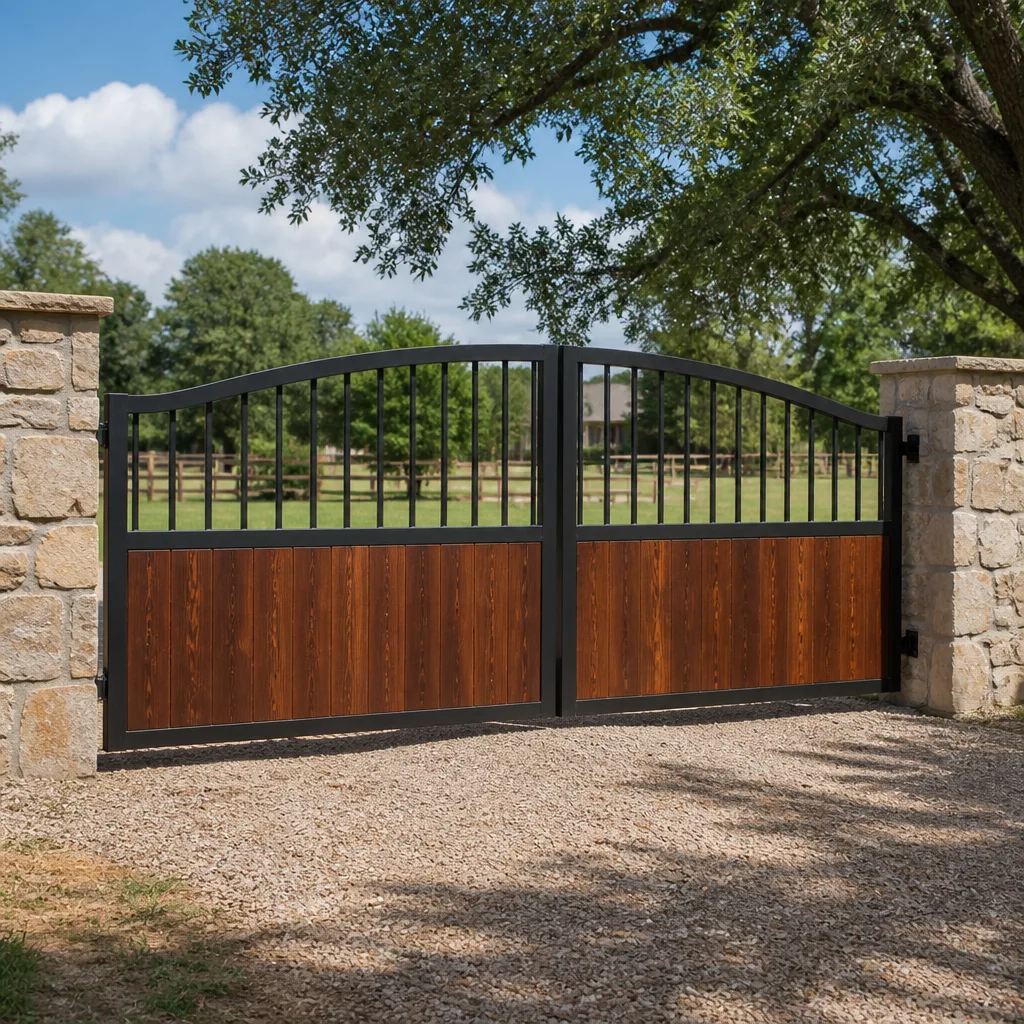 Farm & ranch
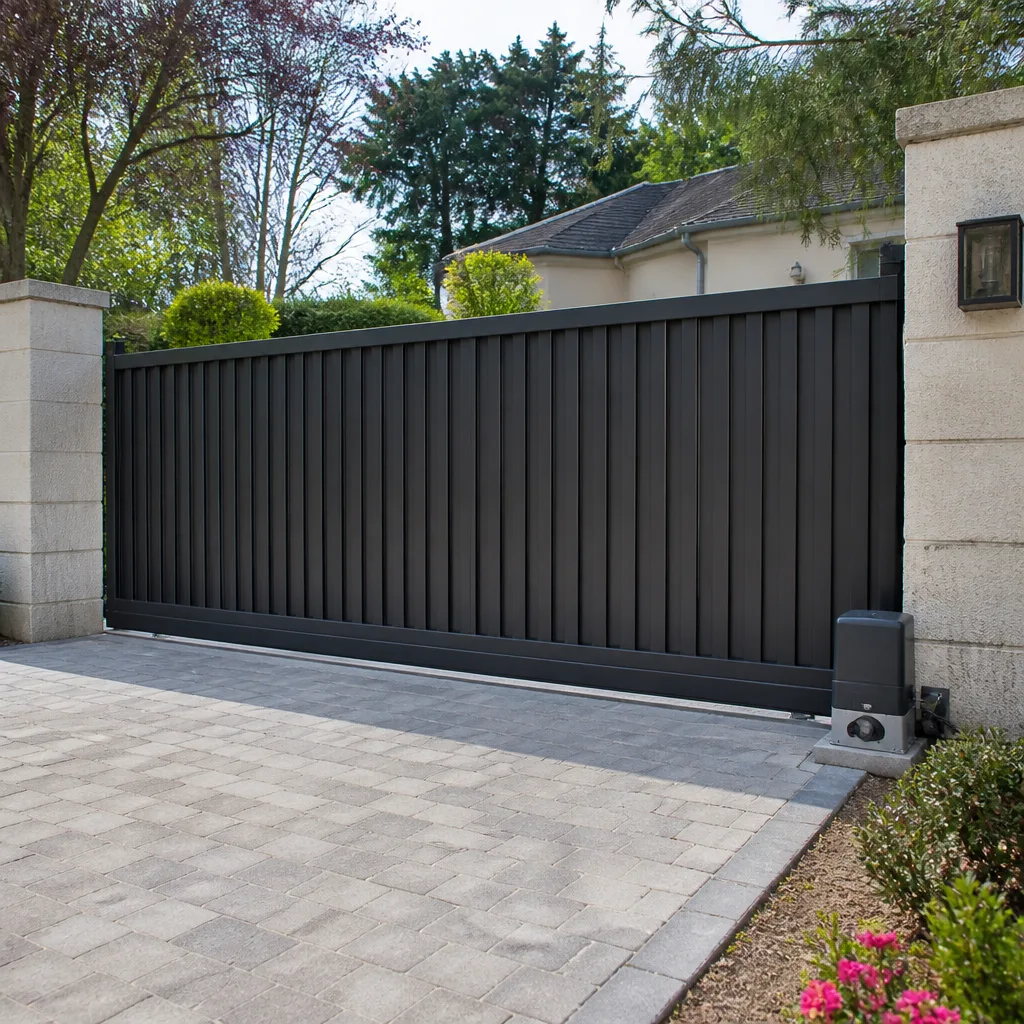 Sliding driveway gates
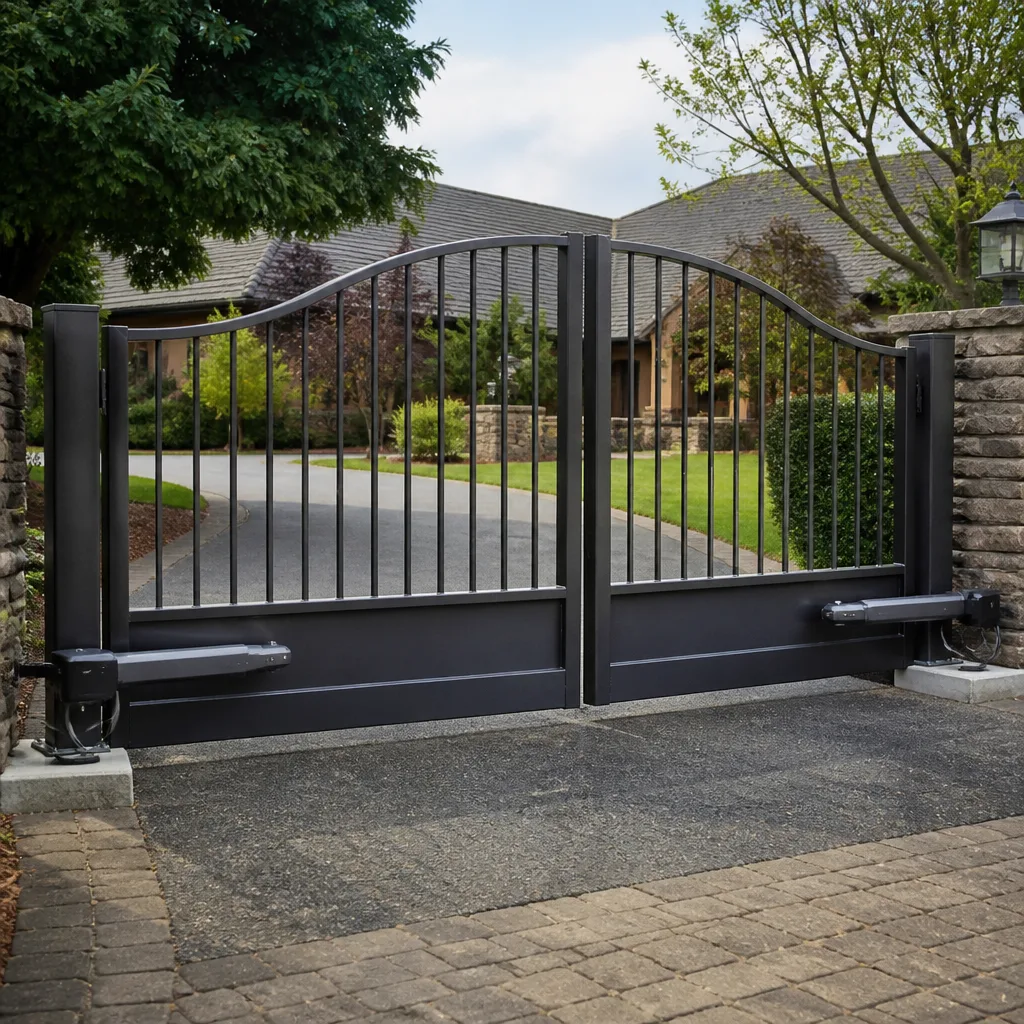 LiftMaster operators
Free on-site gate assessment - hinges, posts, and your LiftMaster or Nice gate operator checked before anything is quoted
The assessment is free and the quote is the invoice.
Get your free estimateGate Repair Permits, Codes & Inspections in Knoxville, TN: What You Need to Know
Most gate repairs in Knoxville don’t need a permit. That’s the part people get right. The part they get wrong is assuming nothing about a gate ever does. The work that crosses the line into permitted territory – new post footings, a hardwired electrical connection, a commercial operator brought up to UL 325 – is exactly the work that gets skipped on paperwork, because it’s the most expensive work and the least visible once it’s buried in the ground or tucked inside a control box. When an unpermitted footing or an uninspected electrical run turns up later, it delays a home sale or gives an insurer a reason to push back on a claim. This guide draws the line precisely: what Knox County and the City of Knoxville require, what they don’t, and how to check a past job before it becomes your problem.
Quick Answer
In Knoxville and Knox County, routine gate repair – fixing a hinge, replacing a motor, adjusting a swing arm, swapping a remote or receiver – generally does not require a building permit. A permit is typically triggered when the work involves new structural footings, a new or upgraded electrical circuit, or commercial operator work that must meet UL 325 entrapment protection requirements. Electrical and building permits are separate, and some gate jobs need both at once. When in doubt, call the City of Knoxville or Knox County building department directly and describe the work; a five-minute phone call settles it before you dig.
Styles & brands we work with
- Wrought iron
- Wood & steel frame
- Farm & ranch
- Sliding driveway gates
- LiftMaster operators
Table of Contents
- What gate work needs a permit in Knox County?
- Building permit vs. electrical permit: why some gate jobs need both
- UL 325 and entrapment protection: the liability side nobody explains
- How to check whether a previous gate installation was permitted
- What happens during a Knox County inspection, and how to pass the first time
- How to hire a gate contractor in Knoxville who won’t skip the paperwork
- Repair or replace: when the permit question changes the answer
What gate work needs a permit in Knox County?
The short version: cosmetic and mechanical repairs are almost always permit-free, and anything that touches structure or the electrical supply usually isn’t. Knox County and the City of Knoxville run their own building departments, and the person who decides is the plan reviewer or inspector, not your contractor and not this guide. Still, the pattern across most jurisdictions is consistent enough to plan around.
Work that typically does not require a permit:
- Replacing an operator motor, control board or receiver on an existing gate
- Adjusting or replacing hinges, rollers, latches or stops
- Repairing a sagging gate leaf that’s still attached to its existing posts
- Swapping a damaged panel or picket on a gate that stays in its current footprint
- Programming a new remote, keypad or entry code
Work that usually does require a permit:
- Setting new posts or pouring new footings, because the gate’s structural anchor point is changing
- Running a new electrical circuit to a gate operator, or upgrading an existing one
- Installing a new operator on a commercial property, where the entrapment protection requirements are stricter
- Any work the local building department classifies as a new installation rather than a repair
That last bullet is the one that catches people. A job described by a contractor as “just replacing the gate” is a new installation to an inspector if the posts, footings and operator are all being replaced. The label matters less than what’s actually being built. If you’re weighing a fix against a fresh build, our gate repair work starts with figuring out which side of that line you’re on.
One more local factor: Knoxville sits in a climate with real seasonal ground movement. Clay-heavy soil swells in a wet spring and shrinks in a dry summer, and posts that were set at the wrong depth tend to lean within a couple of years. When we reset a footing, that’s structural work – and structural work is where the permit conversation belongs.
Building permit vs. electrical permit: why some gate jobs need both
These are two different permits, handled by two different reviewers, and a surprising number of gate projects need both. A building permit covers the structure: posts, footings, gate framing, anchoring. An electrical permit covers the power: the circuit feeding the operator, the disconnect, the low-voltage control wiring where the jurisdiction treats it that way.
When do you need both at the same time? The clearest case is a brand new automatic gate on a property where there was no powered gate before. You’re setting footings and you’re running a circuit. That’s two permits. A less obvious case is replacing a swing gate with a heavier one on a commercial site: the new leaf may need deeper footings (building permit) and a larger operator that draws more current (electrical permit).
When a gate manufacturer’s instructions call for a dedicated circuit – and most operators from DoorKing and similar commercial-grade lines do – the electrical side isn’t optional. Neither is the disconnect. A disconnect is what lets a technician or a first responder kill power to the operator without hunting for a breaker inside a building.
- Identify the scope. Are footings new or existing? Is the circuit new or existing?
- Call the jurisdiction. City of Knoxville if the property is inside city limits, Knox County if it’s in the unincorporated county. Ask specifically about building vs. electrical.
- Get the permit before digging. Inspectors will ask to see footings before they’re poured. Digging first and asking later is how a project gets red-tagged.
- Schedule inspections in the right order. Footing inspection before the pour, electrical rough-in before the panel is closed up, final inspection after everything is energized and tested.
We plan the sequence on every job that crosses into permitted work, which is part of why the gate installation side of our business runs on a measure-then-schedule basis rather than a same-day promise. Permits and inspections take time, and pretending otherwise just sets up a surprise.
UL 325 and entrapment protection: the liability side nobody explains
UL 325 is the safety standard for gate operators and it addresses one thing above all: what happens when a person, a pet or a vehicle is in the gate’s path and the gate keeps moving. For residential operators, the standard is enforced through the product itself – the operator you buy is built to meet it. For commercial and multi-unit properties, the standard goes further, and the property owner carries real exposure when a gate is installed or modified without the entrapment protection the standard calls for.
What entrapment protection actually looks like on an installed gate:
- Photo eyes or beam sensors across the gate opening, so the gate reverses or stops when the beam is broken
- Edge sensors on the closing edge of the gate leaf, so contact triggers a reversal
- Built-in obstruction detection in the operator, which senses resistance and reverses the gate
- Audible and visual warnings that run before the gate moves
Here’s the part that gets glossed over. When a commercial operator is replaced or a gate is significantly modified, the current version of the standard applies to that work, not the version that was current when the gate was first installed. A 15-year-old operator on a Knoxville apartment complex gate might have been compliant then and not be compliant now. Bringing it up to date often means adding sensors and a control panel that weren’t there before – and that’s the kind of work a building department wants to see.
Our technicians have up to 13 years of experience with the entrapment hardware on commercial systems, including DoorKing operators and the accessories that pair with them. When we look at a commercial gate, we check the safety devices before we check anything else.
How to check whether a previous gate installation was permitted
This is the step people skip, and it’s the one that catches problems before a closing table or an insurance adjuster does. If you bought a property with an automatic gate already installed, or you inherited one after a renovation you didn’t oversee, you may not know whether the work was permitted. It’s a five-minute check in most cases.
- Start with the address, not the contractor. Permit records are searchable by property address.
- Use the Knox County online permit portal if the property sits in the unincorporated county. You can search permits by address and see what was pulled, when, and whether it was finaled.
- Use the City of Knoxville’s permit search if the property is inside city limits. Same idea: address search, look for building and electrical permits tied to the gate or the structure it’s attached to.
- Check the closing date against the installation date. If the gate looks newer than the last permit on record, that’s a flag. So is a permit that was pulled and never finaled.
- Ask for the documentation if you’re buying. A seller should be able to show the permit and the final inspection. If they can’t, that’s a negotiating point and a job for a gate professional to inspect.
An open, unfinaled permit is its own headache. It sits on the property record and can hold up a sale until it’s closed out, which usually means an inspection of work that was done years ago by someone you can’t reach. Getting ahead of it is cheaper than discovering it at closing. If you suspect a prior installation has a paperwork problem, our team can inspect the gate and tell you what’s actually installed and whether it’s likely to pass.
What happens during a Knox County inspection, and how to pass the first time
A gate-related inspection is more straightforward than most people expect. The inspector is checking three things: that the structure is anchored the way the plans say, that the electrical work is safe and to code, and that the operator and its safety devices work as intended. What fails most often isn’t the work – it’s the site. The inspector arrives, can’t reach the panel, can’t find the disconnect, and the appointment is burned.
How to prepare so a repair or installation passes on the first visit:
- Have the permit and approved plans on site. Not in your truck, not in your email. Printed and on the property.
- Clear access to the gate, the operator and the electrical panel. The inspector needs to walk the gate path and reach the disconnect without moving anything.
- Label the circuit. The breaker feeding the operator should be clearly marked at the panel.
- Test the safety devices before the inspector does. Break the beam, trip the edge sensor, run the obstruction reversal. If something doesn’t work, you want to find out before the appointment, not during it.
- Have the manufacturer’s installation instructions on hand for the operator and any safety accessories, since the inspector may want to see what the entrapment protection is supposed to do.
- Be ready for a footing inspection before the pour. If the gate is new, that’s a separate visit that happens before the concrete goes in.
We ask the same six questions before we schedule an inspection on any Knoxville property, and it saves everyone a second trip. The gates we install and repair go in knowing what the inspector will look for, because we’ve been through it enough times to know where the failures hide.
How to hire a gate contractor in Knoxville who won’t skip the paperwork
Ask the permit question before you ask the price. A contractor who hesitates, or who tells you a permit “isn’t needed” for a job that involves new footings or a new circuit, is telling you something important about how they’ll handle the rest of the work. The local pro we connect you with is licensed and insured as their state requires, and part of what that means is knowing when to call the building department.
- Ask whether a permit is required for this specific job, and listen for a specific answer, not a shrug.
- Ask who pulls the permit – the contractor or you. In most cases the contractor pulls it and the property owner holds it.
- Ask about UL 325 safety devices on any commercial or automated gate, including what’s already installed and what’s missing.
- Ask about electrical scope – who runs the circuit, who connects the operator, and whether an electrician is involved.
- Ask what happens at inspection and who’s on site for it.
Brand fluency matters here too. A generalist who mostly works on one brand of residential opener is not the person to bring a commercial DoorKing system up to current safety requirements. We work on the brand already on your gate, across nine manufacturers, from basic residential driveway openers to commercial access panels. Our gate motor & opener work covers the power and control side, and our Knoxville Gate Repair Pros team handles the rest of the system in the same call.
Repair or replace: when the permit question changes the answer
The permit question is usually the tiebreaker between repairing and replacing. A repair that stays on the existing footing and the existing circuit is straightforward, usually permit-free, and typically done fast. A replacement that involves new structure or new electrical changes the project timeline, because permits and inspections take weeks, not hours.
When repair usually wins:
- The posts and footings are solid, and the gate only needs new hardware
- The operator is failing but the circuit, disconnect and safety devices are already in place
- The gate needs adjustment, not rebuilding
When replacement usually wins:
- The footings have shifted or the posts are leaning beyond adjustment
- The operator is beyond the point where parts are available, especially on older commercial systems
- The property has been reclassified or changed use, and the gate no longer meets current requirements
- There’s no record of any permit, and you’re planning to sell
Same-day repair is realistic when it’s a mechanical fix on an existing install. A replacement that needs a permit and an inspection is a scheduled, measured job, and we’ll tell you that upfront with a written estimate rather than pretend it’s a quick swap. That’s the difference between a gate specialist and a generalist.
Common Mistakes to Avoid
- Digging new footings before checking the permit requirement. Inspectors want to see footings before the pour. Once the concrete is in, the only options are an as-built inspection or tearing it out.
- Treating building and electrical permits as one thing. They’re separate, they’re reviewed by different people, and a job that needs both won’t pass on a single inspection.
- Assuming an older commercial gate is grandfathered into the original safety standard. When the operator is replaced or the gate is significantly modified, the current UL 325 requirements apply to that work.
- Skipping the permit search before buying a property with an automatic gate. An open permit or a never-pulled one can surface at closing, and by then you’re negotiating from a weaker position.
- Leaving the site unprepared for inspection. The most common failure isn’t the installation – it’s an inspector who can’t reach the panel or find the disconnect.
- Hiring a generalist for commercial access control. Entrapment devices on DoorKing and similar commercial systems aren’t something to learn on the job.
- Letting a contractor handle the electrical side without documentation. If the circuit was run by whoever happened to be on site, ask for the electrical permit – or the name of the electrician who pulled it.
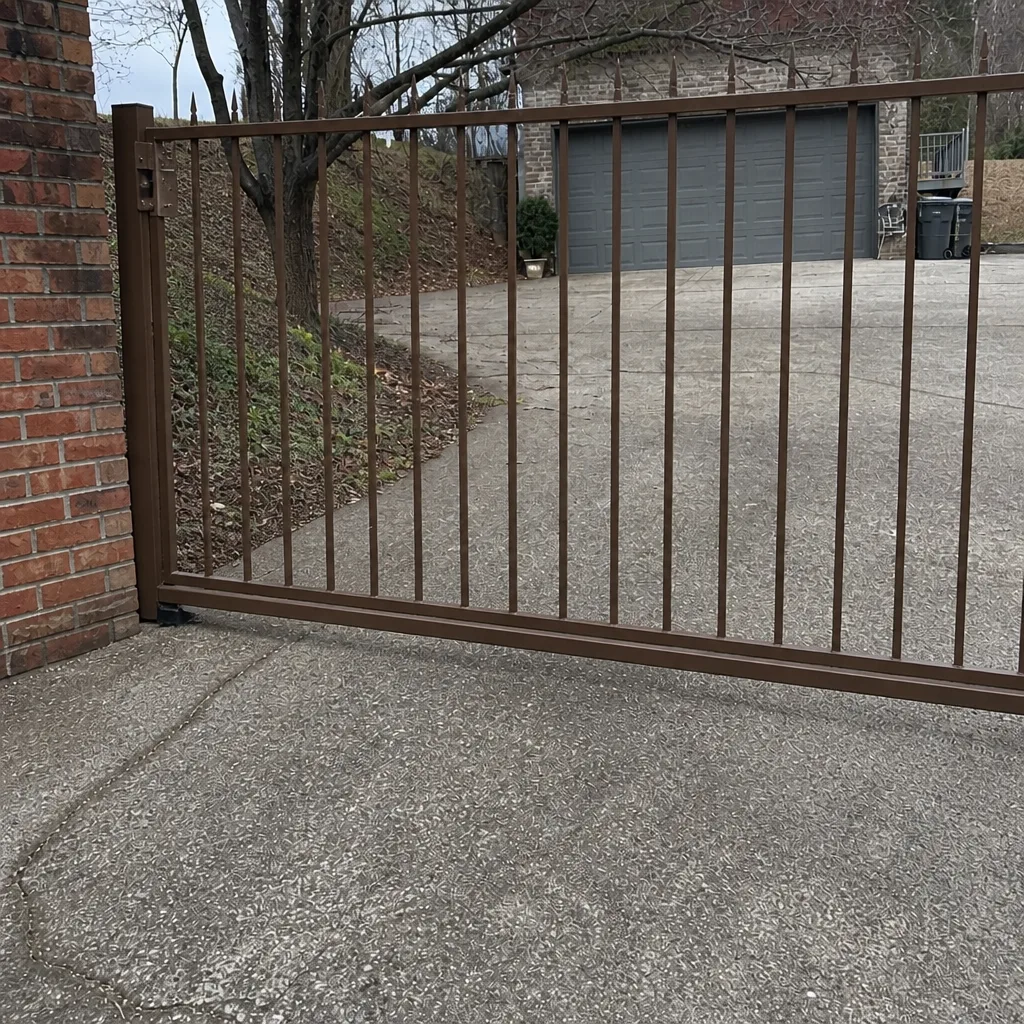
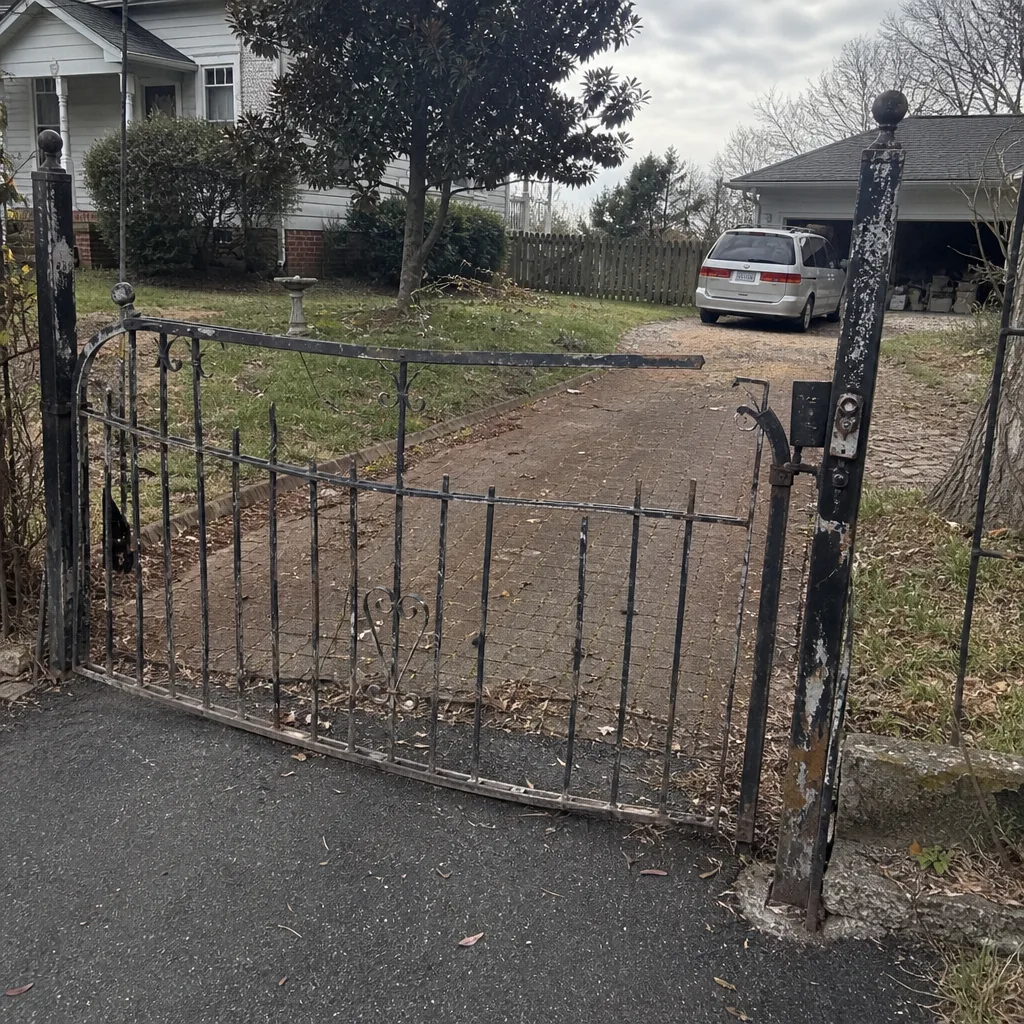
See the difference
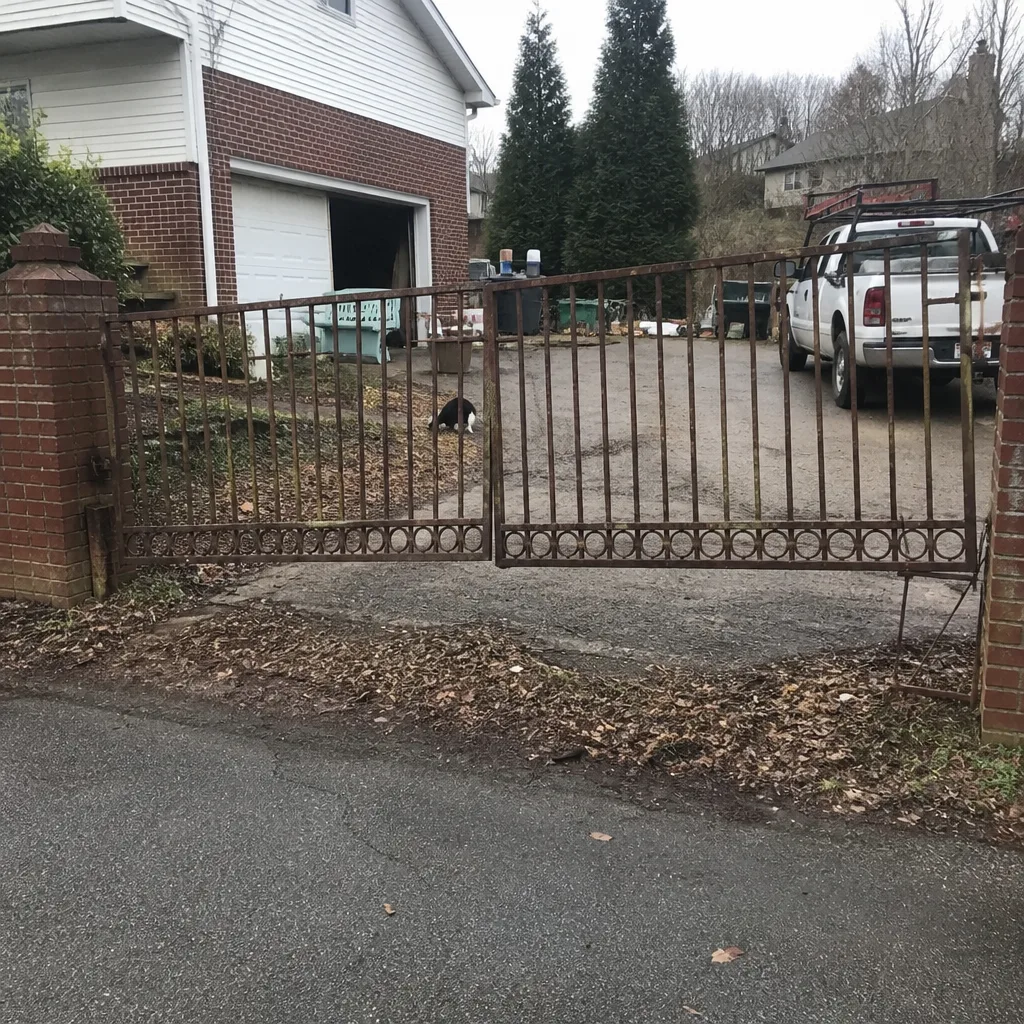 Before
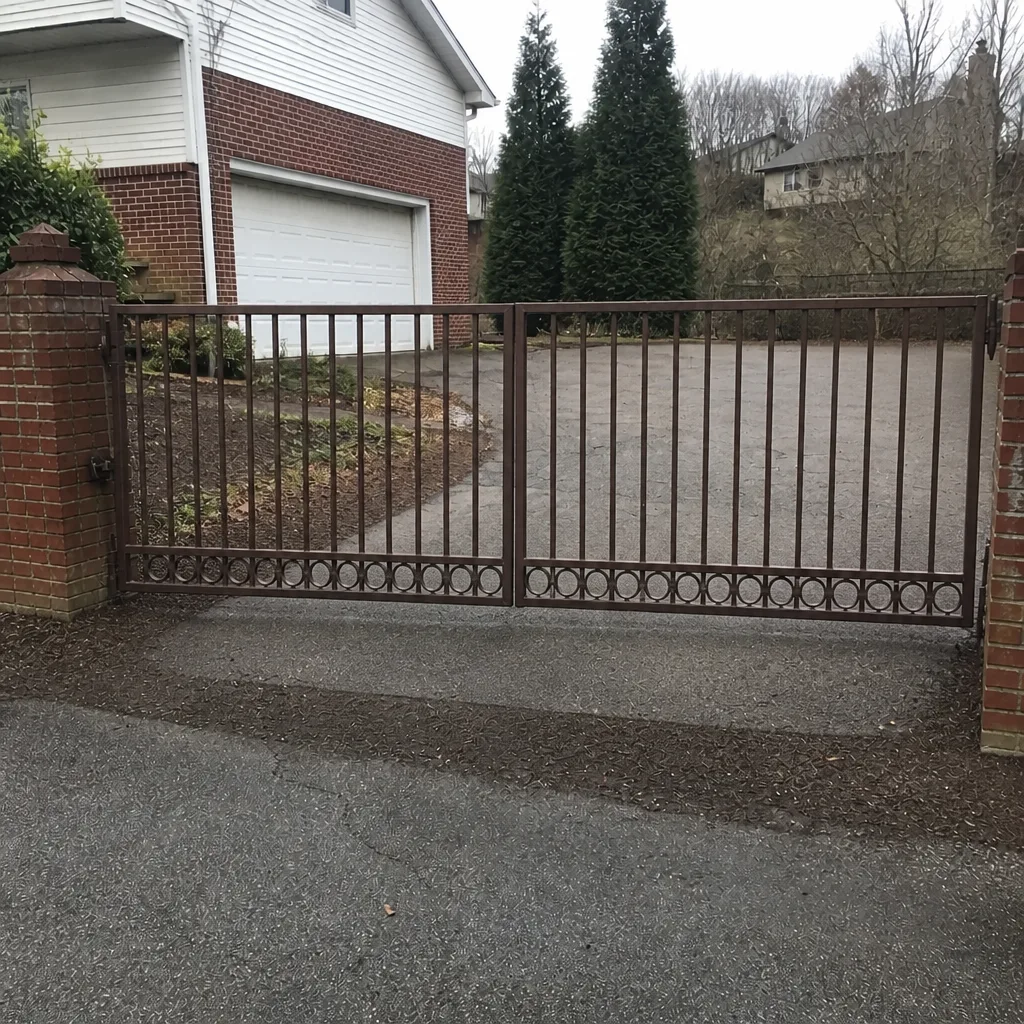 After
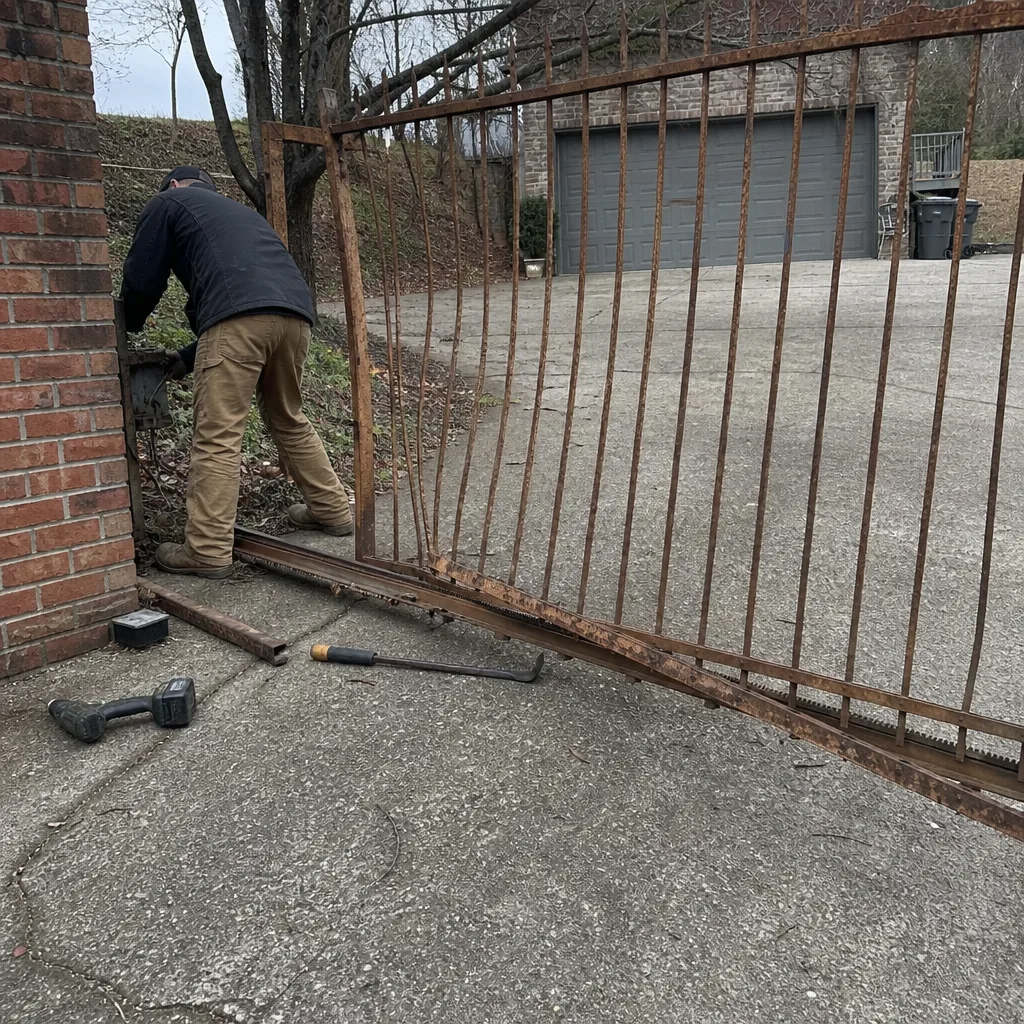 Before
 After
 Before
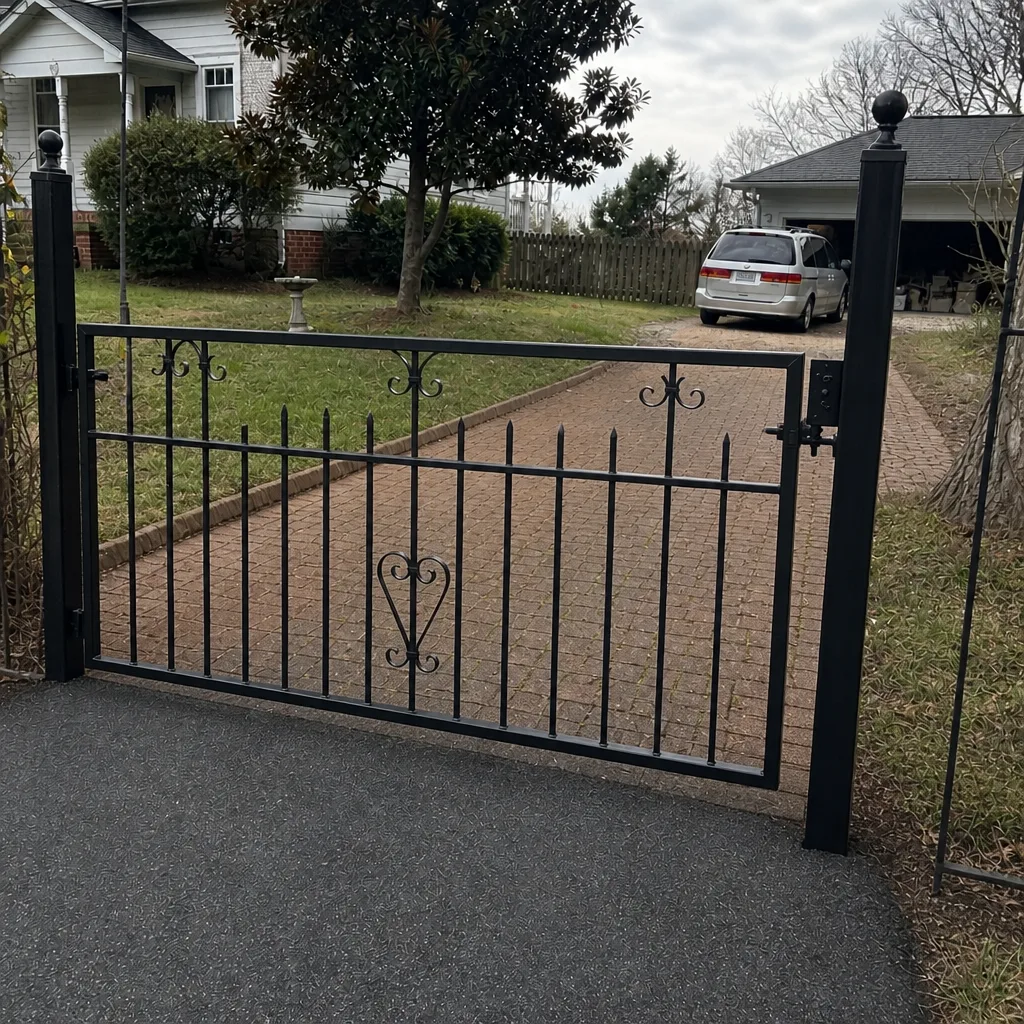 After
When to Call a Professional
Call a professional when the work involves anything structural or electrical – new posts, new footings, a new circuit, or a commercial operator that may need UL 325 safety devices added. Call when the gate is leaning and you’re not sure whether the footing or the hinge is the problem, because those are two different jobs with different permit answers. Call when you’ve bought a property with an automatic gate and there’s no permit paperwork, or when the gate already has an open permit you need to close out. And call when the gate is on a multi-unit property or an HOA, where access control and liability add layers that a handyman can’t carry. Knoxville Gate Repair Pros offers free estimates in Knoxville – call (855) 337-0860.
Frequently Asked Questions
Usually not. A repair that uses the existing posts, footings and circuit – new hinges, a new motor, a new receiver, adjustment work – generally doesn’t require a building permit in Knox County or inside Knoxville city limits. A permit is typically triggered when the work changes the structure or the electrical supply, such as new footings or a new circuit for the operator. Describe the exact work to your city or county building department to be sure. Call (855) 337-0860 for an exact quote – estimates are free.
Yes, in most cases. A new automatic gate almost always involves new footings (a building permit) and a new electrical circuit for the operator (an electrical permit), which means two permits and at least two inspections. The one exception is a gate that bolts onto existing structure with existing power already in place, and even then it’s worth asking. A written estimate will spell out the permit scope before any work starts.
UL 325 is the safety standard for gate operators, and it covers entrapment protection – photo eyes, edge sensors, obstruction detection and pre-motion warnings. The standard applies to every automatic gate: your operator was built to meet it. The requirements get stricter for commercial and multi-unit properties, and they apply to current work rather than the version in force when the gate was originally installed. Call (855) 337-0860 to have a technician check what’s on your gate.
Search the property address in the Knox County online permit portal if you’re in the unincorporated county, or the City of Knoxville’s permit search if you’re inside the city. Look for building and electrical permits tied to the gate or the structure it’s attached to, and check whether they were finaled. If the gate looks newer than the last permit, or a permit was never finaled, that’s a flag worth a professional inspection.
There’s no single number because the range depends on gate size, material, operator class and electrical scope, and because permit fees are set by the jurisdiction, not by the contractor. What we can tell you is how the pricing works: the estimate is free, the scope and price are written out per job, and the price is quoted and agreed before any work starts. Call (855) 337-0860 for an exact quote on your property.
Yes, most stuck-gate repairs don’t need a permit, and same-day service is realistic for mechanical fixes on an existing installation. We answer 24/7. Fast dispatch from 7am to 7pm, Sunday through Friday. If the fix turns out to involve new footings or a new circuit, we’ll tell you before the work starts and move it into the scheduled permit process. Call (855) 337-0860 for an exact quote – estimates are free.
The Bottom Line
Most gate repairs in Knoxville don’t need a permit – and the ones that do are the ones people skip. New footings, a new electrical circuit and commercial operator work that has to meet current UL 325 requirements are the three triggers. Building and electrical permits are separate, some jobs need both, and the inspection is straightforward if you clear the site and test the safety devices first. If you bought a property with an automatic gate and you’re not sure it was permitted, check the county or city permit search before it becomes a problem at closing. When the work crosses into permitted territory, hire a gate specialist who knows the sequence. Call (855) 337-0860. We answer 24/7. Fast dispatch from 7am to 7pm, Sunday through Friday.
Written by the team at Knoxville Gate Repair Pros.